 Ferndale Window
 Why Sudden Valley Roofs Wear Differently Than Roofs Elsewhere in Whatcom County
Sudden Valley sits in a pocket of Whatcom County where tree cover, lake-effect moisture, and shifting marine air all work on a roof at the same time. Homes here are often tucked under mature conifers, which means less direct sun on the roof deck, longer drying times after rain, and a steady supply of needles and organic debris collecting in valleys and against fascia boards. Add in the driving rain that rolls through this part of Washington for much of the fall and winter, plus salt-tinged air moving inland off the Strait of Georgia and Bellingham Bay, and you have a climate that is genuinely harder on asphalt shingles than a drier, more open lot would be.
None of this means asphalt shingle roofing is a bad choice for Sudden Valley — it's still one of the most practical, cost-effective, and repairable roofing systems available, and it performs well here when it's installed with this specific climate in mind. The problems we get called out for are almost never "asphalt shingles failed." They're shingles installed the same way you'd install them in a dry, sunny neighborhood, with no allowance for shade, moss, or prolonged moisture contact.
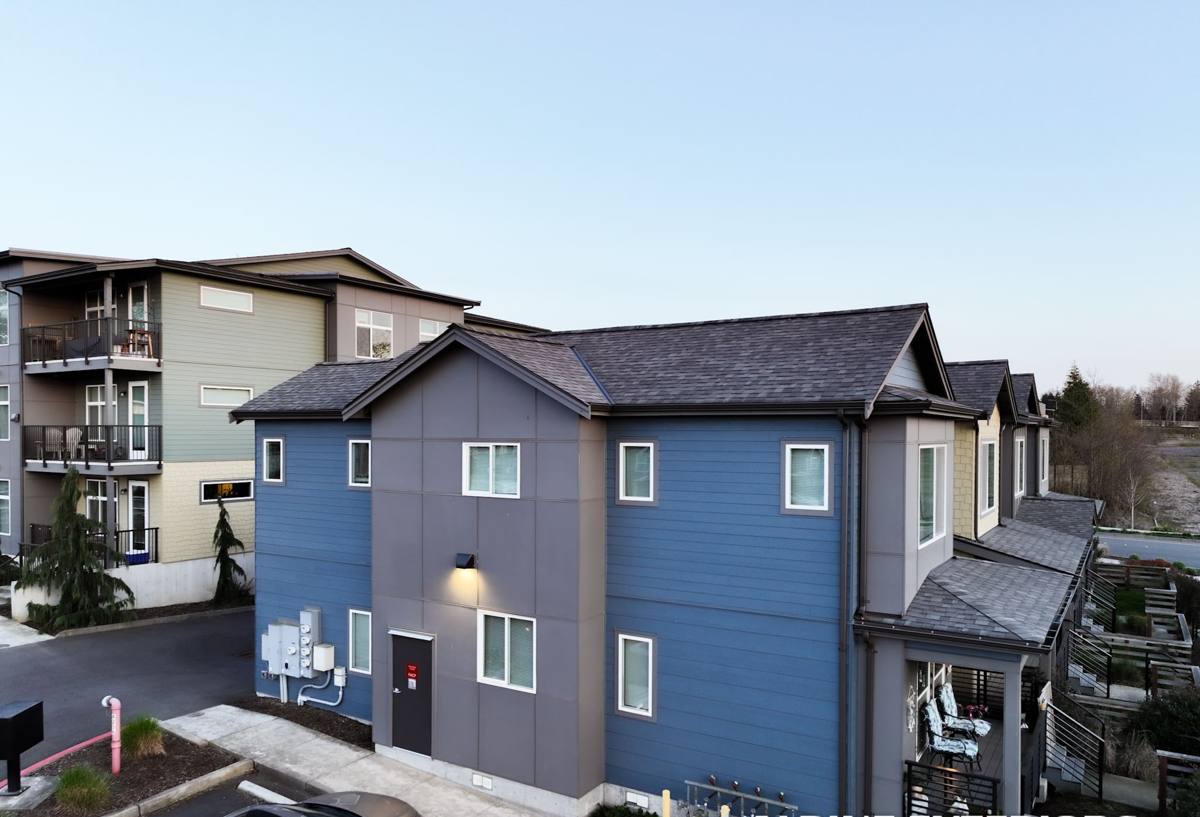
What a Correctly Installed Asphalt Shingle Roof Involves Here
A roof that's going to hold up under Sudden Valley conditions needs more attention paid to what's underneath the shingles than the shingles themselves. The visible layer gets all the attention, but the underlayment, flashing, and ventilation decisions are what actually determine whether a roof lasts fifteen years or thirty.
Underlayment and Ice/Water Protection
In a shaded, moisture-heavy setting, we lean toward synthetic underlayment with self-adhered ice-and-water membrane at eaves, valleys, and around every penetration — chimneys, vents, skylights. These are the spots where water sits longest and where moss and debris are most likely to dam up runoff. Skimping here is invisible on installation day and expensive five years later.
Flashing
Step flashing at walls and dormers, and properly lapped valley flashing, matter more under tree cover because organic debris collects at these transitions and holds moisture against the metal and the shingle edges longer than it would on an open roof. We flash to shed water past the debris, not just past the shingle.
Ventilation
A shaded roof deck that can't breathe stays damp longer after every rain, which is exactly the environment moss and algae need. Balanced intake and exhaust ventilation keeps the underside of the deck drier and reduces the moisture load the shingles are fighting from both sides.
Fastening and Nail Pattern
Manufacturer nail patterns exist for a reason, and in a wind-and-rain-exposed area like this one, under-fastening or high-nailing is one of the most common causes of early shingle lift and blow-off. We follow the pattern the manufacturer specifies for the wind zone, every time, not the fastest pattern.
Moss, Algae, and Shade: The Recurring Sudden Valley Problem
Moss doesn't just sit on top of a roof looking bad — it holds moisture against the shingle surface, works its way under tab edges, and lifts shingles enough for wind-driven rain to get underneath. Given the amount of tree cover in Sudden Valley and the region's long wet season, moss pressure here is genuinely higher than in most of Whatcom County's more open neighborhoods.
Two things reduce moss pressure at the roof level: shingle selection and installation details.
- Algae-resistant (AR) shingles use copper-infused granules that discourage algae and moss growth over time — worth the modest upcost on a shaded roof.
- Proper granule coverage and a tight, correctly lapped install give moss fewer edges and gaps to establish in.
- Keeping valleys and gutters clear of needles and debris removes the organic material moss needs to take hold.
- Trimming overhanging branches where practical improves airflow and sun exposure, both of which slow moss growth.
We won't tell a homeowner that any shingle is moss-proof, because it isn't — under enough shade and enough years of rain, moss will eventually try to grow on any asphalt roof. What AR shingles and a clean install buy you is time, and less frequent maintenance in between.
Choosing the Right Shingle for This Climate
Not every asphalt shingle product is a good fit for a shaded, high-moisture lot. The table below reflects how we think through the tradeoffs with homeowners in this area — it's not about buying the most expensive option, it's about matching the product to the site.
| Shingle Tier | Typical Lifespan | Best Fit For | Moss/Algae Resistance |
|---|---|---|---|
| 3-Tab (economy) | 15–20 years | Budget-driven projects, outbuildings, sun-exposed roofs | Low unless AR-rated; needs more frequent cleaning under shade |
| Architectural / Laminate | 25–30 years | Most Sudden Valley homes — better wind resistance, thicker profile | Good when AR-rated; standard choice we recommend here |
| Premium / Designer Architectural | 30–50 years (varies by product) | Steep-slope, highly visible, or long-term-hold homes | Best available granule and AR technology, longest moss resistance |
For most Sudden Valley homes we install algae-resistant architectural shingles as the baseline recommendation — they hold up to wind and driving rain better than 3-tab, and the AR granules directly address the moss and algae pressure this neighborhood's shade creates. Premium tiers make sense on steeper roofs or for homeowners planning to stay long-term and wanting to stretch the interval between re-roofs as far as possible.
Our Process, Start to Finish
1. On-Site Assessment
We walk the roof, not just the yard. That means checking deck condition at eaves and valleys, looking for soft spots, evaluating existing ventilation, and noting how much shade and debris load the roof actually deals with — Sudden Valley lots vary a lot in tree cover from one property to the next.
2. Written Estimate
You get a clear scope: tear-off or overlay, underlayment type, flashing work, shingle product and tier, and ventilation changes if needed. No vague line items.
3. Tear-Off and Deck Inspection
Full tear-off lets us actually see the deck. Any soft or water-damaged sheathing gets replaced before anything goes back down — installing new shingles over a compromised deck just hides the problem for a few years.
4. Underlayment, Flashing, and Shingle Installation
Installed in the order and manner described above, with attention to the valleys, penetrations, and eaves that take the most abuse in this climate.
5. Cleanup and Walkthrough
Magnetic sweep for nails, debris hauled off, and a walkthrough so you know what was done and what to watch for going forward.
Materials and What We Stand Behind
We install established, warrantied asphalt shingle lines from manufacturers with a track record in Pacific Northwest conditions, and we're upfront about warranty structure before you sign anything: manufacturer material warranties cover the shingle itself, and our workmanship warranty covers our installation. Those are two different things, and homeowners deserve to understand the difference before a claim situation ever comes up, not during one.
We don't push a product line just because it carries a longer warranty number on paper. Warranty length matters less than installation quality — a poorly flashed valley will leak under a 50-year shingle just as fast as under a 20-year one. Our standard is to install every roof, regardless of tier, to the details that actually keep water out in this climate.
Signs Your Sudden Valley Roof Needs Attention Now
- Visible moss growth on shingles, especially on north-facing or heavily shaded slopes
- Granules collecting in gutters or at downspout outlets
- Curling, cupping, or lifted shingle edges
- Dark streaking (algae) across the roof surface
- Soft or spongy spots when the roof is walked, or sagging visible from the ground
- Water stains on interior ceilings, especially near valleys or chimneys
- Daylight visible through the attic roof deck
- Debris buildup in valleys that doesn't clear between rains
Any one of these on its own isn't necessarily an emergency, but in a moisture-heavy, shaded environment like Sudden Valley, they tend to compound quickly. Catching them early is almost always cheaper than waiting.
Why Local Experience in This Neighborhood Matters
A crew that only occasionally works in Whatcom County's wetter, tree-covered neighborhoods tends to default to generic installation practices — the kind that hold up fine in a dry climate but leave gaps here. Working Sudden Valley regularly means we already know how shade patterns, tree cover, and driving rain off the water behave on these roofs, and we build the underlayment, flashing, and ventilation decisions around that from the start instead of learning it through a callback.
It also means we're realistic with homeowners about moss and moisture. We're not going to promise a maintenance-free roof under a canopy of conifers — nobody honestly can. What we can promise is a roof built with the right materials and details to handle this specific climate, and straight answers about what upkeep will actually be needed afterward.
After Installation: Keeping a Sudden Valley Roof Performing
A well-installed asphalt shingle roof in this area still benefits from basic seasonal upkeep: keeping gutters and valleys clear of needles, watching for moss regrowth, and having the roof looked at after any major windstorm. None of this is complicated or expensive, but it's the difference between a roof that reaches the top end of its expected lifespan and one that doesn't.
If your roof is showing any of the signs above, or you're planning ahead for a replacement, we're happy to take a look and give you a straight, no-pressure assessment of where things stand. Reach out for a free estimate using the form below — we'll walk the roof, explain what we see, and give you honest options for your home.