 Ferndale Window
 Sandy Point's Waterfront Exposure Is a Different Job Than Siding Work Inland
Sandy Point sits right up against the water, and that changes what a siding system has to survive day in and day out. A home a few miles inland in Ferndale deals with Whatcom County's wet winters and moss-friendly humidity, but it isn't getting salt-laden wind off the water on top of it. Sandy Point homes get both at once: the general Pacific Northwest soak, plus the corrosive, moisture-loading effect of salt air blowing straight off the Strait.
That combination is hard on siding in ways that aren't always obvious from the street. Salt air accelerates corrosion on fasteners and metal trim, holds moisture against exterior surfaces longer than plain rain does, and speeds up the breakdown of finishes that aren't built to handle it. Add driving rain that gets pushed sideways into wall assemblies during winter storms, and a long moss season that keeps north- and west-facing walls damp for months at a stretch, and you've got a set of conditions that will find every weakness in a siding job — the underlayment, the flashing, the caulking, the fastening pattern, all of it.
We're not describing this to sell fear. We're describing it because it's the actual reason a "good enough" siding replacement inland can fail early on a Sandy Point property. The material and the installation both have to be matched to the exposure, not just to the budget.
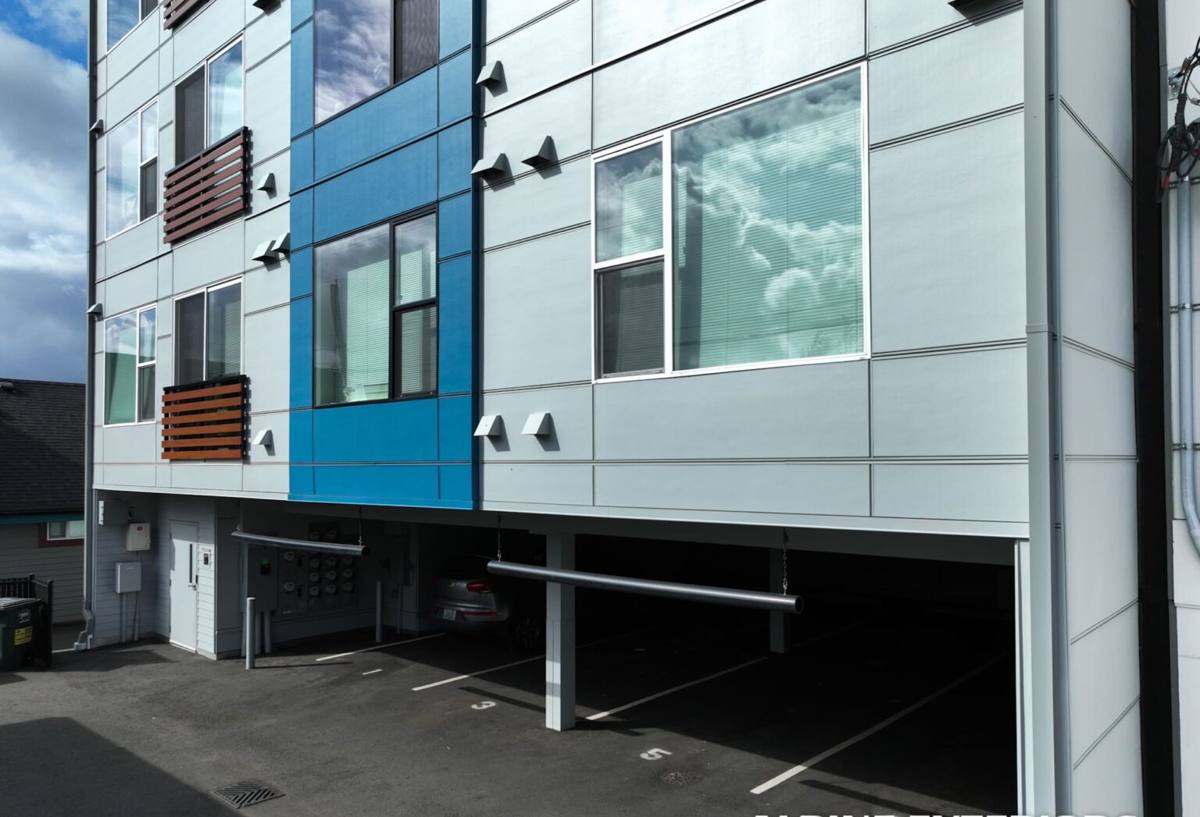
What Salt Air, Wind-Driven Rain, and Moss Actually Do to Siding Over Time
It helps to understand the specific failure paths, because they explain almost every decision in a correct replacement.
Salt Air
Airborne salt is corrosive to exposed metal — nails, screws, flashing, trim fasteners — and it can also degrade certain paints and coatings faster than a normal marine-adjacent climate would. Corrosion at fastener heads is one of the more common quiet failures we find on waterfront-adjacent siding: the fastener rusts, loses its grip, and the panel starts to work loose long before the siding material itself looks worn.
Wind-Driven Rain
Rain that's just falling straight down is relatively easy for a wall assembly to shed. Rain that's being driven sideways by wind off the water behaves differently — it gets forced up under laps, into seams, and behind trim if those details weren't built with that load in mind. This is why lap spacing, flashing at every horizontal transition, and proper caulking at penetrations matter more here than on a sheltered inland lot.
Moss and Sustained Moisture
Whatcom County's long, wet winters already favor moss and algae growth on north- and shaded west-facing walls. Near the water, that shaded moisture tends to stick around even longer because salt air raises ambient humidity and slows drying between storms. Moss holds water against the siding surface, and sustained moisture contact is the single biggest driver of rot, delamination, and paint failure on any wood-based or wood-composite siding product.
Signs a Sandy Point Home's Siding Needs Replacing, Not Just Patching
Because failure often starts at fasteners, seams, and shaded corners rather than in the middle of a wall, it's easy to underestimate how far along a problem is. Watch for these:
- Rust streaking below nail or screw heads, or visible corrosion on trim fasteners
- Soft or spongy spots when you press on siding near the bottom courses or around window trim
- Persistent moss or dark staining on north- and west-facing walls that comes back within weeks of cleaning
- Paint or finish that's chalking, peeling, or bubbling, especially on the side of the house that faces the water
- Gaps opening up at seams, corners, or where siding meets trim, letting daylight or drafts through
- Warping, cupping, or visible separation between courses
- Interior signs — musty smell, peeling interior paint, or staining on walls that back up to exterior siding
Any one of these can sometimes be spot-repaired. Several together, especially combined with fastener corrosion, usually means the underlying assembly has been compromised and a full or substantial replacement is the more honest recommendation.
What a Correct Siding Replacement Actually Involves
Replacing siding on a home this exposed isn't just swapping old panels for new ones. Done right, it's a rebuild of the whole exterior water-management system:
Tear-Off and Substrate Inspection
Old siding comes off and the sheathing underneath gets inspected for rot or water damage, particularly around windows, doors, and any wall that's taken direct weather for years. Damaged sheathing gets repaired before anything new goes on — covering over a soft spot just hides the problem.
Weather-Resistive Barrier
A continuous, properly lapped weather barrier goes over the sheathing, with special attention to how it integrates with window and door flashing. This layer is what actually keeps wind-driven rain out of the wall cavity if any gets past the siding itself.
Flashing at Every Transition
Windows, doors, roof-to-wall intersections, and any horizontal trim need flashing detailed to shed water outward, not trap it. This is one of the most common places we find shortcuts on older installs, and it's usually where the first rot shows up.
Fastening Matched to the Exposure
Corrosion-resistant fasteners, installed to the manufacturer's spacing and depth specs, matter more here than almost anywhere else in the county. Overdriven or underdriven fasteners are a leading cause of premature siding failure, and in a salt-air environment, the wrong fastener type will corrode years before it should.
Caulking and Sealant at Penetrations
Every point where something passes through the siding — hose bibs, light fixtures, vents — needs to be sealed with a product rated for the exposure, not just whatever's on the truck.
Why We Only Install James Hardie Fiber Cement
We've made siding material selection simple by not offering everything on the market. We install James Hardie fiber cement siding, full stop — not vinyl, not LP SmartSide, not Cemplank or Allura, not primed spruce or cedar. That's a deliberate standard, not a lack of options.
Fiber cement is non-combustible, which matters on its own merits, and it doesn't share the moisture-driven failure modes of wood-based or wood-composite products. It won't absorb water and swell, delaminate, or rot the way engineered wood siding can if a seam or fastener fails — which, given the wind-driven rain and sustained moss-season moisture Sandy Point sees, is exactly the failure path we're trying to avoid. Hardie's ColorPlus factory-applied finish is baked on under controlled conditions and holds up to UV and weather significantly better than field-applied paint, which matters when a house is taking direct salt-air exposure.
James Hardie also engineers its siding by climate zone — HZ5 and HZ10 product lines are formulated for different moisture and temperature conditions across the country. For a coastal Whatcom County home, that climate-specific engineering is a real advantage over a one-size-fits-all product. It comes with a strong transferable warranty as well, which is worth something concrete if you sell the home down the road.
None of this means other products are junk. Vinyl is inexpensive and low-maintenance in mild climates; LP SmartSide is a capable engineered-wood product when it's kept dry and maintained. But on a property with this much combined salt, wind, rain, and shade exposure, we don't think those products give a homeowner the margin for error that fiber cement does — so we don't install them here.
Material Comparison for a Waterfront-Exposed Home
| Material | Moisture Behavior in Salt Air | Finish Durability | Long-Term Maintenance |
|---|---|---|---|
| James Hardie fiber cement | Does not absorb water or swell; resists rot | Factory ColorPlus finish holds color and resists UV/salt fading | Low — periodic washing, no repainting on typical schedule |
| Vinyl siding | Doesn't rot, but can warp or become brittle with UV/temperature swings | Color molded in but can fade and chalk over time | Low, but damaged panels are hard to color-match later |
| LP SmartSide / engineered wood | Vulnerable to swelling and delamination if seams or fasteners fail | Field or factory finish, needs consistent upkeep | Moderate to high — depends heavily on installation quality |
| Cedar / primed spruce | Absorbs moisture readily; prone to rot without diligent upkeep | Requires regular repainting or restaining | High — most maintenance-intensive option in this climate |
This isn't a knock on every alternative — it's a picture of why fiber cement's moisture behavior lines up better with what Sandy Point's exposure actually demands.
Our Process for a Sandy Point Siding Replacement
The steps are the same as any quality siding job, but we pay closer attention to the details that matter most for water-adjacent exposure:
- On-site assessment, including a close look at fastener condition, shaded/moss-prone walls, and any soft or damaged trim
- Written estimate that spells out scope, material, and any substrate repair we expect to need
- Tear-off and sheathing inspection, with repairs made before new material goes up
- Weather-resistive barrier and flashing installation at every window, door, and transition
- James Hardie siding installation to manufacturer fastening and clearance specifications
- Final walk-through so you can see the completed work and ask questions before we call it done
Why Hiring a Crew That Already Works Sandy Point Matters
A siding job that looks fine in a dry inland neighborhood can fail early right on the waterfront if the crew installing it hasn't accounted for that exposure. Fastener choice, flashing details, lap spacing, and clearance off grade all need to be tightened up for salt air and driving rain — and a contractor who mostly works sheltered inland lots may not think to make those adjustments unless they're used to this specific stretch of coastline.
We work throughout Ferndale and Whatcom County, and jobs on and near the water are part of that regular work, not an occasional exception. That means we're not guessing at what Sandy Point's conditions demand — we're applying what we've already learned from other homes facing the same wind, salt, and moss exposure.
Keeping New Siding Looking Right
Even the right material benefits from a little upkeep in this environment. A rinse with a garden hose a few times a year knocks off salt residue and slows moss regrowth on shaded walls. Keep gutters clear so water isn't sheeting down the siding face, and trim back vegetation that's holding moisture against the wall. None of this is heavy maintenance — it's the kind of thing that keeps a well-installed Hardie exterior looking good for the long haul instead of just the first few years.
If your Sandy Point home's siding is showing rust streaks, soft spots, persistent moss, or you're just planning ahead before the next storm season, we're happy to take a look. Reach out for a free, no-pressure estimate using the form below.