 Ferndale Window
 Sandy Point sits close enough to the water that its homes take a different kind of weathering than roofs a few miles inland. Salt-laden air, wind-driven rain off the Strait, and heavy tree cover that keeps roofs shaded and damp for months at a time all add up to a roofing environment that's tougher than average — even by Pacific Northwest standards. A roof replacement out here needs to account for that from the first material choice to the last flashing detail, not just meet the same spec you'd use on a roof in downtown Ferndale or inland Whatcom County.
Why Sandy Point Roofs Wear Differently
Three things separate Sandy Point from a typical Whatcom County reroof: proximity to saltwater, tree canopy, and exposure to wind off open water. Any one of these on its own is manageable. Together, they shorten the useful life of roofing materials and hardware that would otherwise hold up fine for decades.
Homes closer to the water see airborne salt settle on roofing surfaces and metal components year-round, not just during storms. Homes set back under trees get less sun exposure and more standing moisture, which is exactly what moss and moisture-loving growth need to take hold. And because Sandy Point is a low-lying coastal community, wind during winter storms tends to come in harder and more consistently than it does a few miles inland, which matters more for flashing and fastening than most homeowners expect.
What That Means Over Time
Left unaddressed, this combination shows up as premature granule loss on asphalt shingles, corroded fasteners and flashing well before their rated life, moss mats that hold moisture against the roof deck, and soft spots or leaks starting at valleys, chimneys, and vent penetrations — the details, not the open field of the roof, are almost always where a coastal roof fails first.
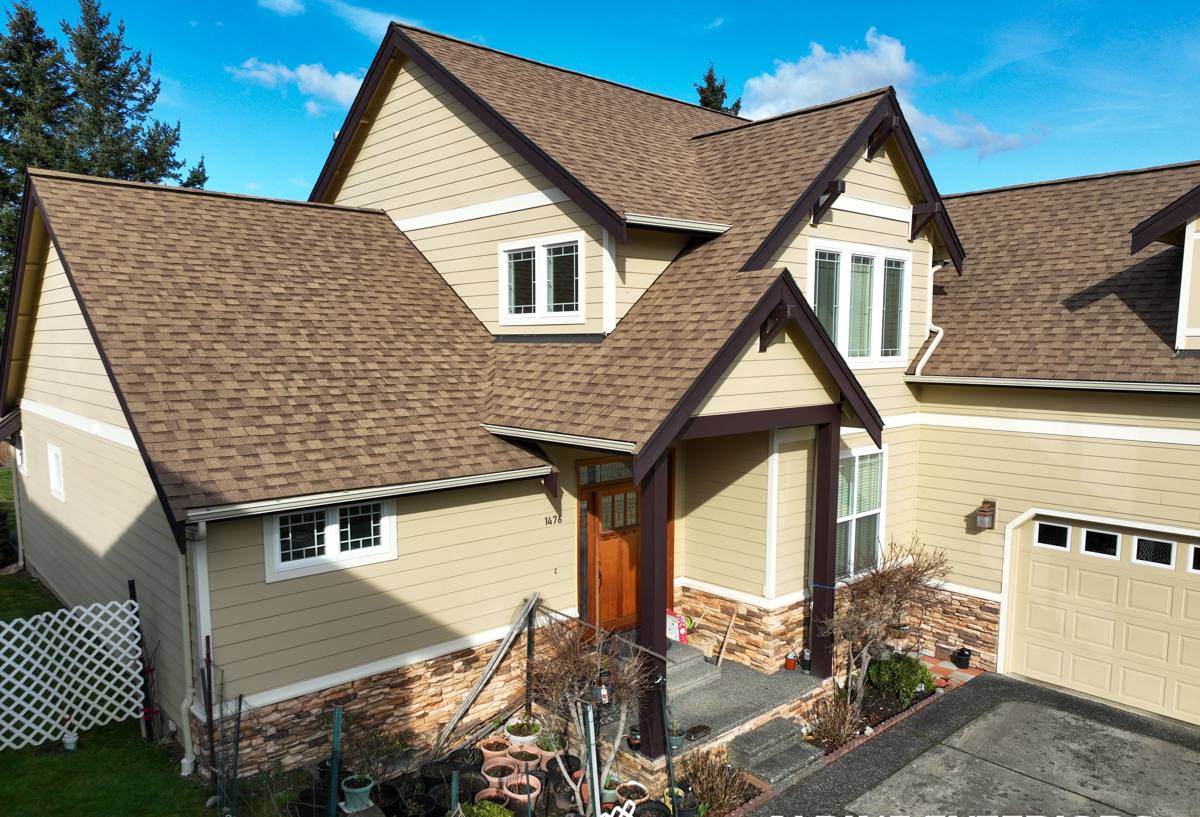
Salt Air and Corrosion — The Detail Most Roofs Get Wrong
Salt air doesn't damage shingles directly nearly as much as it damages metal. Standard electro-galvanized fasteners, cheap drip edge, and mill-finish flashing all corrode faster near saltwater than the manufacturer's warranty assumes, because those warranties are written for average inland exposure. Once a fastener head rusts through or flashing pits and thins, water finds a path long before the shingle field itself is worn out.
For a Sandy Point reroof, that means specifying corrosion-resistant hardware as a baseline, not an upgrade: stainless steel or high-quality hot-dip galvanized fasteners, properly rated metal flashing, and hardware choices that match the coastal exposure rather than a generic spec sheet. It costs a bit more up front. It's also the difference between flashing that's still doing its job in twenty years and flashing that's the first thing to fail.
Moss, Shade, and Roof Debris
Whatcom County's long wet season is hard on any roof, but shaded, tree-lined lots — common around Sandy Point — extend how long a roof stays damp after each rain. That's the exact condition moss needs to establish. Moss holds water against shingles and roofing felt, works its way under shingle tabs as it grows, and can lift material enough to let wind-driven rain get underneath.
Needles, leaves, and branch debris compound the problem by collecting in valleys and behind chimneys, damming water instead of letting it run off. A correct replacement addresses this two ways: choosing a roofing material and underlayment system that resists moss better than a bare, untreated surface, and making sure valleys and low-slope transitions are detailed to shed debris rather than trap it.
What Helps Long-Term
- Algae- and moss-resistant shingle products (copper- or zinc-infused granules) on asphalt roofs
- Zinc or copper strips at the ridge on moss-prone roofs, where appropriate to the material
- Valleys and transitions detailed for clean water and debris flow, not flat catch points
- Keeping overhanging limbs trimmed back so the roof gets more sun and dries out faster after rain
Wind and Driving Rain — Where Flashing and Fastening Matter Most
Open water nearby means Sandy Point sees storm winds that push rain sideways, not just straight down. A roof that's watertight in a normal rain can still leak in a wind-driven event if the underlayment, ice-and-water barrier at vulnerable areas, and flashing details weren't built for that kind of exposure. This is where a lot of budget reroofs cut corners that don't show up as a problem until the first real coastal storm.
The fix isn't exotic — it's discipline in the details: fully adhered underlayment at eaves, valleys, and around every penetration; step flashing and counter-flashing installed correctly at walls and chimneys instead of relying on caulk; and fastening patterns that meet or exceed the wind rating for the material, not just the manufacturer's minimum.
Choosing Materials for a Sandy Point Home
There's no single "correct" material for every home here — it depends on the roof's slope, sun exposure, tree cover, and your budget and maintenance appetite. What matters is going in with eyes open about how each option handles salt air and moss specifically.
| Material | Coastal/Moss Performance | Trade-Offs to Know |
|---|---|---|
| Architectural asphalt shingle (algae-resistant) | Good with the right granule treatment; widely available | Needs periodic moss/debris checks in shaded areas; typical 25-30 year product life |
| Standing seam metal | Excellent water shedding and moss resistance on adequate pitch | Higher upfront cost; fastener and finish quality matter even more near saltwater |
| Synthetic/composite shingle | Good moisture and impact resistance | Product quality varies widely; verify real-world coastal track record before committing |
| Cedar shake | Attractive but higher maintenance in damp, shaded, salt-air conditions | Needs regular treatment and moss management to hold up out here |
Whatever material you land on, the flashing, fasteners, and underlayment beneath it matter as much as the shingle or panel on top — that's true everywhere, but it's especially true this close to the water.
What a Correct Roof Replacement Involves
A roof replacement is more than stripping old shingles and laying new ones. Done right, it's a full system: deck, underlayment, flashing, ventilation, and the finish material, all working together. Skipping steps here is exactly how a roof develops problems years before it should.
- Full tear-off and deck inspection — soft, rotted, or delaminated decking gets replaced, not covered over
- Ventilation checked and corrected — poor attic airflow accelerates moisture problems and shortens roof life from the inside
- Ice-and-water shield at eaves, valleys, and other vulnerable areas, sized to local exposure
- Corrosion-resistant flashing and fasteners specified for coastal conditions, not generic minimums
- Correct step flashing and counter-flashing at all walls, chimneys, and penetrations
- Ridge and soffit ventilation balanced to actually move air, not just present a vent
- Cleanup and haul-away of all old material, with the yard and gutters checked for debris
Our Process
We start with an on-site inspection and honest assessment of what your current roof needs — sometimes that's a full replacement, sometimes it's targeted repair, and we'll tell you which. If replacement is the right call, we walk through material options with the coastal trade-offs explained plainly, put together a clear written scope and price, and schedule around weather windows that make sense for a proper tear-off and install.
During the job, we protect landscaping and gutters, do a full deck inspection before anything new goes down, and detail every penetration and transition the way we'd want it done on our own house. When it's done, we walk the roof with you, explain what was done and why, and leave you with documentation for your records and warranty.
Why Local Experience in Sandy Point Matters
A crew that's worked roofs in Sandy Point and other Whatcom County coastal areas already knows where the wind actually hits hardest, which tree lines create the worst moss problems, and which flashing and fastener choices hold up here versus which ones look fine on paper and fail early. That's not something a general answer from a manufacturer spec sheet or a crew that mostly works inland can give you.
It also means fewer surprises during the job. We're not guessing about how your neighborhood's climate behaves — we're building the roof to match conditions we've already seen firsthand, on homes not far from yours.
After the Install — Keeping It That Way
A well-built roof still benefits from a little upkeep in a coastal, tree-covered setting. A yearly look at valleys and gutters for debris, keeping branches trimmed back where practical, and addressing any moss growth early — before it mats and holds water — will get you the full life out of whatever material you choose. We're happy to point out what to watch for on your specific roof once the job's done.
If you're weighing a roof replacement for a home in Sandy Point, we're glad to take a look and give you a straight assessment — no pressure, no upsell, just what your roof actually needs. Use the form below to request a free estimate.