 Ferndale Window
 James Hardie Siding for Sandy Point Homes
Sandy Point sits out on a low, sandy point of land facing the water northwest of Ferndale, and that location puts homes here through a heavier version of the weather the rest of Whatcom County deals with. Lots are close-set and close to the beach, elevations are low, and there's little in the way of higher ground or tree cover to break up wind coming off the water. Salt-laden air, driving rain, and a moss season that runs long even by Pacific Northwest standards are just part of owning a home out here. Siding that would hold up fine on a sheltered inland lot in Ferndale proper doesn't always get the same easy ride on a Sandy Point beachfront property.
We install James Hardie fiber cement siding exclusively, and for a community with this much direct water exposure, it's the material we recommend without hesitation. This page covers what Sandy Point's climate actually does to a home's exterior, what a correct Hardie installation involves out here, and how we approach a project on a lot this exposed.
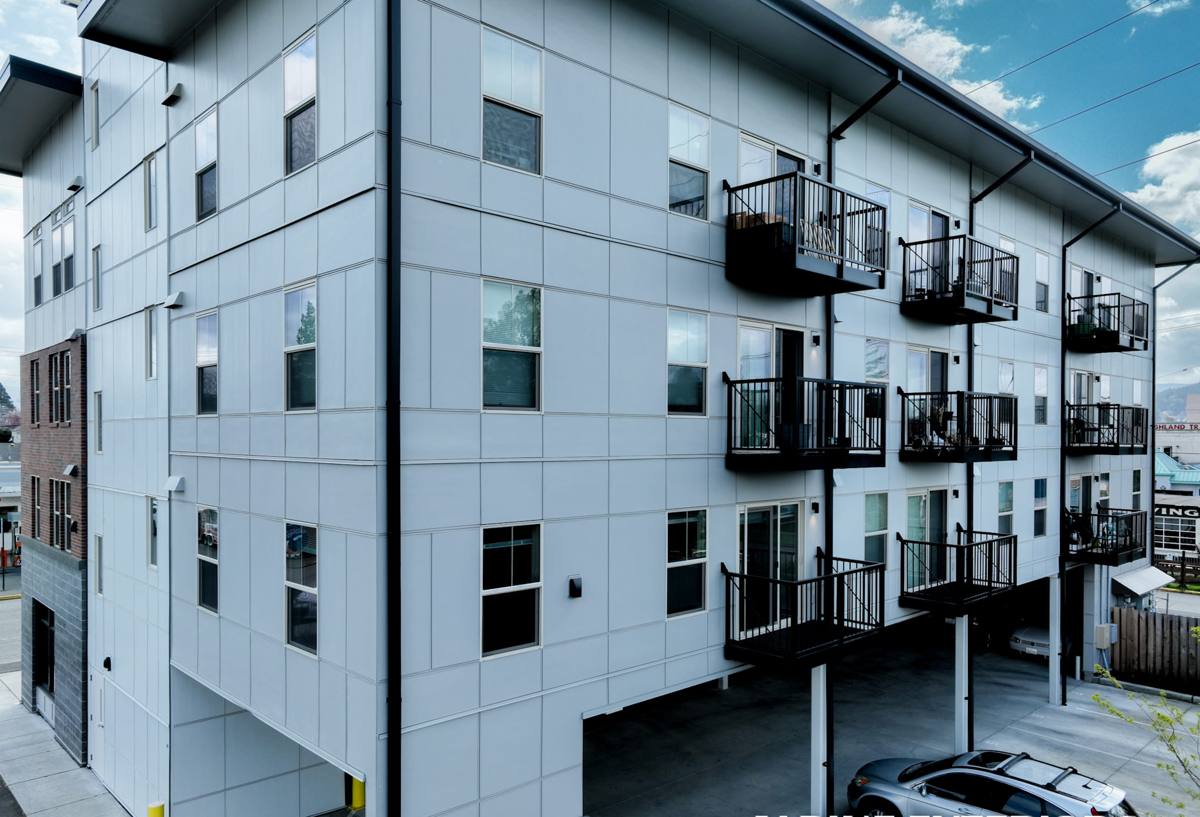
What Sandy Point's Exposure Does to a Home's Exterior
Salt Air Off the Water
Homes set directly along the water pick up salt-laden moisture in the air at a steadier rate than homes even a mile or two inland. That salt exposure is hard on anything metal — fasteners, flashing, hardware — and it's hard on lower-grade paints and finishes, which tend to chalk, fade, and fail years ahead of where they would on a drier, more sheltered lot. Over time, a siding and trim system chosen without that exposure in mind starts showing its age early: rusting nail heads, corroding flashing, and a finish that looks tired well before the material underneath is actually worn out.
Wind-Driven Rain on an Exposed Point
Being out on a point means fewer windbreaks in every direction, and wind is what turns ordinary rain into a sideways problem. Driving rain pushed by open-water wind finds its way into lap joints, trim seams, and any spot where flashing isn't doing its job — a tougher, more sustained test than a simple rainfall total suggests. A siding system that performs fine on a calmer, more sheltered street can still fail on an exposed Sandy Point lot because the water is coming at the wall from the side, not just from above.
A Long Moss and Mildew Season
Constant moisture, cooler shaded sides of the house, and the general dampness of a waterfront property add up to a moss and mildew season that runs longer here than on drier, sun-exposed lots elsewhere in Whatcom County. It typically shows up first on north-facing walls and any wall that stays shaded for most of the day. Beyond looking bad, sustained moss growth holds moisture directly against the wall assembly, which is the exact condition that leads to rot behind the siding if it isn't caught and addressed.
Low, Sandy Ground Near the Wall
Sandy Point's low elevation and sandy soil mean many homes sit close to grade, with less separation between the ground and the bottom edge of the siding than you'd find on a hillside lot. That matters because splash-back from rain, and moisture wicking up from damp ground near the foundation, both concentrate right at the bottom courses of siding — often the first place a lower-quality material starts to soften, swell, or discolor.
Why James Hardie Is What We Put on These Homes
We used to offer a wider range of siding products. We narrowed to one system after seeing, repeatedly, which materials actually held up under sustained coastal exposure like Sandy Point sees and which ones quietly didn't. For a beachfront lot out here, the case for fiber cement over the alternatives is about as strong as it gets anywhere in our service area.
- Non-combustible core: Fiber cement doesn't feed a fire the way wood-based or wood-derived siding products can, which matters for household safety and often for insurance underwriting on a waterfront property.
- Factory-applied ColorPlus finish: The color is baked on under controlled conditions rather than brushed on in the field, so it holds up against salt exposure and UV far longer than site-applied paint does.
- Climate-engineered HZ5 formulation: Hardie's HZ5 product line is built for regions with heavy, sustained moisture exposure and freeze-thaw cycling — a close match for what a Sandy Point waterfront lot experiences most winters.
- Dimensional stability: Fiber cement doesn't swell, cup, or warp the way engineered wood siding can after repeated wet-season moisture cycles, which matters more here given how long that wet season runs.
- Strong transferable warranty: Hardie backs its products with a robust warranty structure, provided the installation follows spec, giving homeowners real protection instead of a marketing claim.
| Material | Behavior in Salt Air & Driving Rain | Maintenance on a Waterfront Lot | Realistic Lifespan Here |
|---|---|---|---|
| James Hardie fiber cement | Dimensionally stable; resists moisture and salt-driven degradation | Low; factory finish resists moss, chalking, and fading | 30+ years with proper install |
| LP SmartSide (engineered wood) | More sensitive to moisture at cut edges, seams, and fastener holes | Moderate to high; edge sealing needs ongoing upkeep in wet, salty air | 15-25 years, exposure-dependent |
| Vinyl | Can warp, gap, or become brittle with sustained wind and temperature swings | Low visible upkeep, but hidden moisture issues behind panels are easy to miss | 20-30 years, variable |
| Cedar | Absorbs moisture readily without regular sealing; salt air accelerates weathering | High; recurring sealing or repainting cycle | 15-25 years with consistent upkeep |
We don't install LP SmartSide, vinyl siding, Cemplank, Allura, primed spruce, or cedar. Each of those has a place in the broader market, and other contractors install them competently. But on a point of land taking this much direct salt spray and wind-driven rain, we made a professional call that standing fully behind one system we trust is worth more to a homeowner than a lower-cost option that quietly shifts maintenance risk onto them a few years down the road.
What a Correct Installation Looks Like on a Sandy Point Lot
Material choice only gets a Sandy Point home halfway there. The rest comes down to installation detail, and on an exposed waterfront lot, skipping any of the following shows up faster than it would on a sheltered inland property:
- House wrap or weather-resistive barrier installed and correctly lapped before any siding goes up
- A drainage gap or rainscreen behind the siding so moisture that does reach the surface can dry out instead of sitting against the wall
- Corrosion-resistant fasteners at the manufacturer's specified spacing, sized for higher-wind coastal exposure rather than a generic inland pattern
- Proper clearance between the bottom of the siding and grade, especially important given Sandy Point's low elevation and sandy soil near the foundation
- Joints that are lapped and sealed to Hardie's spec rather than simply butted together and caulked
- Flashing at windows, doors, corners, and roof-to-wall transitions that actually manages water, instead of relying on caulk to cover gaps
- Field-cut edges primed before installation to preserve the factory ColorPlus finish's protection
None of this shows up as a problem on day one. A wall installed with shortcuts can look identical to a correctly installed one for a year or two. The difference shows up in year three, four, or five, when the corner-cut wall is dealing with staining, soft spots, or paint failure that the correctly installed one simply isn't.
Our Process for a Sandy Point Siding Project
Walkthrough and Assessment
We start by looking at the specific walls involved — which ones face the water directly, which stay shaded and slow to dry, and whether there's already hidden moisture or rot behind the existing siding that needs addressing before new material goes up. New siding over an unresolved moisture problem just buries the same issue under a fresh surface.
Planning Before Install Day
We work out fastening pattern, flashing details, and how the siding will meet windows, trim, and roof transitions before crews start cutting material. On an exposed lot like this, planning those details on paper first avoids field improvisation, which tends to be where corners get cut on a rushed job.
Installation to Manufacturer Spec
Every fastener, gap, and flashing lap follows James Hardie's published installation requirements for this climate zone, not a generic national standard. That's what keeps the manufacturer's warranty intact, and it's also just what makes the wall perform the way it's supposed to for decades instead of years.
Final Walkthrough
We walk the finished job with you, cover what little maintenance James Hardie siding actually needs, and make sure you know what to look for if you ever want to check the wall yourself down the road.
Repair, Partial Re-Side, or Full Replacement
Not every siding issue on a Sandy Point home calls for tearing the whole house down to the studs. Storm-damaged sections, an isolated trim failure around a window, or a section that's taken impact from wind-blown debris can often be repaired and matched into existing Hardie siding. But when water has been tracking behind the wall for a while, or the home still has an older, non-Hardie product nearing the end of its useful life, patching it usually just delays a bigger job while hidden rot keeps spreading underneath. We'll tell you honestly which situation you're actually in rather than defaulting to whichever answer sounds better on a first visit.
Cost Factors for James Hardie Siding in Sandy Point
| Factor | What It Affects | Why It Matters on a Sandy Point Lot |
|---|---|---|
| Distance from the water and wind exposure | Fastening spec and flashing requirements | More exposed lots often need tighter fastening patterns and extra flashing attention |
| Tear-off vs. overlay | Labor scope and access to the substrate | Tear-off reveals hidden moisture or rot damage that's common under older siding this close to the water |
| Substrate condition | Repair costs before new siding goes on | Long-term trapped moisture can rot sheathing and framing behind the wall |
| Grade clearance and drainage around the home | Prep work needed before installation | Sandy, low-lying soil can mean regrading or drainage work to get proper clearance |
| Site access | Labor time and equipment needs | Close-set beachfront lots can have tighter staging areas than inland properties |
Exact costs depend on the specific property and its exposure, which is why we walk the home in person before giving a real number rather than quoting off a generic price-per-square-foot sheet.
Signs Your Sandy Point Home's Siding Needs Attention
- Moss or dark staining that returns quickly after cleaning, especially on shaded or north-facing walls
- Soft or spongy siding low on the wall, near grade, or around window and door trim
- Rusting fasteners, corroding flashing, or chalky, faded paint on older siding
- Cracked, chipped, lifted, or missing siding sections after a windstorm
- Visible gaps at seams, corners, trim joints, or window flashing
- Rising energy bills that may point to a wall assembly that's no longer sealing properly
Why a Crew That Already Works Sandy Point Matters
A crew that's worked this specific stretch of waterfront regularly understands how salt air, wind-driven rain, and a long moss season behave on real Sandy Point homes over a full year, not just how a product performs on a spec sheet. That experience shows up in practical decisions on install day: which wall orientations stay wet the longest, where extra flashing attention actually earns its keep, and which fastening details are worth the added time so a homeowner isn't dealing with a callback after the next winter storm off the water. Sandy Point's exposed, low-lying position means it sees a heavier version of the same challenges the rest of Ferndale and Whatcom County deal with, and a crew with hands-on local experience treats that difference seriously instead of applying a one-size-fits-all approach built for a calmer, more sheltered site.
If your Sandy Point home needs new siding, a repair, or just an honest second opinion on what's happening behind an aging wall, we're glad to take a look. Reach out using the form below to schedule a free, no-pressure estimate.