 Ferndale Window
 Why Board & Batten Suits Sandy Point's Coastal Homes
Board and batten has a long history on Pacific Northwest coastlines, and it's easy to see why it keeps showing up on homes near the water in Whatcom County. The vertical lines read as clean and modern on newer builds, but the style also has roots in old coastal and farmhouse construction, which makes it a natural fit for the mix of architecture found around Sandy Point. Beyond looks, the vertical orientation sheds water differently than horizontal lap siding, which matters on a stretch of shoreline that sees its share of wind-driven rain off the Strait.
Because Sandy Point sits close to the water, homes here take more direct exposure to salt-laden air, gusty marine wind, and prolonged damp stretches than a comparable house a few miles inland in Ferndale. That doesn't rule board and batten out — it just means the material and the installation details matter more than they would on a sheltered lot. This page focuses specifically on what that means for a board and batten project at Sandy Point, not board and batten in general.
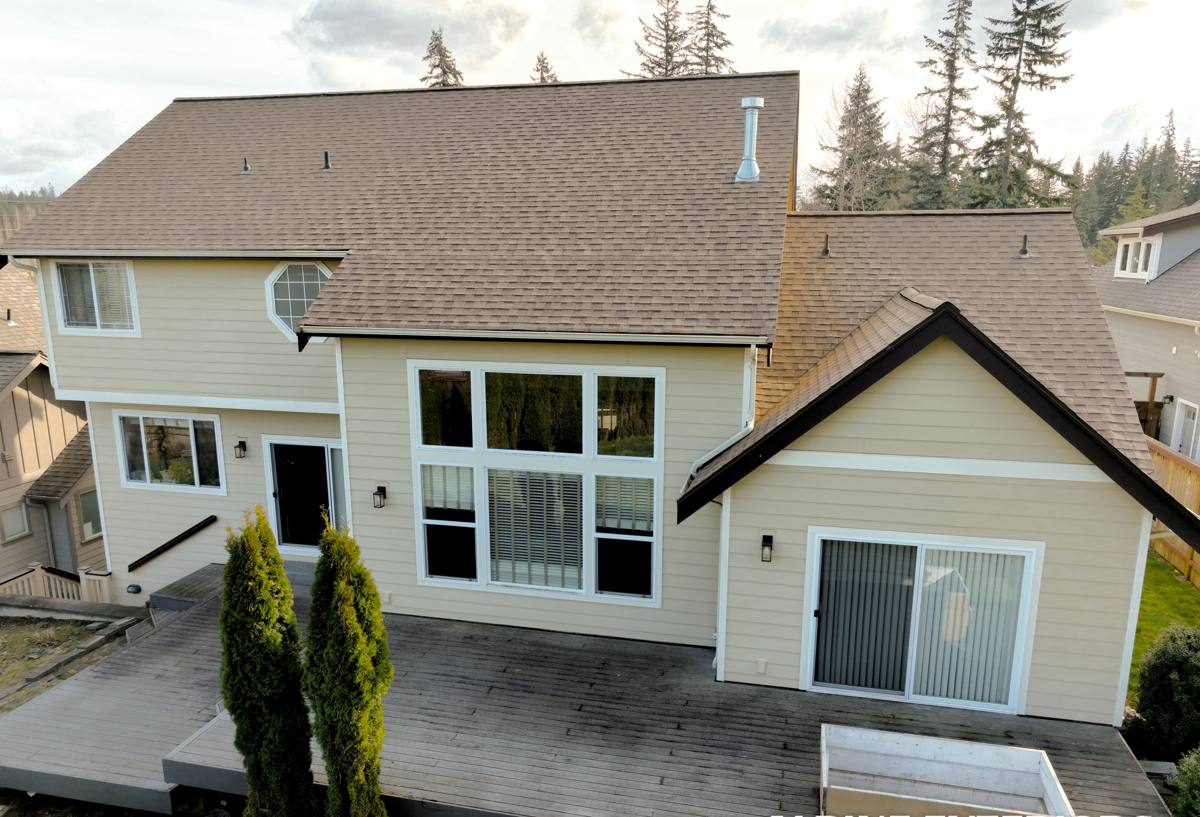
What Salt Air, Driving Rain, and Moss Season Actually Do to Siding
Three conditions do most of the damage to exterior siding in this part of Whatcom County, and Sandy Point gets a concentrated dose of all three:
- Salt air: Airborne salt accelerates corrosion on fasteners, flashing, and any metal trim components. Over years, corroding fasteners can loosen boards, stain the face of the siding, and create small gaps where moisture works its way in.
- Driving rain: Wind off the water doesn't just fall — it pushes rain sideways into vertical seams, batten joints, and anywhere caulking has started to fail. A siding system that isn't detailed to drain and dry properly will hold moisture behind the cladding, out of sight.
- A long moss season: The Pacific Northwest's extended damp months support moss and algae growth on any surface that stays wet and shaded, and board and batten's vertical battens create narrow shadow lines that can hold moisture longer than a flat wall. A siding material with weak moisture resistance will show green and black staining faster in this environment.
None of this means board and batten is a bad choice near the water — it means the product and the crew installing it need to be built for this exact climate, not a generic install.
What a Correct Board & Batten Installation Involves
Board and batten is a straightforward-looking siding profile, but it hides more installation detail than most homeowners expect. Getting it wrong doesn't usually show up in year one — it shows up in year five or six, as trapped moisture, staining, or failed caulk joints. A correct install includes:
Drainage Behind the Cladding
Vertical siding needs a way for any moisture that gets past the face material to drain and dry out rather than sit against the wall sheathing. That means a proper water-resistive barrier and, on exposed sites like Sandy Point, a drainage gap (rainscreen furring) rather than nailing battens directly to a flat wall assembly. This is one of the details that's invisible once the job is done — and one of the easiest to skip if a crew is rushing.
Corrosion-Resistant Fasteners
Standard fasteners degrade faster in salt air. Board and batten near the water should be hung with fasteners rated for coastal or marine exposure, driven at the manufacturer's specified spacing and depth — not just "close enough."
Sealed Joints and Cut Edges
Every cut edge on fiber cement siding needs to be primed or sealed before installation; a raw, unsealed edge is where moisture gets a foothold first. Batten joints, corners, and penetrations (light fixtures, vents, hose bibs) need correctly sequenced flashing and sealant, not caulk smeared over a gap after the fact.
Ground and Roofline Clearance
Siding installed too close to grade, decks, or roof-to-wall intersections stays wet longer and is more likely to wick moisture from below. Proper clearance is a simple detail that gets overlooked constantly on tight coastal lots.
The Only Board & Batten System We Install: James Hardie Fiber Cement
Ferndale Window Co. installs James Hardie fiber cement siding exclusively — we don't install vinyl, LP SmartSide, primed spruce, cedar, Cemplank, or Allura board and batten systems. For a shoreline community like Sandy Point, that standard isn't arbitrary. Fiber cement doesn't absorb and swell with moisture the way wood-based products can, it's non-combustible, and it holds a factory-applied finish far longer than field-painted materials — which matters when the air itself is working against paint adhesion.
For board and batten specifically, we typically use HardiePanel vertical siding paired with HardieTrim battens, finished with James Hardie's ColorPlus Technology baked-on finish. ColorPlus is engineered and warranted specifically to resist fading and hold up against the kind of UV and moisture cycling this coastline sees, which reduces how often the siding needs attention compared to a site-painted finish. Hardie's HZ5 product line is engineered for temperate, damp climates like ours — it's not a generic national product adapted after the fact.
We stand behind Hardie because it's proven over decades of real Pacific Northwest exposure, backed by a strong transferable warranty, and forgiving of the freeze-thaw and moisture cycling that's normal here — not because it's the cheapest option on the shelf.
Comparing Board & Batten Material Options
| Material | Salt Air / Moisture Resistance | Maintenance Over Time | Typical Lifespan |
|---|---|---|---|
| James Hardie fiber cement | Non-combustible, dimensionally stable, doesn't swell or rot from moisture exposure | Low — ColorPlus finish resists fading and staining | Multiple decades with correct installation |
| Cedar / primed spruce | Absorbs moisture, prone to swelling, splitting, and rot near salt air | High — regular painting/staining and moisture monitoring | Shorter, highly dependent on upkeep |
| LP SmartSide (engineered wood) | Wood-based substrate, more moisture-sensitive than fiber cement at cut edges and joints | Moderate — edge sealing and joint maintenance matter | Moderate, install-dependent |
| Vinyl board & batten | Doesn't rot, but can warp, fade, and become brittle with UV and temperature swings | Low upfront, but limited repair options if damaged | Variable, often shorter-lived in coastal wind exposure |
This table reflects general material behavior, not a specific brand comparison — the point is that the underlying material matters as much as the installation crew when a home sits this close to the water.
Our Process for a Sandy Point Board & Batten Project
Every board and batten job we do near the water follows the same sequence, adjusted for the specific house:
- On-site assessment: We look at the home's exposure — wind direction, existing moisture damage, current siding condition, and how close the structure sits to grade and water.
- Product and layout planning: We size panel and batten spacing to the home's proportions and confirm trim, corner, and flashing details before any material is ordered.
- Removal and inspection: Once old siding comes off, we check the sheathing and water-resistive barrier underneath for hidden moisture damage — common on older coastal homes — before closing anything back up.
- Rainscreen and barrier installation: We install the drainage plane and furring system appropriate for the wall assembly and exposure.
- Siding and batten installation: Panels and battens go up to manufacturer fastening specs, using corrosion-resistant fasteners throughout.
- Sealing and flashing detail: Every joint, corner, and penetration gets properly sequenced flashing and sealant — not an afterthought.
- Final walkthrough: We review the finished job with the homeowner and flag anything that needs attention before we call it done.
Why a Crew That Already Works Sandy Point Matters
Sandy Point isn't a generic Ferndale address — it's a shoreline community with its own wind exposure, access considerations, and moisture behavior that differ from homes further inland in Whatcom County. A crew that's worked this specific stretch of coastline already knows which fastener specs hold up, where moss tends to establish first on a vertical batten wall, and how to sequence a tear-off around tighter, wind-exposed lots without leaving a wall assembly open to a rain event overnight.
That local familiarity also shows up in smaller ways: knowing which sides of a house catch the worst of the wind-driven rain, understanding how salt spray settles differently depending on lot elevation, and having a realistic sense of how long materials stage safely on-site before wind becomes a problem. None of that comes from a spec sheet — it comes from doing the work in this specific place, repeatedly.
Maintenance Checklist for Board & Batten in This Climate
Correct installation does most of the heavy lifting, but a little seasonal attention keeps board and batten siding performing near the water:
- Rinse salt spray and airborne residue off the siding periodically, especially on wind-facing walls.
- Inspect caulking at batten joints, corners, and trim once a year for cracking or separation.
- Check shaded battens and north-facing walls for early moss or algae growth during the wetter months.
- Keep landscaping and debris clear of the base of the wall so siding can dry properly.
- Look for rust staining around fastener heads or trim, which can signal corrosion starting early.
- Have flashing at windows, doors, and roof intersections checked periodically — this is where leaks typically start.
If you're weighing board and batten siding for a home at Sandy Point, we're happy to walk the property, look at your current siding's condition, and talk through what a correct installation looks like for your specific exposure. Reach out for a free, no-pressure estimate using the form below.