 Ferndale Window
 Why Point Roberts Roofs Wear Differently
Point Roberts sits on its own peninsula, surrounded on three sides by the Salish Sea and cut off from the rest of Whatcom County by the international border. That geography is part of what makes it a great place to live, and it's also exactly why roofs out there age faster than roofs just a few miles inland. Salt-laden air moves off the water and settles on every exposed surface, including your roof. Combine that with driving rain off the Strait of Georgia and a shoulder season that stays damp and shaded for months at a stretch, and you get a climate that's genuinely tougher on roofing materials than most manufacturers assume when they write their warranty language.
We work throughout Whatcom County out of Ferndale, and while every roof in this region deals with Pacific Northwest weather, Point Roberts homes get a concentrated version of it. Salt air accelerates corrosion on fasteners, flashing, and any exposed metal. Wind-driven rain finds gaps that would stay dry in a calmer inland location. And a long, low-angle moss season keeps roof surfaces wet and organic matter growing longer than in sunnier spots. None of this means a roof out there is doomed — it means repairs have to account for conditions a generic patch job ignores.
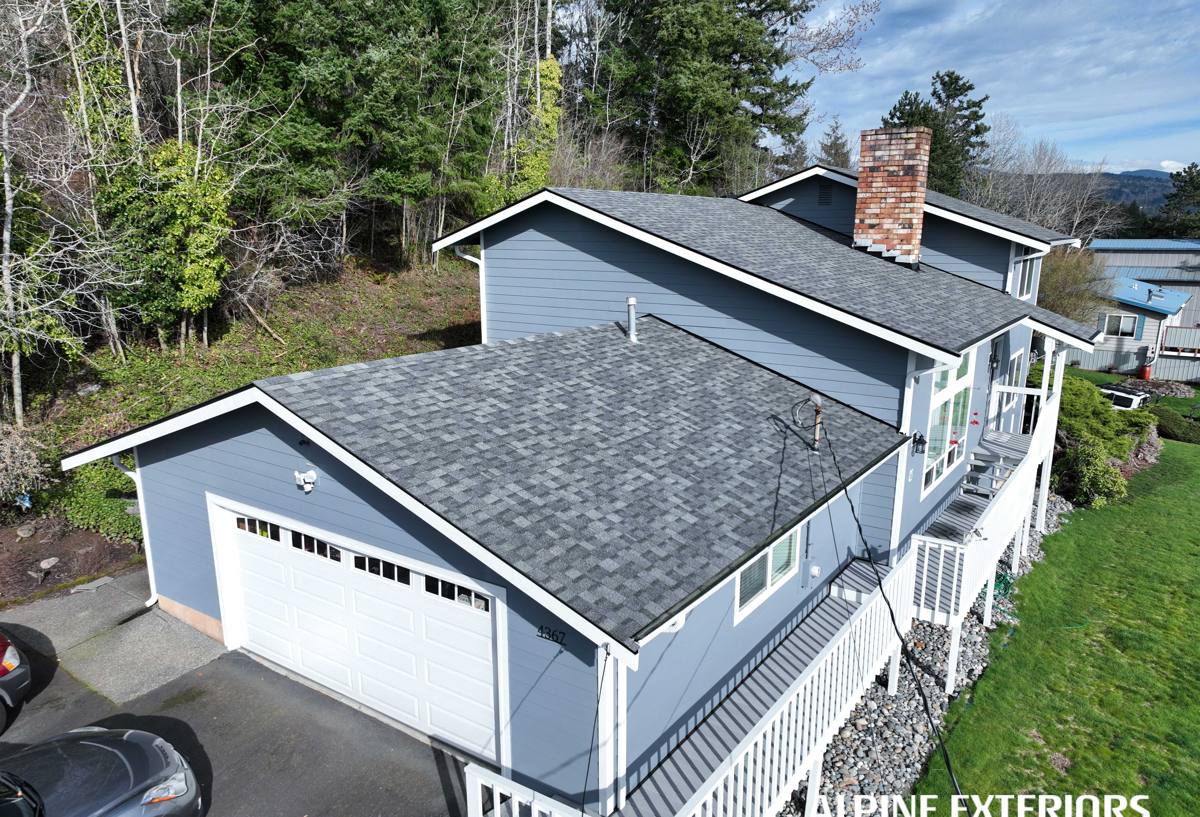
Signs Your Roof Needs Repair Now
Most roof failures don't start as leaks. They start small, and by the time water is visibly coming through a ceiling, the damage underneath has usually been building for a while. Homeowners who catch these signs early save money, because a repair now is almost always cheaper than a repair after the plywood deck or insulation gets wet.
- Granules collecting in gutters or at the base of downspouts
- Moss or dark streaking concentrated on north-facing or shaded roof sections
- Curling, cracking, or lifted shingle edges, especially on slopes exposed to prevailing wind
- Rust staining or visible corrosion around flashing, vents, or metal valleys
- Soft spots or slight sagging when walking the attic or crawling the roof deck
- Daylight visible through the roof deck from inside the attic
- Water stains on interior ceilings, especially after a windy rainstorm rather than a calm one
- Loose or missing fasteners around chimneys, skylights, or vent boots
Wind-driven rain is worth calling out on its own. A leak that only shows up during a storm with strong wind out of the south or southwest, but never during a straight-down rain, almost always points to a flashing or penetration problem rather than worn-out field shingles. That distinction matters for diagnosis and for cost — it's usually a smaller fix than homeowners expect.
The Most Common Repairs We Make Out That Way
Moss and Organic Growth Damage
Moss doesn't just look bad. It holds moisture directly against the roofing material, works its way under shingle edges as it grows, and gradually lifts material away from the deck. On shaded roofs — anything under tree cover or on a north-facing slope that doesn't get much sun — moss can establish itself within a season or two if it isn't controlled. Repair in these cases usually means removing the growth, assessing the shingles or roofing underneath for granule loss and lift, and replacing whatever section has actually been compromised rather than the whole roof.
Flashing and Penetration Failures
Flashing around chimneys, skylights, plumbing vents, and roof-to-wall transitions is the single most common failure point on any roof, and salt air makes it worse by accelerating corrosion on the metal itself and on the fasteners holding it down. A flashing repair done right means removing the old material, checking the deck underneath for rot, and installing new flashing with proper overlap and sealant — not just caulking over the old piece, which is a short-term fix that fails again within a year or two.
Salt-Air Corrosion on Metal Components
Metal valleys, drip edge, gutters, and exposed fasteners corrode faster this close to the water. Once corrosion perforates a valley or drip edge, water gets behind the roofing material even if the shingles above look fine. We check these components specifically on every Point Roberts repair call, because they fail quietly and are easy to miss on a surface-level inspection.
Wind-Driven Rain Intrusion
Storms coming off open water push rain sideways and upward under laps and edges that would shed a normal vertical rain without issue. This shows up most often at rake edges, low-slope transitions, and anywhere the original installation cut a corner on underlayment or edge sealing. Fixing it correctly sometimes means re-detailing an edge, not just patching the surface shingles.
What a Correct Repair Actually Involves
A roof repair is only as good as the diagnosis behind it. Anyone can seal a visible crack or throw new shingles over a soft spot, but if the underlying cause — a failed flashing, a rotted deck section, an underlayment gap — isn't addressed, the same leak comes back within a season or two, usually in a slightly different spot. Our approach is to trace the water back to its actual entry point, which is frequently several feet away from where the stain shows up inside the house, since water travels along rafters and sheathing before it drips.
A correct repair typically includes:
- Identifying the true point of water entry, not just the visible symptom
- Removing enough surrounding material to inspect the deck and underlayment condition
- Replacing any rotted or delaminated decking before new roofing goes back on
- Matching flashing, fasteners, and underlayment to materials suited for a marine, salt-exposed environment
- Blending repaired sections with surrounding roofing as closely as material age and availability allow
- Checking adjacent areas — vents, valleys, edges — that share the same exposure and installation age
Our Process, Start to Finish
We keep the process straightforward because homeowners dealing with a leak are usually already stressed about it.
- Inspection. We walk the roof and the attic if accessible, looking for the actual source of the problem rather than just the reported symptom.
- Honest assessment. We tell you what we found, what's causing it, and whether it's a targeted repair or something closer to a full re-roof — in plain language, with photos of what we saw.
- Written scope and price range. Before any work starts, you know what's being done and roughly what it will cost.
- The repair itself. We remove the failed section, address the deck if needed, and install materials matched to the exposure the roof actually faces.
- Cleanup and follow-up. We clear debris, check the work in the next rain event when possible, and let you know what to watch for going forward.
Repair or Replace? How We Help You Decide
Not every call ends in a repair, and we'd rather tell you that up front than sell a patch job on a roof that's genuinely at the end of its service life. The table below covers the general factors we weigh — every roof is different, so treat this as a starting point for the conversation, not a quote.
| Factor | Leans toward repair | Leans toward replacement |
|---|---|---|
| Age of roofing material | Well within expected service life | At or past typical lifespan for the material |
| Extent of damage | Localized to one section or penetration | Spread across multiple slopes or the whole field |
| Deck condition | Solid, dry sheathing under the damaged area | Widespread rot or soft decking |
| Granule loss / wear | Isolated to shaded or moss-affected areas | Even, roof-wide granule loss |
| Cost of repair vs. remaining life | Repair cost is a small fraction of replacement cost | Repair cost approaches what re-roofing would run |
A simple flashing or spot repair typically runs a few hundred dollars. More involved work — deck replacement, multiple penetrations, or storm damage across a larger area — can run into the low thousands. We'll never recommend a repair timeline just to delay a conversation about replacement; if the numbers point toward replacement being the better long-term value, we'll say so.
Why Hiring a Crew That Already Works Point Roberts Matters
Point Roberts is a U.S. exclave — the only practical land route in and out crosses the Canadian border. That's not a small detail for roofing work. Scheduling a repair crew, getting materials delivered, and coordinating timing all take more planning than a job a few minutes from the shop. Crews unfamiliar with the area sometimes underestimate this and either show up without the right materials on hand or need to make a return trip mid-job, which stretches out a repair that should take a day into something longer.
Working in Whatcom County and specifically out this way regularly means we plan material orders and border logistics ahead of time, so a scheduled repair actually happens on the day it's scheduled. It also means we've seen how this specific stretch of coastline treats roofing over time — which details fail first, which materials hold up, and which shortcuts from an original installation tend to cause problems five or ten years later.
What Local Experience Actually Changes
- Materials and fasteners ordered in advance, sized for the job, sourced with the marine exposure in mind
- Realistic scheduling that accounts for border crossing and ferry-adjacent access rather than assuming mainland drive times
- Familiarity with how salt air and prevailing wind direction affect which roof slopes fail first
- A track record of return visits if something needs a second look, rather than a one-time out-of-town crew
Materials and Long-Term Care After a Repair
Once a repair is done, a little ongoing attention keeps it from becoming a repeat call. Salt air and moss don't stop working just because a patch has been made.
| Maintenance step | Why it matters here | Rough frequency |
|---|---|---|
| Moss removal / treatment | Prevents regrowth from lifting repaired or surrounding shingles | Annually, before wet season |
| Gutter and downspout clearing | Backed-up water sits against roof edges and accelerates rot | Twice a year |
| Metal component check (flashing, valleys, vents) | Salt corrosion progresses faster on exposed metal than on shingles | Annually or after major storms |
| Post-storm visual check | Wind-driven rain events are when small failures first show themselves | After significant wind/rain events |
We're upfront that no roofing product is maintenance-free in this environment. Some materials handle salt exposure and moss better than others, and the right choice depends on your roof's shading, slope, and how long you plan to be in the home — that's a conversation worth having in person rather than guessing over the phone.
Getting Ahead of the Next Moss Season
The best time to deal with a developing roof problem in this area is before the wet season sets in, not after the first bad storm of the fall. Moss that's controlled in late summer doesn't get the months of damp, shaded growth it needs to really take hold. Flashing checked and re-sealed before the rains arrive doesn't have to prove itself in a storm to tell you it's failing. If your roof is showing any of the early signs above, addressing it now is almost always less work and less cost than waiting for a leak to force the issue mid-winter.
If you're noticing moss buildup, a stain that only shows up in windy storms, or you just want a second opinion on a roof that's getting older, we're happy to take a look. Reach out for a free, no-pressure estimate using the form below, and we'll give you an honest read on what your roof actually needs.