 Ferndale Window
 Point Roberts Is Its Own Kind of Roofing Job
Point Roberts sits on a small peninsula at the far southern tip of a larger landmass that's otherwise part of Canada, connected to the rest of Whatcom County only by water or by driving through the border. That geography matters for roofing more than most homeowners realize. Materials, crews, and equipment all have to be planned and staged ahead of time — you can't just run back to a supply yard mid-afternoon if something's short. A new roof out here isn't a smaller version of a Ferndale or Bellingham job. It's a job that has to be planned tighter, sourced smarter, and installed by people who've already worked out the logistics.
On top of the location, the peninsula's exposure to open water means homes here take a harder hit from wind-driven rain and salt-laden air than most inland properties in the county. A roof that's correct on paper but not built for that specific exposure will show its age early — curling shingles, rusted fasteners, and moss colonies that come back within a year or two of being cleaned off.
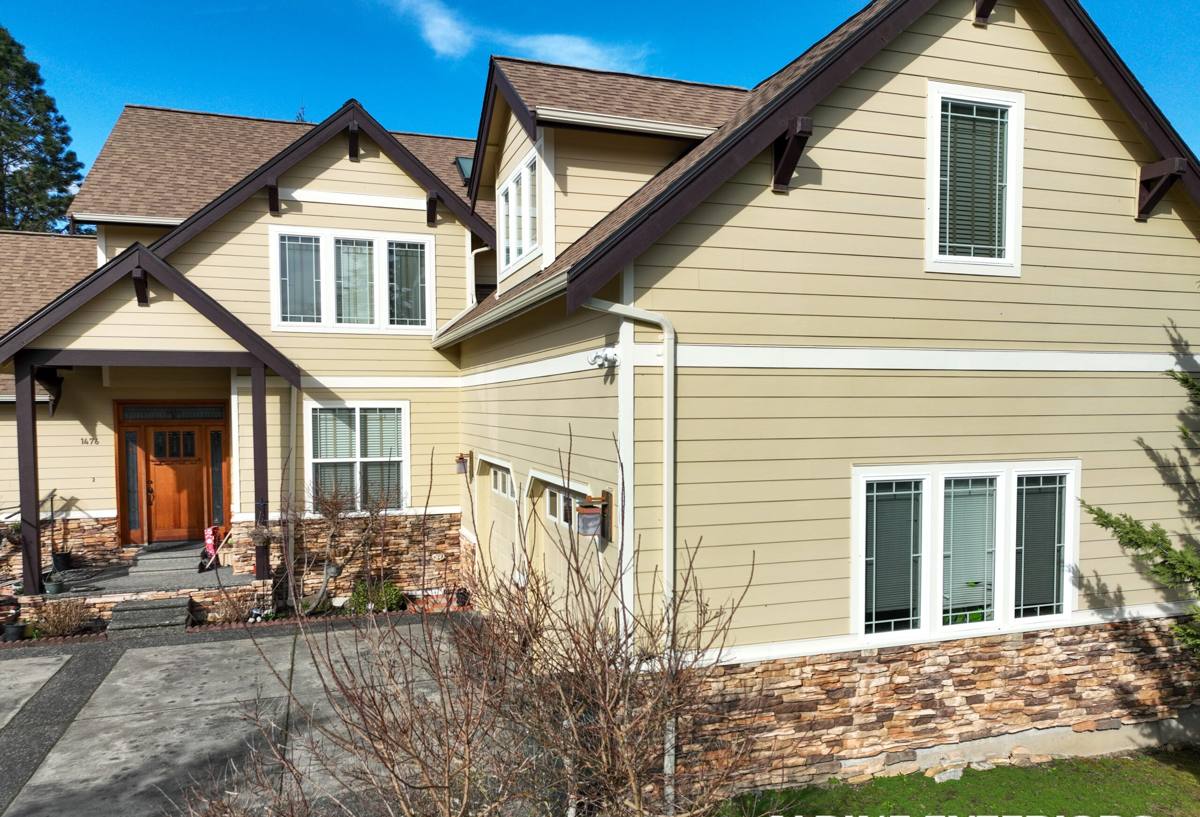
What the Local Climate Does to a Roof
Three things drive roofing decisions in Point Roberts, and they compound each other:
Salt Air
Being surrounded on three sides by saltwater means airborne salt settles on every exterior surface, including the roof. Salt accelerates corrosion on exposed metal — fasteners, flashing, vent stacks, and any exposed hardware. It also slowly degrades sealants faster than in a purely inland climate. Roofing components need to be chosen and detailed with that in mind, not treated as an afterthought.
Driving Rain
Storms coming off the water don't just drop rain straight down — wind pushes it sideways, up under shingle edges, and into any gap in flashing or underlayment. A roof design that only accounts for vertical rainfall will eventually leak here, usually at the vulnerable points: valleys, chimney flashing, and roof-to-wall transitions.
Moss and Moisture
Northwest Washington's mild, wet winters and shaded, tree-lined lots are ideal conditions for moss and algae growth on roofing. Left unchecked, moss holds moisture against the roof surface, lifts shingle edges, and shortens the life of the roofing material well before it would otherwise wear out. Point Roberts' tree cover and marine humidity make this a near-constant maintenance issue rather than an occasional one.
Signs Your Roof Needs Replacement, Not Just Repair
Not every problem calls for a full tear-off. But there's a point where patching individual leaks costs more over time than replacing the roof outright. Watch for:
- Granule loss showing bare asphalt on multiple slopes, not just one weathered section
- Shingles that are cupping, curling, or cracking across large areas of the roof
- Moss or algae that returns within months of cleaning, especially on north-facing slopes
- Soft spots or visible sagging when walking the roof or viewing the deck from the attic
- Repeated leaks in different locations after the roof, rather than one recurring leak
- Roofing material past its expected service life, especially if it predates a major storm cycle
If you're seeing two or more of these at once, a licensed roofer should assess whether repair is still cost-effective or whether you're better off putting that money toward a new system with a full warranty.
Choosing the Right Roofing System for This Peninsula
There's no single "correct" material for every home — it depends on your budget, roof pitch, tree cover, and how long you want to go between maintenance visits. Here's how the common options stack up against Point Roberts' specific conditions:
| Material | Salt Air Behavior | Moss Resistance | Typical Lifespan |
|---|---|---|---|
| Standard asphalt composition shingle | Fasteners and flashing need corrosion-resistant hardware | Moderate — benefits from algae-resistant granules and periodic cleaning | 20–30 years |
| Impact/algae-resistant composition shingle | Same fastener considerations as standard shingle | Better — copper or zinc granules discourage regrowth | 25–30 years |
| Standing seam metal | Requires marine-grade coatings and stainless or coated fasteners near the water | Strong — smooth surface sheds moss more easily | 40–50+ years |
| Cedar shake | Higher maintenance burden in salt air and moisture; needs regular treatment | Weak without diligent upkeep — moss thrives in the wood grain | 20–30 years with upkeep |
For most Point Roberts homes, we steer clients toward algae-resistant composition shingles or standing seam metal. Both hold up well against the moisture and salt exposure here without demanding constant intervention, and both come with manufacturer warranties that stay valid when installed to spec — which matters more on an exposed peninsula than almost anywhere else in the county.
What a Correct New Roof Installation Actually Involves
A new roof is more than laying shingles over what's already there. Done right, it's a sequence where each step protects the one after it:
Tear-Off and Deck Inspection
We remove the old roofing down to the deck rather than layering over it. That lets us actually see the plywood or plank sheathing underneath — soft, delaminated, or water-stained decking gets replaced before anything new goes down. Skipping this step is the single most common reason a "new" roof fails early.
Ice and Water Protection at Vulnerable Points
Valleys, eaves, chimney bases, and skylight perimeters get self-adhering waterproof underlayment before the rest of the roof is covered. These are the spots where wind-driven rain finds its way in first, and they're exactly where a marine climate like this one punishes any shortcuts.
Underlayment Across the Full Field
A synthetic underlayment goes down over the remaining deck as a secondary water barrier. It won't stop water on its own, but it buys time and protection if the primary roofing surface is ever compromised by wind or debris.
Flashing Details
Roof-to-wall transitions, chimneys, vents, and any roof penetration get new flashing, not a bead of caulk over the old metal. Flashing is where most leaks originate on an otherwise sound roof, and it's the detail most likely to get rushed on a lower-quality job.
Corrosion-Resistant Fasteners and Hardware
Given the salt air exposure here, we use fasteners and exposed metal components rated for coastal or marine conditions rather than standard hardware. It costs a little more up front and saves a callback in a few years when standard fasteners start rusting through.
Ventilation
Proper intake and exhaust ventilation keeps the attic dry and temperature-regulated, which matters for both energy efficiency and preventing condensation-driven rot in the deck from underneath — a problem that's easy to miss because it doesn't show up as an obvious leak.
Our Process, Start to Finish
- Assessment: We walk the roof, check the attic from the inside, and document the condition of the deck, flashing, and ventilation before quoting anything.
- Written estimate: You get a clear scope of work and price — what's being torn off, what's being replaced, what materials are specified, and why.
- Material staging: Because of the peninsula's access, we plan delivery and equipment logistics before the crew ever starts, so the job isn't waiting on a supply run mid-week.
- Tear-off and deck repair: Old roofing comes off, damaged decking is replaced, and the deck is inspected before anything else proceeds.
- Installation: Underlayment, flashing, and roofing material go down in sequence, with attention to the wind and moisture details specific to this location.
- Final walkthrough: We review the finished roof with you, including ventilation and any warranty paperwork, before calling the job complete.
Why a Crew That Already Works Point Roberts Matters
Every roofing crew that comes to Point Roberts has to solve the same logistics problem: getting people, equipment, and materials onto a peninsula that's most easily reached by crossing the border. A crew that's done it before has that dialed in — they know how to schedule around it, stage supplies so the job doesn't stall, and avoid the delays that come from figuring it out on the fly. That translates directly into fewer surprises for you, a tighter timeline, and a crew that isn't learning the local conditions on your dime.
There's also a practical trust factor. A roofer who already has a working relationship with Point Roberts homeowners has a reputation to protect in a small community — that's a stronger accountability check than a name you found from outside the area with no local track record here.
What Drives the Cost of a New Roof Here
| Factor | Why It Matters |
|---|---|
| Roof size and pitch | More square footage and steeper slopes mean more material and labor time |
| Material choice | Standing seam metal costs more up front than composition shingle but needs less long-term maintenance |
| Deck condition | Rotted or soft sheathing found during tear-off adds repair cost that can't always be predicted before opening the roof up |
| Access and logistics | Point Roberts' location affects delivery scheduling and crew staging compared to mainland jobs |
| Number of penetrations | Chimneys, skylights, and vents each need individual flashing detail, adding labor |
| Tear-off layers | Removing multiple existing layers of roofing takes more time than a single-layer tear-off |
We'd rather walk your roof and give you real numbers than throw out a broad range that doesn't mean much until we've seen the deck. What we can tell you honestly: the cheapest bid is rarely the cheapest outcome once you factor in a roof that has to be redone in half the expected lifespan because a step got skipped.
Protecting Your New Roof Once It's Installed
A correctly installed roof still benefits from basic upkeep, especially in a climate this wet and shaded. A short annual checklist goes a long way:
- Clear debris and needles from valleys and gutters before fall storms arrive
- Have moss growth treated or removed before it spreads across a full slope
- Check attic ventilation isn't blocked by insulation or stored items
- Look at flashing around chimneys and vents after any major windstorm
- Trim back overhanging branches that keep sections of the roof shaded and damp
- Schedule a professional inspection every few years rather than waiting for a visible leak
None of this is complicated, but skipping it is how a well-installed roof ends up needing early attention anyway. Marine climates don't forgive neglect the way drier regions sometimes do.
If your Point Roberts roof is showing its age, or you'd rather plan ahead than wait for a leak, we're glad to come take a look. The estimate is free, there's no pressure to commit on the spot, and you'll get a straight answer about whether repair or replacement makes sense for your home — just fill out the form below to get started.