 Ferndale Window
 Window Replacement Built for the Nooksack Area's Weather, Not Just Any Weather
Nooksack sits inland from Bellingham Bay along the Nooksack River corridor, but "inland" in Whatcom County doesn't mean sheltered. Westerly winds still carry salt-laden marine air up the valley, driving rain comes through sideways more often than straight down, and the low, shaded ground near the river holds moisture long after the rest of the county has dried out. Windows here don't fail the way they do in drier climates. They fail at the edges — at seals, sills, and flashing details that were never built to handle this much sustained moisture exposure.
A window replacement job that would hold up fine in a dry inland climate can start showing problems within a few years out here. That's not a knock on any particular product; it's just what happens when installation details and material choices aren't matched to the actual conditions a house sits in. This page is about what that match looks like for homes in and around Nooksack specifically.
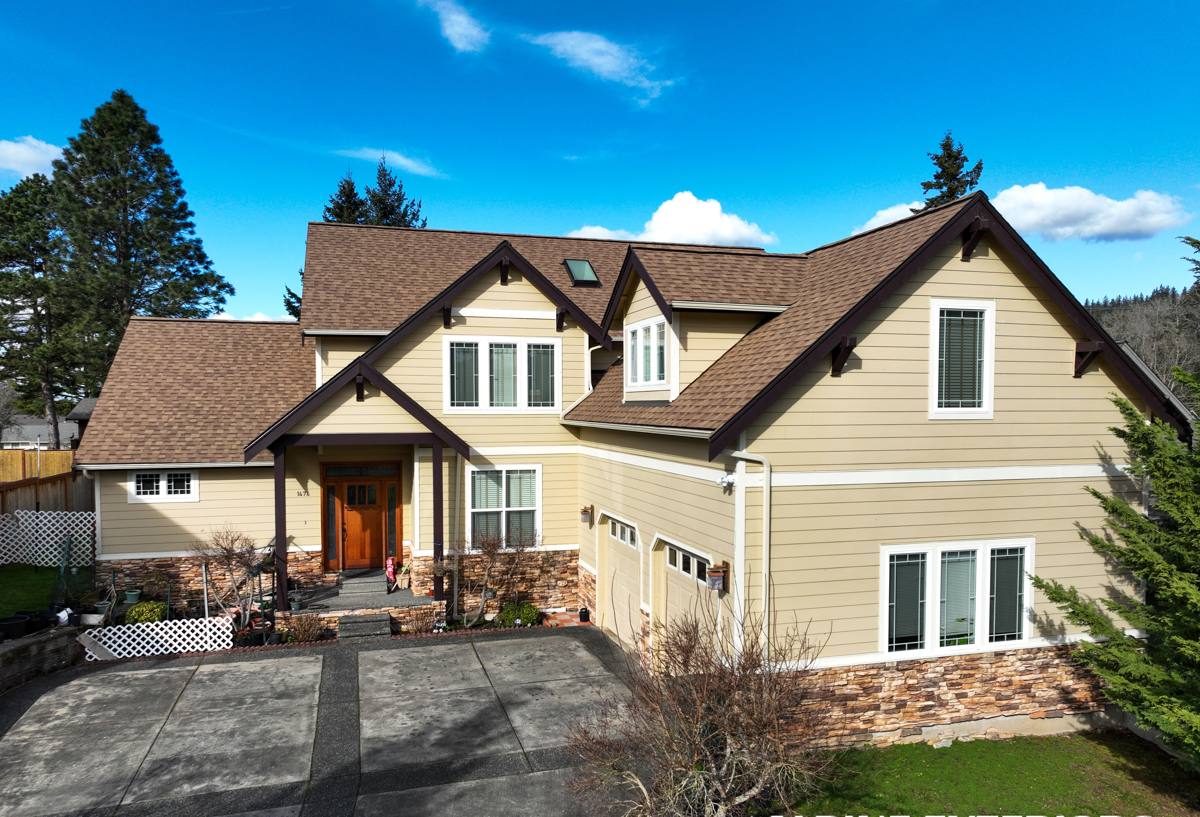
What This Climate Actually Does to Windows
Salt Air and Metal Fatigue
Salt-carrying air doesn't need to come from a beachfront to cause corrosion — it travels well inland on prevailing winds, especially through a river valley that funnels weather up from the Sound. Over years, that air attacks unprotected fasteners, aluminum components, and lower-grade hardware. Locks stiffen, cranks bind, and weep holes corrode shut, which then traps water instead of draining it. The fix isn't exotic; it's specifying corrosion-resistant hardware and fasteners from the start instead of discovering the problem a few winters in.
Driving Rain and Water Intrusion
Wind-driven rain doesn't just hit a window head-on — it gets pushed sideways and upward into gaps that would stay dry in calmer weather. Most window failures we see aren't the glass unit or the sash; they're water finding a path behind the frame because flashing was skipped, reversed, or improperly lapped with the house wrap. Once water gets behind a window, it's working on sheathing and framing you can't see, often for years before it shows up as a soft spot, a stain, or a musty smell inside.
Moss, Shade, and Trapped Moisture
Low ground near the river, mature tree cover, and long stretches of overcast weather add up to a moss season that runs a good part of the year in this area. Moss on a roof gets attention because it's visible. Moss and organic buildup around window sills and exterior trim gets ignored because it's easy to miss — but it holds moisture against wood and paint far longer than open, sun-exposed walls do, which accelerates rot at exactly the spots where a window depends on a tight seal.
What a Correct Job Involves
Flashing and Weather Barrier Integration
The window unit itself is often the easy part. What actually determines whether a replacement lasts is whether the flashing, sill pan, and house wrap are integrated correctly — water managed so it sheds outward and down, never trapped behind the frame. This means proper sill pan flashing under every opening, head flashing that laps over the water-resistive barrier above it (never tucked behind it), and side flashing that ties the whole assembly together. Skipping or shortcutting this is the single biggest cause of early failure we see in replacement work in this region.
Frame Material Choices for This Climate
Not every frame material handles sustained moisture and salt exposure the same way. Fiberglass and quality vinyl frames tend to do well here because they don't corrode and have low expansion/contraction across our temperature swings. Wood frames can look excellent but need a genuine maintenance commitment — repainting, caulking, and inspection on a schedule — or they become the weak point in an otherwise solid installation. Aluminum-clad options work but only when the cladding and flashing details are done right, since any gap in the cladding exposes bare metal to the same corrosion pressure described above.
Sealing That's Actually Rated for the Exposure
Caulk and sealant grade matters more here than in drier climates. A sealant that's fine for a covered porch opening may not hold up on a west-facing wall catching full driving rain. We match sealant type and application to each opening's actual exposure rather than using one product everywhere.
Signs a Nooksack-Area Home May Need Window Replacement
- Visible gaps, soft or spongy trim, or paint that bubbles and peels around the frame
- Condensation building up between glass panes, which usually means a failed seal on the insulated glass unit
- Windows that are hard to open, close, or lock — often a sign the frame has shifted or swollen
- A noticeable draft or cold spot near the window even when it's fully closed
- Moss, algae, or dark staining collecting on the sill or lower frame
- Rising energy bills without any other obvious cause
- Visible daylight or a musty smell near the frame after heavy rain
Any one of these on its own might just need a repair. Several showing up together, especially on the same wall, usually points to a water management problem that repair alone won't fix.
Our Process for Nooksack Window Replacement Projects
Assessment and Measurement
We start by looking at each opening individually rather than treating the whole house as one job. Exposure varies wall to wall — a window under an eave on the leeward side sees very different weather than one facing open ground toward the prevailing wind. We check the condition of the existing sheathing and framing around each opening while we're there, since that's the only real way to know whether hidden water damage exists before the new window goes in.
Installation Day
Old windows come out carefully so we can inspect the rough opening underneath. Any soft or damaged framing gets addressed before anything new goes in — installing a new window over compromised framing just hides the problem for a while. Sill pan flashing goes in first, then the window is set, leveled, and shimmed, followed by head and side flashing integrated with the house wrap in the correct shingle-lap order so water sheds outward at every layer.
Final Sealing, Trim, and Cleanup
Interior and exterior sealing is done with products matched to each opening's exposure, not a one-size-fits-all approach. Trim is reinstalled or replaced as needed, and we walk the job site afterward — check that every unit operates smoothly, locks fully, and seals tight, and clean up debris before we call it done.
Comparing Frame Materials for This Climate
| Material | Moisture & Salt Resistance | Maintenance | Typical Fit |
|---|---|---|---|
| Vinyl | Good — won't corrode or rot | Low | Most homes, strong value |
| Fiberglass | Excellent — very stable in wet, variable weather | Low | Homes wanting longevity with less upkeep |
| Wood | Fair — needs protection to perform well | High — regular painting/sealing | Homes prioritizing a traditional look |
| Aluminum-clad wood | Good, if cladding and flashing are done right | Moderate | Blending wood interior with lower-maintenance exterior |
What Drives Cost on a Nooksack Window Job
We won't quote a number without seeing the openings, but a few factors consistently move the price up or down on jobs in this area:
| Factor | Why It Matters |
|---|---|
| Number and size of openings | More glass and larger units mean more material and labor |
| Hidden rot or framing damage | Found once old windows come out; repair adds time before the new unit goes in |
| Frame material chosen | Vinyl, fiberglass, and wood carry different material costs |
| Exposure of the wall | Wind- and rain-exposed walls may need upgraded flashing and sealant details |
| Access and site conditions | Second-story or hard-to-reach openings take more time and equipment |
Broadly, straightforward single-window replacements on easily accessible walls run less than full-house replacements with hidden damage to repair — but the honest answer is always specific to the house, which is why we look before we quote.
Why a Crew That Already Works This Area Matters
Anyone can install a window on a calm, dry day. The difference shows up years later, when the flashing detail either did its job during a wind-driven storm or didn't. A crew that regularly works Ferndale and the surrounding Whatcom County communities, including Nooksack, has already seen how houses out here actually take on water — where moss builds up, which wall orientations catch the worst of the driving rain, and which shortcuts show up as callbacks two or three winters later. That's not something you get from a general installation checklist; it's from doing the work in this specific climate, repeatedly, and paying attention to what holds up.
Permits, Codes, and Energy Performance
Window replacement in Whatcom County generally needs to meet current energy code requirements for the glass and frame assembly, and depending on the scope of work, a permit may be required. We handle that conversation as part of the process rather than leaving it for the homeowner to sort out — better to confirm what's needed before work starts than to run into it partway through. Energy performance also matters practically here: a properly sealed, correctly rated window cuts down on drafts and helps even out temperature swings in a climate that spends a lot of the year damp and cool.
Caring for Your Windows After Installation
A correct installation buys you a long service life, but a little seasonal attention extends it further. Clear moss and debris away from sills and lower trim before it has a chance to sit against the frame. Check exterior caulking once a year, since even good sealant eventually needs a touch-up in a climate this wet. Wipe down hardware occasionally to keep corrosion-resistant fittings working smoothly, and keep an eye out for the early warning signs listed above — catching a small issue early is a lot cheaper than dealing with hidden rot later.
If you're weighing window replacement for a home in the Nooksack area, we're glad to come take a look and give you a straight, no-pressure estimate — what we'd actually recommend for your walls and your budget, not a generic package. Use the form below to get started.