 Ferndale Window
 Siding Installation in Nooksack: Built for Whatcom County's Weather, Not Just the Curb
Nooksack sits in one of the wettest, dampest corners of Washington State. Homes here deal with driving rain that comes in sideways off winter storms, long stretches of overcast humidity, and a moss season that seems to run most of the year on anything north-facing or shaded by trees. Add in the marine air that moves through Whatcom County from the coast, and you have a climate that is genuinely hard on exterior building materials. Siding installation in this area is not a cosmetic project — it is a water-management project that happens to also make the house look good.
We install siding for homeowners throughout the Ferndale and Nooksack area, and the pattern is consistent: the siding that fails early almost always failed because of how it was installed, not just what it was made of. Correct flashing, correct fastening, correct clearances, and the right substrate behind the panels matter more than the brand name on the box. This page walks through what a Nooksack home actually needs from its siding, what a properly done installation involves, and why our crews only install James Hardie fiber cement rather than the alternatives.
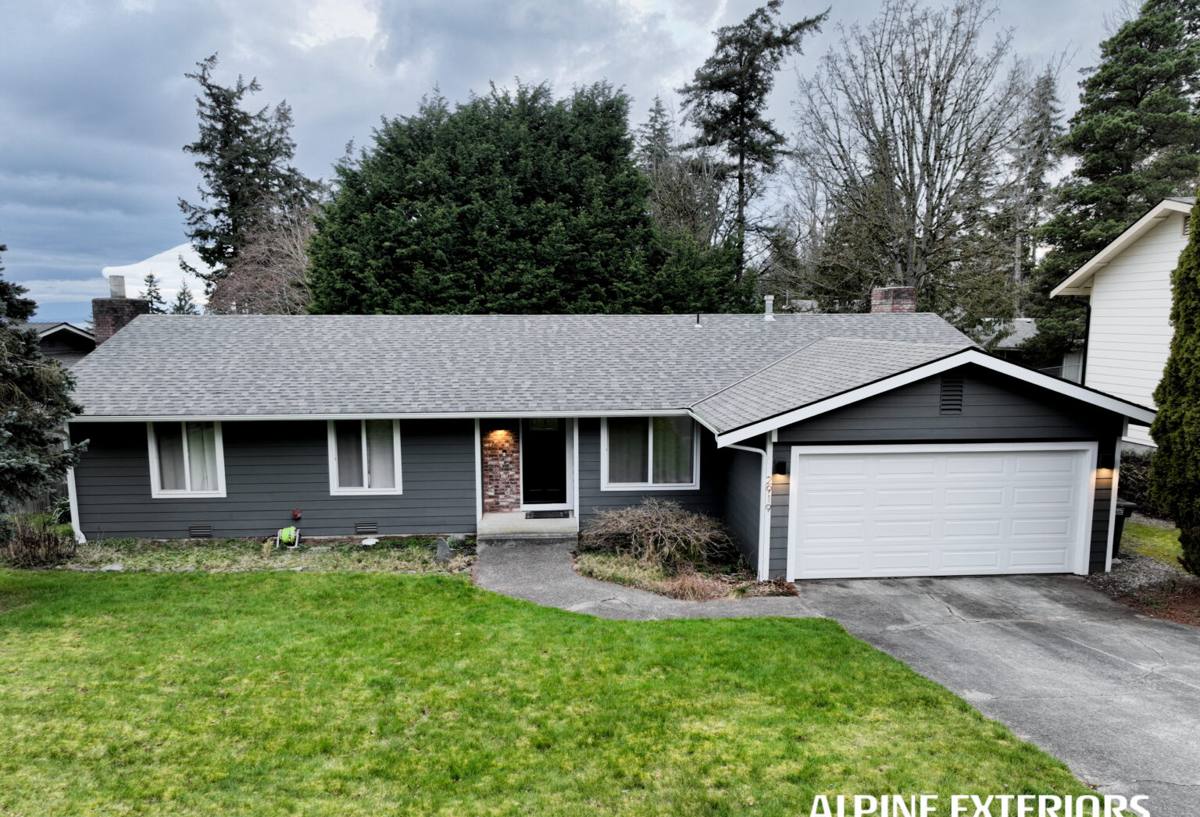
What Whatcom County's Climate Actually Does to Siding
It helps to be specific about what "harsh climate" means in practical terms for a home in Nooksack, rather than treating it as a vague warning.
Constant moisture exposure
Rain in this part of Washington isn't just frequent — it's prolonged. Siding can stay damp for days at a time during fall and winter, and wood-based products (whether raw lumber, engineered wood, or primed spruce) absorb that moisture at seams, cut ends, and fastener holes. Once moisture gets behind or into a panel, drying time is slow because the air itself stays humid for weeks.
Moss and biological growth
Moss doesn't just grow on roofs. On shaded siding, especially north- and east-facing walls near trees, moss and algae take hold wherever a surface stays damp and organic debris collects. Over years, that growth holds moisture directly against the siding surface, which accelerates whatever underlying weakness the material has.
Wind-driven rain
Storms coming off the water don't just drop rain — they push it horizontally into wall assemblies, seams, and trim intersections. This is where installation quality matters more than material choice. A wall can have excellent siding and still leak if the flashing details around windows, doors, and butt joints weren't done correctly.
Salt and marine air
The marine air that reaches inland toward Nooksack carries fine airborne salts and moisture that slowly attack fasteners, caulking, and unprotected wood fiber. It's a slower process than direct coastal exposure, but over a couple of decades it adds up, especially on the weather-facing sides of a house.
What Correct Siding Installation Involves
A siding job is really three systems working together: the water barrier behind the siding, the siding itself, and the flashing details that tie them together at every penetration. Skipping or rushing any one of these is how "new siding" ends up with rot underneath it in under ten years.
Weather-resistive barrier and drainage plane
Before a single piece of siding goes up, the wall needs a continuous weather-resistive barrier with a drainage gap behind the siding. In a climate like Whatcom County's, that drainage plane is what lets incidental moisture escape instead of sitting against the sheathing.
Flashing at every penetration
Windows, doors, hose bibs, light fixtures, and deck ledgers all need proper flashing integrated with the water barrier — installed in the correct shingle-lap order so water is always directed outward and down, never trapped.
Fastening to manufacturer spec
Fiber cement siding has specific nailing patterns, fastener types, and edge-distance requirements. Over-driven or under-driven fasteners, wrong nail types, or fastening into the wrong substrate are among the most common causes of early siding failure we see when we inspect other contractors' work.
Clearances and gaps
Siding needs a gap above roof lines, decks, and grade, plus proper caulking (or intentional gapping, depending on the detail) at trim and butt joints. Tight-to-grade or tight-to-roof installations are a near-guarantee of moisture problems within a few years in this climate.
Why We Only Install James Hardie Fiber Cement
We made a deliberate decision to install one siding system — James Hardie fiber cement — rather than offering a menu of vinyl, engineered wood, or other fiber cement brands. That's not a marketing gimmick; it's a response to what actually holds up in Whatcom County conditions.
Fiber cement is dimensionally stable and non-combustible, and it doesn't absorb and swell the way wood-based or engineered-wood products can when they stay wet for extended periods. James Hardie's HZ5 product line in particular is engineered for the kind of freeze-thaw and moisture cycling found in the Pacific Northwest. Combined with a factory-applied ColorPlus finish, it resists the fading and moss-friendly surface breakdown that raw or field-painted products are more prone to over time.
We're not going to tell you every other siding product is junk — vinyl is inexpensive and low-maintenance in the right application, and engineered wood has genuine fans. But we build our reputation on doing one thing well rather than installing whatever a homeowner requests, and for a climate like this one, fiber cement done correctly is what we're willing to warranty and stand behind.
Siding Options Compared for a Nooksack Climate
| Factor | James Hardie Fiber Cement | Vinyl | Untreated/Primed Wood |
|---|---|---|---|
| Moisture resistance | Strong — engineered for wet climates (HZ5) | Doesn't absorb water, but seams can trap moisture | Absorbs moisture, prone to swelling and rot |
| Moss/algae resistance | Factory finish resists surface breakdown | Moss grows on surface film, harder to fully clean | Porous surface holds moisture and organic growth |
| Wind-driven rain performance | Rigid panels, tight-lap installation | Can flex and gap in high wind | Depends heavily on paint maintenance |
| Fire resistance | Non-combustible | Can melt or deform under heat | Combustible |
| Maintenance over 15+ years | Low — occasional wash and caulk check | Low, but brittleness increases with age | Repainting and moisture inspection ongoing |
Signs a Nooksack Home Needs New Siding
Some warning signs are visible from the ground; others require a closer look, especially on shaded or weather-facing walls.
- Persistent moss or dark staining that returns shortly after cleaning
- Soft or spongy spots when you press on siding, especially near the bottom courses
- Visible warping, buckling, or gaps at seams and corners
- Paint that's peeling or bubbling repeatedly in the same spots
- Cracked or missing caulking around windows, doors, and trim
- Rising utility bills that suggest the wall assembly is no longer insulating or sealing properly
- Visible rot or discoloration on trim boards, fascia, or corner boards
Our Siding Installation Process
For siding installation projects in Nooksack and the surrounding Ferndale service area, our process stays consistent from house to house:
- On-site assessment — we look at existing siding condition, wall assembly, drainage, and any moisture damage before quoting anything.
- Removal and substrate inspection — old siding comes off and we check the sheathing underneath for rot or prior water intrusion before covering it back up.
- Weather barrier and drainage plane installation — a continuous, correctly lapped barrier goes on before any siding.
- Flashing at all penetrations — windows, doors, and any wall-mounted fixtures get flashed to manufacturer and code detail.
- James Hardie panel installation — fastened to spec, with correct clearances at grade, roof lines, and trim.
- Final inspection and cleanup — we walk the whole exterior with the homeowner before calling the job done.
Cost Factors for Siding Installation in Nooksack
Every home is different, so we don't quote broad numbers without seeing the house, but the main factors that move a siding estimate up or down are consistent:
Substrate condition
If sheathing needs to be replaced due to prior moisture damage, that adds labor and material cost beyond the siding itself — but skipping it just buries the same problem under new siding.
Home size and wall complexity
Homes with lots of corners, dormers, and trim detail take longer to flash and fit than a simple rectangular footprint.
Siding profile and accessories
Lap width, trim style, and accent details (such as board-and-batten sections) affect material cost and labor time.
Access and site conditions
Tree cover, slope, and how close the home sits to fences or neighboring structures can affect setup time and scaffolding needs.
Why Hiring a Crew That Already Works in Nooksack Matters
Siding installation isn't just a product install — it's a response to the specific conditions of a specific site. A crew that regularly works in Nooksack and greater Whatcom County already understands which walls take the worst of the wind-driven rain, how moss behaves on shaded northern exposures, and how much drainage detail a house needs given the region's rainfall totals. That local pattern recognition shows up in the small decisions during installation — where to add extra flashing, where clearances need to be more generous, which corners of the house deserve extra attention during final inspection.
It also matters for accountability. A local crew is available for a callback, a warranty question, or a follow-up inspection years down the road — not just for the length of a single project.
If you're weighing siding installation for a home in Nooksack or elsewhere in the Ferndale area, we're happy to take a look and give you a straightforward, no-pressure estimate — no obligation, just an honest read on what your home needs.