 Ferndale Window
 Siding Built for Marietta's Shoreline Exposure
Marietta sits right along Bellingham Bay, and that shoreline location changes what a siding job actually needs to hold up to. Homes here take on a combination that inland Ferndale properties don't see nearly as hard: salt-laden air coming off the water, driving rain that gets pushed sideways into walls instead of falling straight down, and a moss season that runs long even by Whatcom County standards. Siding that would be perfectly fine a few miles inland can start showing real wear here years earlier, especially on walls that face the water or stay shaded through the wet months.
We work in Marietta and the rest of the Ferndale area regularly, and we install James Hardie fiber cement siding exclusively — no vinyl, no LP SmartSide, no primed wood. For a shoreline property in this climate, that's not a marketing preference. It's the material we trust to actually perform over a couple of decades of salt air and standing wet seasons.
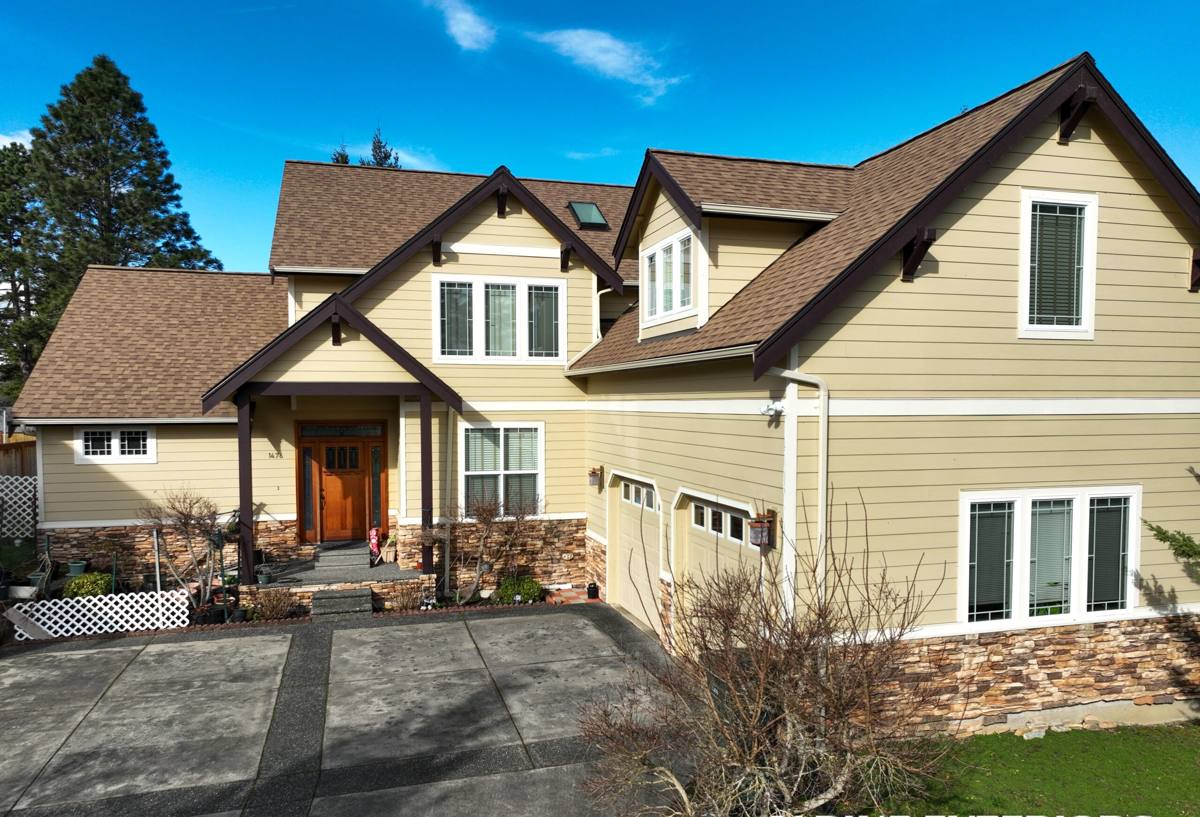
What Salt Air, Driving Rain, and Moss Season Actually Do to Siding
Salt Air
Airborne salt off Bellingham Bay settles on exterior surfaces and accelerates corrosion of anything metal — fasteners, flashing, trim connectors — while also drawing moisture to the surface of porous or absorbent siding materials. Over time that combination shows up as premature fastener rust, paint and finish breakdown, and softer spots at seams and edges where salt residue holds moisture against the material instead of letting it dry.
Driving Rain
Storms coming off the water push rain into a wall horizontally rather than letting it run down and off. That matters because a lot of siding failures don't start on the open face of a wall — they start where wind-driven rain gets forced behind trim, into unsealed seams, or up under laps that weren't installed with enough clearance. A shoreline lot like Marietta sees this kind of wind-driven weather more often than a sheltered inland yard, so the flashing and lap details matter more here, not less.
A Long Moss Season
Mild temperatures, persistent dampness, and plenty of shaded north- and east-facing wall area add up to a moss and algae season that stretches across most of the year in this part of the county. It usually shows up first as green or black staining on shaded siding, and while it looks cosmetic, sustained organic growth holds moisture directly against the wall behind it — which is exactly the condition that leads to hidden rot in a wall assembly that isn't detailed to dry out.
Wind Load Off the Water
Open shoreline exposure also means more sustained wind load on siding than a lot tucked back from the water. That affects fastening pattern and clearance requirements, and it's one more reason a generic install spec isn't the right approach for a home sitting this close to the bay.
Signs a Marietta Home Is Overdue for Siding Replacement
Because this environment pushes wear faster than a typical inland property, it's worth checking these signs sooner rather than later:
- Paint or finish that's chalking, peeling, or fading unevenly, especially on water-facing walls
- Soft or spongy spots when you press on siding near the bottom courses or around window and door trim
- Persistent green or black staining that comes back quickly after cleaning
- Visible cracking, warping, or separation at seams and corners
- Rusting fasteners or streaking below nail heads and trim connectors
- A musty smell or visible staining on interior walls that share an exterior wall with a problem area
- Siding that's original to a home built more than 20-25 years ago, especially wood-based products
Any one of these on its own might just need a repair. Several together, especially on the same wall, usually means moisture has been getting behind the siding for a while and it's worth a full inspection before deciding between a patch and a full replacement.
Why We Install Only James Hardie Fiber Cement Here
James Hardie fiber cement is non-combustible, dimensionally stable, and manufactured with factory-applied ColorPlus finishes engineered to hold color and resist the kind of chalking and fading that salt air and UV exposure accelerate. Hardie also builds specific HZ formulations for different climate zones, which matters for a property that sits directly on the water and deals with sustained moisture exposure most of the year. It doesn't absorb water the way wood-based siding does, it doesn't warp or soften the way engineered wood products can when a seam fails, and it carries a strong transferable warranty when installed to the manufacturer's specifications.
We've made a professional decision to install this one system rather than offer a menu of cheaper alternatives. Vinyl can crack and fade under sustained UV and salt exposure and doesn't hold paint if a homeowner ever wants a color change. LP SmartSide and other engineered wood products perform reasonably well in drier climates but are more sensitive to sustained moisture at cut edges and seams — exactly the condition a shoreline lot creates. For a home standing up to Bellingham Bay's weather year after year, we'd rather install the product we're confident will still look and perform the way it should a couple of decades out.
What a Correct Siding Replacement Involves
Tear-Off and Substrate Inspection
A proper job starts by removing the old siding entirely rather than installing over it, because that's the only way to actually see the sheathing underneath. On a shoreline property, this step matters even more — hidden moisture damage from years of salt air and driving rain often isn't visible from outside until the old siding comes off. Any soft, rotted, or delaminated sheathing gets repaired before anything new goes up.
Water-Resistive Barrier and Flashing
A weather-resistant barrier goes over the sheathing, followed by flashing at every window, door, and horizontal trim transition — the exact spots where wind-driven rain gets forced in. This is the layer that does the real waterproofing work; the siding itself is the second line of defense, not the first. Skipping or shortcutting flashing details is one of the most common causes of hidden rot behind siding that looks fine from the curb.
Fastening and Clearances
Hardie siding has to be installed with the fastening pattern, nail placement, and clearances the manufacturer specifies — including gaps at grade, roof lines, and adjoining surfaces so water has somewhere to go instead of wicking back into the material. On a wind-exposed shoreline lot like Marietta, getting the fastening spec right also matters for wind resistance, not just water management.
Caulking, Trim, and Factory Finish
Joints and trim transitions get sealed with a quality exterior caulk rated for the product, and because Hardie's ColorPlus finish is factory-applied and baked on, the color goes on more evenly and holds up longer than a field-applied paint job would — which matters on a property getting more UV and salt exposure than an inland home.
Our Process, Start to Finish
- Walk-through and assessment — we look at the current siding, trim, flashing, and any signs of moisture intrusion, paying particular attention to water-facing and shaded walls.
- Honest recommendation — repair, partial replacement, or full re-side, based on what we actually find rather than what's easiest to sell.
- Written estimate — a clear scope and price with no pressure to sign on the spot.
- Tear-off and substrate repair — old siding comes off, sheathing gets inspected, and any damaged material is replaced before moving forward.
- Barrier, flashing, and Hardie installation — installed to manufacturer spec, with fastening and clearances suited to a shoreline property's wind and moisture exposure.
- Final walkthrough — we go over the finished work with you before calling the job done.
What Siding Replacement Costs Depend On
| Factor | What It Affects | Why It Matters in Marietta |
|---|---|---|
| Tear-off vs. substrate condition | Labor and repair scope | Salt air and driving rain make hidden sheathing damage more common on shoreline-facing walls |
| Home size and wall complexity | Material and labor hours | More corners, trim, and roof transitions mean more flashing detail work |
| Wind and fastening spec | Fastener count and pattern | Open shoreline exposure calls for a fastening approach built for sustained wind load |
| Siding profile and finish | Material cost | Different Hardie profiles and ColorPlus finish options carry different material pricing |
| Trim and accessory work | Scope beyond field siding | Corner boards, window trim, and fascia often need attention on homes with years of salt and moisture exposure |
Exact pricing depends on the specific home and what we find once the old siding comes off, which is why we give a real number after walking the property rather than quoting from a generic price sheet.
Why Hiring a Crew That Already Works Marietta Matters
A crew that works this stretch of shoreline regularly knows how salt air, driving rain, and a long moss season actually behave on real homes here — not just how a product performs on a spec sheet. That experience shows up in practical decisions on install day: which walls take the worst of the water exposure, where extra flashing attention is worth the added time, and which fastening details hold up best against sustained wind off the bay. Marietta's shoreline position puts it in a different exposure category than homes further inland in Ferndale, and treating every property in the area with the same generic approach is how avoidable callbacks happen a few winters down the road.
If your Marietta home needs new siding, or you're not sure whether you're looking at a repair or a full replacement, we're glad to take a look and give you an honest answer. Reach out using the form below to schedule a free, no-pressure estimate.