 Ferndale Window
 Roofing in Marietta: A Different Set of Conditions
Marietta sits close enough to Bellingham Bay and the Strait of Georgia that roofs here deal with a combination most inland Whatcom County homes don't: salt-laden air off the water, wind-driven rain that gets pushed sideways under poorly sealed edges, and a moss season that can run eight months or longer in shaded, north-facing sections of a roof. None of these things individually destroy a roof overnight. What they do is shorten the useful life of materials and details that weren't built or installed with this exposure in mind.
A roof replacement in Marietta isn't just "put new shingles on." It's an opportunity to correct whatever combination of age, moisture, and moss has been working against the house, and to install a system that's actually suited to a marine-influenced roof rather than a generic install that would perform fine forty miles inland.
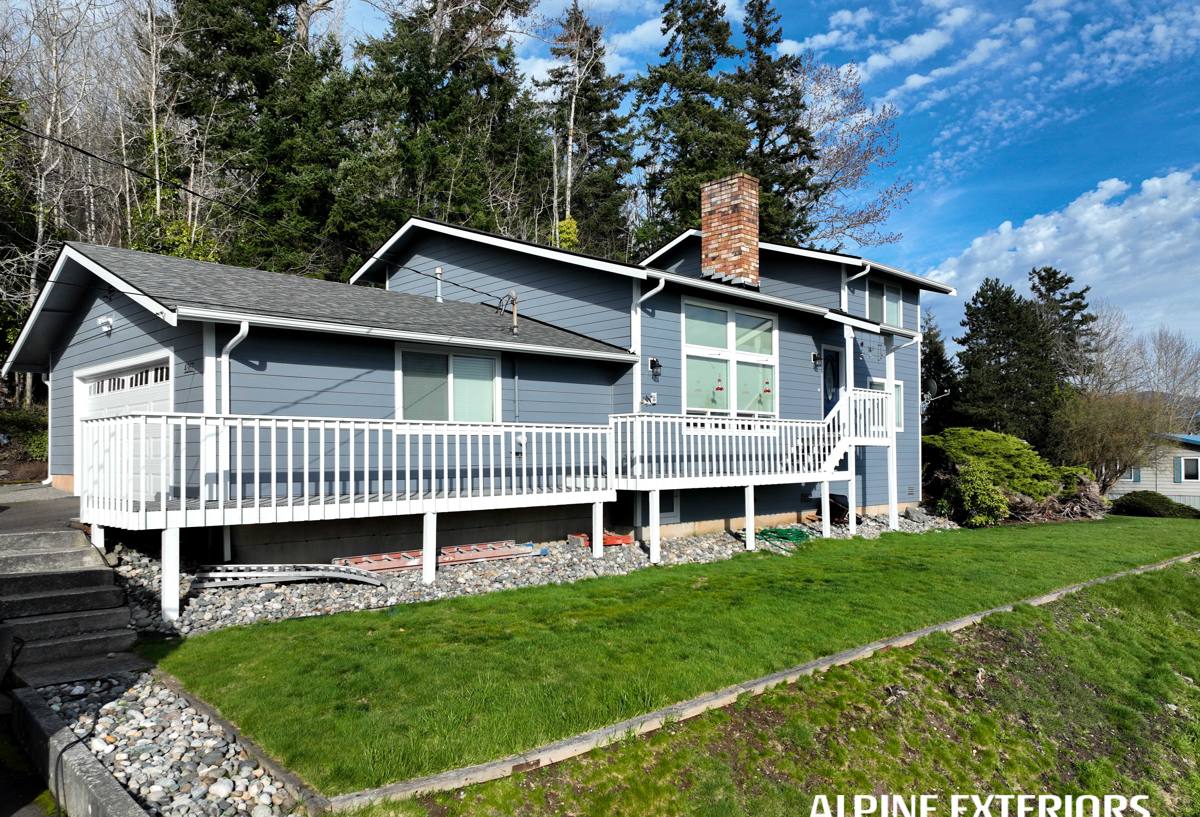
How Salt Air, Rain, and Moss Actually Damage a Roof
Salt Air and Metal Fasteners
Airborne salt accelerates corrosion on exposed metal — nail heads, flashing edges, and any fasteners that aren't rated for coastal exposure. Once corrosion starts on a fastener or flashing seam, it doesn't stay contained; rust staining and pinhole leaks follow. This is why fastener and flashing material selection matters more here than it would on a similar home east of I-5.
Driving Rain and Wind-Loaded Water
Whatcom County storms off the water often come in sideways rather than straight down. That kind of wind-driven rain finds its way under shingle tabs, around poorly lapped underlayment, and through any flashing detail that was installed to "code minimum" instead of built for wind exposure. Roofs that would shed water fine in calm rain can leak in a Marietta wind event if the underlayment and flashing weren't done right.
Moss and Prolonged Moisture
Shaded roof planes — especially north- and east-facing slopes under mature trees, common throughout Ferndale — stay damp for days after a storm. That moisture holds long enough for moss and algae to establish, and once moss takes hold it lifts shingle edges, traps moisture against the roof deck, and accelerates granule loss. A roof that's been fighting moss for years often has more deck damage under the surface than it shows from the ground.
Signs a Marietta Roof Needs Replacement, Not Another Repair
- Granules collecting in gutters or downspouts in noticeable amounts, not just after a new roof's first season
- Moss or dark streaking that returns within a year of cleaning, especially on shaded slopes
- Curling, cupping, or cracked shingles concentrated on the roof's south or west exposure
- Soft spots or slight sag when walked, which usually means deck damage, not just surface wear
- Rust staining at flashing points, valleys, or around roof penetrations
- Daylight visible through the attic roof deck, or damp insulation after storms
- A roof approaching or past the manufacturer's rated lifespan, especially if it was never properly ventilated
Any one of these can sometimes be addressed with a repair. Two or more together, especially on a roof past the fifteen-year mark, usually means repair costs start approaching what a full replacement would run — and a replacement resets the clock with materials matched to this climate instead of patching around a system that's already fighting moisture on multiple fronts.
What a Correct Roof Replacement Involves Here
A roof replacement done right for Marietta's exposure is built in layers, and each layer earns its place:
Tear-Off and Deck Inspection
Full tear-off to the deck, not an overlay. Overlaying a new roof over old, moss-damaged shingles traps moisture between layers and voids most manufacturer warranties. Tear-off also lets us inspect the deck itself — any soft, delaminated, or water-stained sheathing gets replaced before anything new goes down, since covering damaged decking just hides a problem that will resurface as a leak.
Ice-and-Water Shield and Synthetic Underlayment
Self-adhering ice-and-water membrane at eaves, valleys, and roof penetrations, backed by a full synthetic underlayment across the field. This is the roof's real waterproofing layer — the shingles above are the wear surface, but the underlayment is what keeps wind-driven rain out if water ever gets past the shingle line, which it will occasionally on an exposed coastal roof.
Corrosion-Resistant Flashing and Fasteners
Flashing at valleys, chimneys, walls, and penetrations, along with fasteners, specified for coastal-grade corrosion resistance rather than the cheapest code-compliant option. This one line-item detail is where a lot of premature Marietta roof failures start, and it's the cheapest thing to get right at install time and the most expensive to fix later.
Balanced Ventilation
Proper intake at the eaves paired with exhaust at the ridge, sized to the attic's actual square footage. Balanced ventilation controls attic moisture and temperature, which extends shingle life, reduces ice-damming risk, and keeps the underside of the deck dry — a roof deck that stays damp from the inside is just as vulnerable to moss and rot as one exposed to rain from the outside.
Moss-Resistant Details
On shaded slopes, that can mean zinc or copper strips near the ridge, algae-resistant shingle products, or simply making sure the roof drains cleanly with no low spots where water and debris collect. None of this eliminates moss risk entirely in a climate like Whatcom County's, but it meaningfully slows how fast it comes back.
Comparing Roofing Materials for a Marietta Home
| Material | Typical Lifespan Here | Coastal/Moss Performance | Maintenance Burden |
|---|---|---|---|
| Architectural asphalt shingle | 20–30 years | Good with algae-resistant granules and proper ventilation | Periodic moss/debris cleaning on shaded slopes |
| Standing seam metal | 40–50+ years | Sheds moss well due to slick surface; needs coastal-rated fasteners | Low; occasional fastener and seam checks |
| Cedar shake | 20–30 years with upkeep | Attractive but absorbs and holds moisture, higher moss/rot risk in shade | High; regular treatment and inspection |
| Synthetic composite shingle/shake | 30–50 years | Resists moisture absorption better than wood; performs well in salt air | Low to moderate |
There's no single "best" material for every Marietta roof — it depends on the home's exposure, the roofline's pitch and shading, and the owner's tolerance for maintenance versus upfront cost. We'll walk through the real trade-offs for your specific roof rather than defaulting to whatever's easiest to install.
How Our Process Works
- On-site inspection: We look at the roof from the ground and, when safe, up close — deck condition, ventilation, flashing points, and which slopes are carrying the most moss or moisture damage.
- Honest scope and options: You get a clear breakdown of what needs replacing, what materials fit your home and budget, and why — no pressure toward the most expensive option if it isn't the right fit.
- Scheduling around Whatcom County weather: We plan tear-off and dry-in around forecasted rain windows so your home isn't left exposed longer than necessary.
- Tear-off, deck repair, and install: Full removal, deck inspection and repair as needed, then underlayment, flashing, ventilation, and roofing material installed in that order — no shortcuts skipped to save a day.
- Final walkthrough: We review the finished roof with you, including gutter and downspout condition, since a new roof draining into damaged gutters undercuts the whole job.
Maintenance After Your New Roof Goes On
A new roof still needs occasional attention in this climate. Gutters should be cleared regularly, especially in fall when debris from mature trees around Ferndale properties builds up fast. Shaded slopes benefit from a gentle moss treatment every year or two rather than waiting until growth is heavy and has to be scraped, which can damage granules. And after any significant windstorm off the bay, a quick visual check for lifted shingles or displaced flashing catches small issues before they become interior leaks.
Why a Crew That Already Works Marietta Matters
Roofing crews unfamiliar with this specific stretch of Whatcom County coastline tend to specify materials and details built for drier, calmer climates — because that's what they're used to installing. A crew that regularly works Marietta and the surrounding Ferndale area already knows which slopes fight moss hardest, how far wind-driven rain travels under an eave in a coastal storm, and which flashing and fastener choices actually hold up against salt air over a decade, not just through the manufacturer's first inspection. That local pattern recognition doesn't show up on a spec sheet, but it shows up in how long the roof lasts.
What to Confirm Before You Sign a Roofing Contract
- Is this a full tear-off, or is any part of the existing roof being left underneath?
- What underlayment and ice-and-water shield are being used, and where specifically will they be applied?
- Are flashing and fasteners rated for coastal/salt-air exposure, not just standard code minimum?
- How is attic ventilation being addressed, and is it balanced (intake and exhaust both accounted for)?
- What happens if deck damage is found during tear-off — is repair included or billed separately?
- What's covered under workmanship warranty, separate from the manufacturer's material warranty?
- Is the crew insured and licensed to work in Washington, and can that be verified directly?
A contractor who answers these plainly, before you ask twice, is generally a good sign. Vague or rushed answers on any of these points are worth pausing on.
Get a Straightforward Estimate
If your Marietta roof is showing moss that keeps coming back, granule loss, or you're just past the point of wondering whether it's due, we're glad to take a look and give you an honest read — no pressure, no inflated urgency. Fill out the form below for a free estimate and we'll walk the roof with you and talk through what actually makes sense for your home.