 Ferndale Window
 Roof Repair Built for Marietta's Weather
Marietta sits close enough to Bellingham Bay that homes here take on a different kind of weather than roofs just a few miles inland. Salt-laden air off the water, driving rain that comes in sideways during winter storms, and a moss season that can run eight or nine months out of the year all work against a roof at the same time. A repair that would hold up fine in a drier part of Whatcom County can fail early here if it wasn't done with this specific combination of conditions in mind.
That's the gap we aim to close. Roof repair in Marietta isn't just patching a leak — it's understanding why that leak happened in the first place, and making sure the fix accounts for the salt, the moisture, and the moss that will keep coming back year after year.
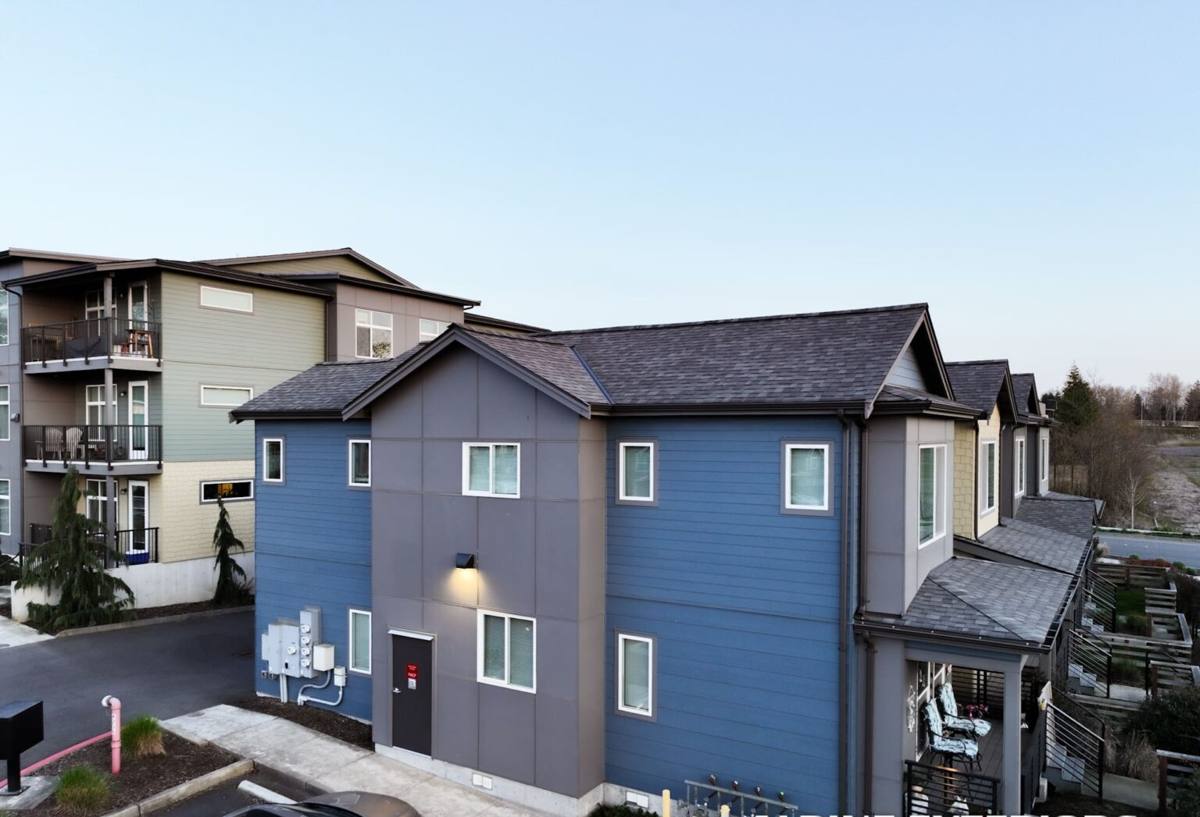
Common Roof Problems We See in Marietta Homes
Moss and Organic Growth
Moss doesn't just look bad — it holds moisture against the roofing material, works its way under shingle tabs, and lifts edges enough for water to get underneath. On roofs with any north-facing slope or shade from trees, moss can establish itself within a single wet season and start causing real damage within a couple of years if it's left alone.
Flashing and Seal Failures
Flashing around chimneys, vents, skylights, and roof-to-wall transitions is where most leaks actually start, not in the field of the roof itself. Salt air accelerates corrosion on lower-grade metal flashing and fasteners, and repeated wet-dry cycles break down sealants faster than in a drier climate. A pinhole in old flashing or a cracked bead of sealant is often the whole story behind a stain on an interior ceiling.
Wind and Storm Damage
Winter storms off the Sound can lift or crack shingles, especially on roofs that are already a little past their prime. Damage from a single storm event is often small — a few tabs, a section of ridge cap — but if it's not addressed before the next round of rain, it turns into a much bigger repair.
Wear at Roof Penetrations
Plumbing vents, exhaust fans, and any other roof penetration are common failure points. Rubber boots around vent pipes degrade with UV and moisture exposure over time and are one of the most frequent sources of a slow, hard-to-trace leak.
Signs Your Roof Needs Repair
Most roof problems give some warning before they turn into an emergency. Homeowners in Marietta should watch for:
- Dark streaks, green or black patches, or thick moss growth on any part of the roof
- Granules collecting in gutters or at downspout outlets
- Shingles that are curling, cracked, or missing, especially after a windstorm
- Soft or spongy spots when walking the roof, or sagging visible from the ground
- Water stains on ceilings or upper interior walls, particularly near chimneys or skylights
- Daylight visible through the roof deck from inside an attic
- Rust streaks or gaps around metal flashing and pipe boots
- Higher-than-usual heating bills, which can point to moisture getting into insulation
Any one of these on its own doesn't necessarily mean a major problem, but catching them early is almost always the difference between a straightforward repair and a much larger one.
What a Correct Roof Repair Actually Involves
A repair that's done right starts with figuring out the actual source of the problem, not just the spot where water is showing up inside the house. Water can travel a surprising distance under roofing material before it finds a path through the deck, so a leak stain in one room doesn't always mean the damage is directly above it.
Once the source is identified, a proper repair typically includes:
- Removing and replacing damaged shingles, underlayment, or decking as needed — not just sealing over the surface
- Reworking flashing at the affected area with materials suited to a coastal, wet climate
- Checking and re-sealing surrounding penetrations while the area is already open
- Confirming ventilation is adequate, since poor attic airflow contributes to both moisture damage and premature moss growth
- Matching new material to existing roofing as closely as possible for both appearance and proper water shedding
A patch-only approach — caulk over a crack, a quick shingle swap without checking underlayment — can buy a little time, but on a roof exposed to this much wind-driven rain, it tends to fail again within a season or two.
Our Roof Repair Process
1. Inspection and Diagnosis
We start by walking the roof (when it's safe to do so) and checking the attic from inside, looking at decking, insulation, and any existing damage. We look beyond the immediate complaint area, since a single leak is often a symptom of an aging roof system rather than an isolated event.
2. A Clear, Honest Assessment
We explain what we found, what's causing it, and what the realistic options are — repair now, plan for replacement later, or in some cases just a maintenance step like moss treatment and gutter clearing. We're not going to recommend a full re-roof for a problem that a targeted repair will solve.
3. The Repair Itself
Work is done with attention to the details that matter most in this climate — proper flashing laps, correctly sealed fasteners, and underlayment that handles wind-driven rain rather than just standard runoff. We clean up thoroughly and haul away old material.
4. Follow-Through
We stand behind the work we do. If something related to the repair doesn't perform the way it should, we come back and address it.
Repair vs. Replacement: How We Help You Decide
Not every roof problem calls for full replacement, and not every repair is the right long-term answer. The decision usually comes down to a few practical factors:
| Factor | Leans Toward Repair | Leans Toward Replacement |
|---|---|---|
| Age of roof | Under 15 years, otherwise sound | Approaching or past expected lifespan for its material |
| Extent of damage | Localized to one section or penetration | Widespread across multiple slopes |
| Deck condition | Solid, no rot found on inspection | Soft, rotted, or delaminated decking discovered |
| Moss/moisture history | First occurrence, treatable | Repeated damage in the same areas over several years |
| Cost outlook | Repair cost is a small fraction of replacement | Repair costs are starting to approach replacement pricing |
Repair costs vary a lot depending on how much of the roof is affected, how steep and accessible it is, and whether decking needs to be replaced along with the roofing material — for that reason we avoid quoting a number until we've actually seen the roof. What we can say is that most straightforward repairs are a fraction of the cost of full replacement, which is exactly why catching problems early matters.
Materials We Work With
Asphalt composition shingle is still the most common roofing material on homes in and around Marietta, and it's what most repairs involve — matching existing shingle profiles and colors as closely as the market allows. For metal roofing, repairs are more about flashing, fastener condition, and seam integrity than the panels themselves, since metal holds up well against moss but is less forgiving of poor flashing work.
Whatever the material, we pay close attention to fastener and flashing quality specifically because of the salt air near the water. Lower-grade metal components corrode faster here than they would twenty or thirty miles inland, and using the right-grade materials up front is cheaper than replacing corroded flashing again in a few years.
Why a Marietta-Familiar Crew Matters
A roofing crew that already works in this part of Whatcom County knows things a crew from further away has to learn on the job — which roof orientations grow moss the fastest, how far wind-driven rain can push water uphill under shingles during a real winter storm, and what flashing and fastener grades actually hold up near the water instead of just meeting a minimum spec. That familiarity shows up in fewer callbacks and repairs that are built for the conditions they'll actually face, not generic conditions from a manual.
It also means a shorter response time. When a storm rolls through and a roof starts leaking, having a crew that's local and knows the area means less waiting around with a tarp and a bucket.
Get a Free Roof Repair Estimate
If you're seeing moss buildup, a stain on the ceiling, or storm damage on your Marietta home's roof, it's worth having someone take a look before it turns into a bigger repair. We offer free, no-pressure estimates — use the form below to get started.