 Ferndale Window
 Marietta's Climate Is Rougher on Siding Than It Looks
Marietta sits low, close to Bellingham Bay and the Nooksack River lowlands, in a stretch of Whatcom County where marine air, standing damp, and shade from mature trees all overlap. That combination is harder on exterior siding than people expect. Salt-laden air off the bay accelerates corrosion on fasteners and metal trim. Driving rain off Pacific storm systems drives moisture sideways into seams and laps that would stay dry in a calmer climate. And the long, wet, mild winters here mean moss and algae get months of ideal growing conditions on any surface that stays damp and shaded.
None of that is unique to one house — it's the baseline for this part of Whatcom County. What it means practically is that siding material choice and installation detail matter more in Marietta than they would in a drier region. A product or installation method that's merely "adequate" somewhere else can fail early here, usually starting at the same weak points: butt joints, corner trim, and anywhere water can sit against wood or fiber without a way to drain and dry out.
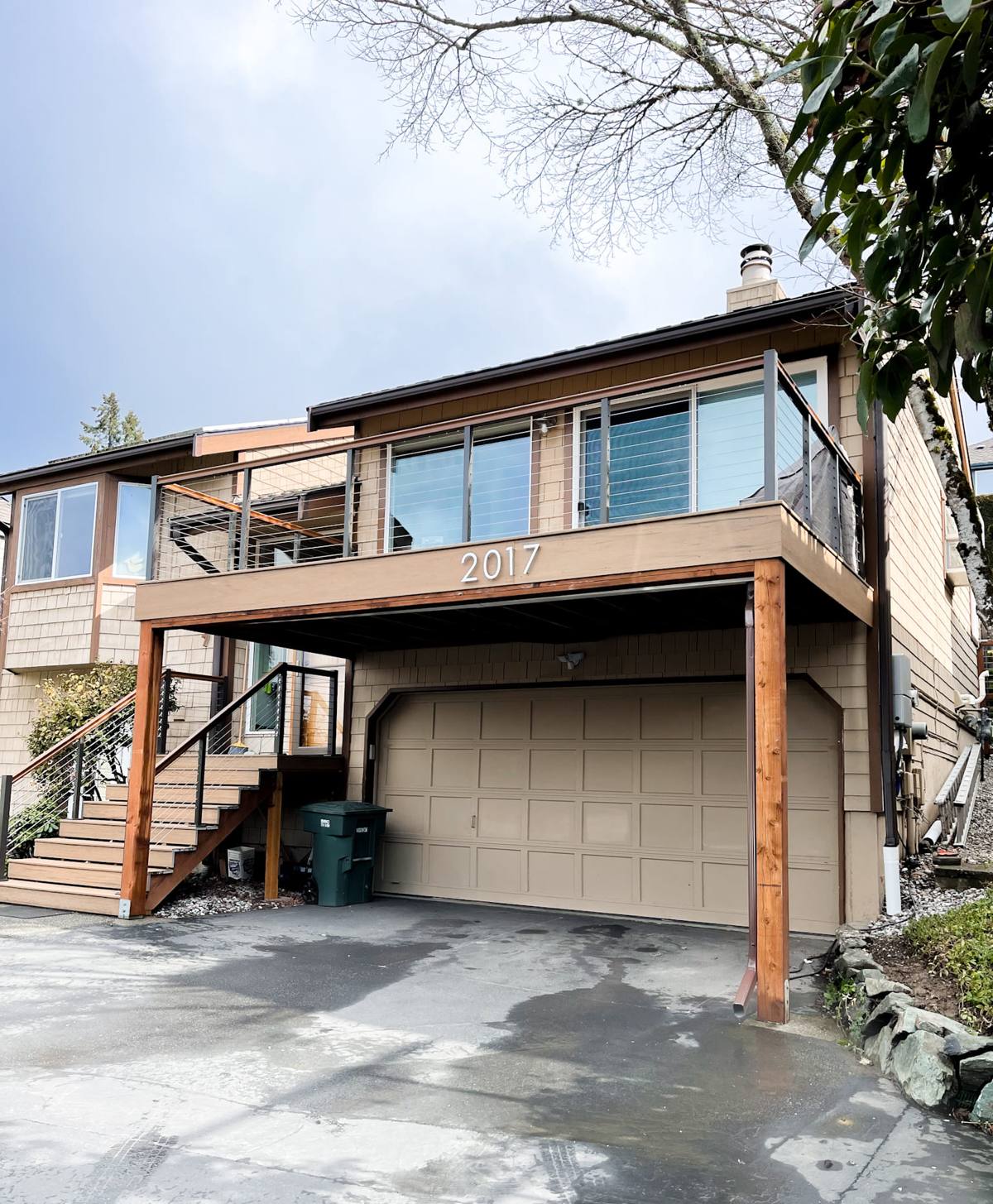
What Correct Fiber Cement Installation Actually Involves
Fiber cement siding has a strong reputation in this region because, installed correctly, it resists moisture, insects, and fire better than most alternatives. The word "correctly" is doing a lot of work in that sentence. A large share of the siding problems we get called out to inspect on older homes trace back not to the material but to installation shortcuts.
The details that matter in a wet marine climate
- Proper weather-resistive barrier and flashing behind every seam, window, and door opening — not just at the obvious spots
- Correct fastener type and spacing, driven to manufacturer spec rather than gun-set depth, to avoid over-driving that cracks the board
- Minimum clearance gaps at the bottom edge, around penetrations, and where siding meets roofing, decks, or grade — this is what lets water shed instead of wicking upward
- Factory-cut and factory-primed edges kept intact, with field cuts back-primed before installation
- Caulking used only where the manufacturer calls for it — over-caulking traps moisture behind the board instead of letting it escape
Skip any one of these and the siding can still look fine for a few years. In Marietta's climate, the moisture that gets behind a poorly flashed joint doesn't dry out quickly, and that's when rot and delamination start — often invisible until the siding is pulled off.
Why We Install Only James Hardie
Ferndale Window Co made a deliberate call to install James Hardie fiber cement exclusively — not vinyl, not LP SmartSide, not cedar or primed spruce, and not other fiber cement brands. That's a narrower lineup than most exterior contractors carry, and we think that's the right trade-off for homes in this climate.
Hardie's HZ5 product line is engineered specifically for climates with sustained moisture exposure like ours, which matters more in Marietta than in the drier interior of the state. The ColorPlus factory finish is baked on and warranted separately from the substrate, which reduces the repainting cycle that plagues field-painted siding in a climate where paint has a hard time curing and holding through our wet season. Fiber cement itself is non-combustible, holds a straight line better than wood-based alternatives, and — when installed to spec — has a long track record in Pacific Northwest conditions specifically because it doesn't feed moss the way wood fiber siding can, and it doesn't trap water the way some engineered wood products do at cut edges and seams.
Where this shows up on a Marietta home
HardiePlank lap siding is the most common choice for standard residential elevations and gives the classic horizontal lap look with the moisture performance the climate demands. HardiePanel vertical siding works well for accent sections, gable ends, or homes going for a board-and-batten look. HardieTrim finishes out corners, fascia, and window surrounds in a material that matches the siding's moisture behavior — mixing in a softer trim material at those points just reintroduces the same weak spots we're trying to eliminate.
Comparing Siding Options for This Climate
| Factor | James Hardie Fiber Cement | Vinyl | Wood / LP-Style Engineered Wood |
|---|---|---|---|
| Moisture resistance | Strong when installed to spec; won't rot or swell | Doesn't absorb water, but seams and gaps allow bulk water behind it | Vulnerable at cut edges and fastener holes; needs consistent maintenance |
| Moss/algae resistance | Factory finish resists organic growth better than porous surfaces | Grows algae/moss readily in shaded, damp areas | Wood fiber is a food source for moss and mildew |
| Salt air / coastal exposure | Non-combustible, dimensionally stable, holds finish | Can become brittle and discolor over time | Finish breaks down faster near salt air |
| Repainting cycle | ColorPlus finish warranted separately, long intervals | Doesn't repaint well; limited color life | Regular repainting required, harder to schedule around our wet season |
| Fire resistance | Non-combustible | Can melt/deform under heat exposure | Combustible |
This isn't a claim that other products are unusable everywhere — it's why, specifically for homes in a marine-exposed, high-moisture pocket like Marietta, we've standardized on one system rather than offering several.
Our Process on a Marietta Project
Every fiber cement job starts with an assessment of the existing wall assembly, not just the visible siding. In this area, that means checking for trapped moisture behind older siding before we ever price a job — no point installing a durable new exterior over a sheathing problem that's already started.
- On-site inspection, including moisture readings at vulnerable points (bottom courses, window returns, any past repair areas)
- Removal of failing siding and inspection of sheathing and framing underneath, with repairs scoped separately if damage is found
- Installation of weather-resistive barrier and flashing at every penetration and transition
- Fiber cement installation to Hardie's fastening, clearance, and gapping specifications
- Trim, corner, and joint detailing built for drainage, not just appearance
- Final walkthrough covering care and what to watch for in year one
We don't shortcut the tear-off and inspection step, even when it adds time to the estimate. On a house this close to the bay, what's underneath the old siding tells us more about the real scope of work than the surface does.
Maintaining Fiber Cement Siding in a Moss-Prone Area
Fiber cement is low-maintenance compared to wood, but "low-maintenance" doesn't mean "no maintenance" in a climate that grows moss on roofs, decks, and siding alike. A few habits go a long way toward protecting the investment:
- Keep gutters and downspouts clear so water isn't sheeting down the siding face during heavy rain events
- Trim back vegetation and tree canopy that keeps siding shaded and damp longer than necessary
- Rinse siding annually with a garden hose (avoid high-pressure washing directly into seams)
- Inspect caulking at trim and penetrations every year or two, and re-caulk only where the manufacturer specifies it
- Watch for any dark streaking or soft spots near ground level, which can indicate splash-back or drainage issues rather than a siding defect
Most of what shortens a siding system's life here isn't the material failing — it's water being allowed to sit somewhere it shouldn't for months at a time.
Why a Crew That Already Works in Marietta Matters
Siding performance in this climate is as much about site-specific judgment as it is about the product. A crew that regularly works Marietta and the surrounding Ferndale area already knows how wind-driven rain tends to hit specific elevations, where moss buildup shows up first on homes near the bay, and how local permitting and inspection expectations run in Whatcom County. That familiarity shows up in small decisions — where to add extra flashing, how tight to run clearance gaps, which elevations need the most attention — that a crew unfamiliar with the area might not think to make.
It also means we're not learning the climate on your project. We've seen how fiber cement performs here over time, what fails first when installation is rushed, and what holds up when it's done right the first time.
What Affects Project Cost
| Factor | How It Affects Scope |
|---|---|
| Existing siding removal | Tear-off and disposal of old material adds labor before new siding goes on |
| Sheathing/framing repair | Moisture damage found during tear-off is priced separately once it's exposed |
| Home size and elevation complexity | Multiple stories, dormers, and cut-outs increase trim and labor time |
| Siding profile and finish | HardiePlank vs. HardiePanel, and color/finish selection, affect material cost |
| Trim and accent work | Full HardieTrim detailing at corners and openings adds to the scope but protects the whole system |
Every home's actual number depends on what we find once we're on site and, if needed, once the old siding comes off. We'd rather give you an honest range after a real look than a number that doesn't hold up.
If you're weighing a siding replacement for a Marietta home, we're happy to take a look and walk you through what we'd actually recommend for your house — no pressure, no obligation. Use the form below to request a free estimate.