 Ferndale Window
 Storm Damage in Lummi Nation Is Its Own Kind of Problem
Homes in and around Lummi Nation sit close to open water, which means roofs here take a different kind of beating than roofs ten or fifteen miles inland. Wind off Bellingham Bay and the Salish Sea drives rain sideways under normal shingle laps, salt-laced air accelerates corrosion on anything metal, and the long, wet Whatcom County shoulder seasons keep roofs damp enough, long enough, for moss to take hold on nearly every north-facing slope. Storm damage repair out here isn't just about patching a hole after one bad night of wind — it's about recognizing the compounding wear that coastal weather leaves behind and fixing it in a way that actually holds up to the next storm, not just the last one.
A roof repair that would be sufficient in a drier, more sheltered part of the county can fall short here. We approach every storm call in this area with that context built in from the start.
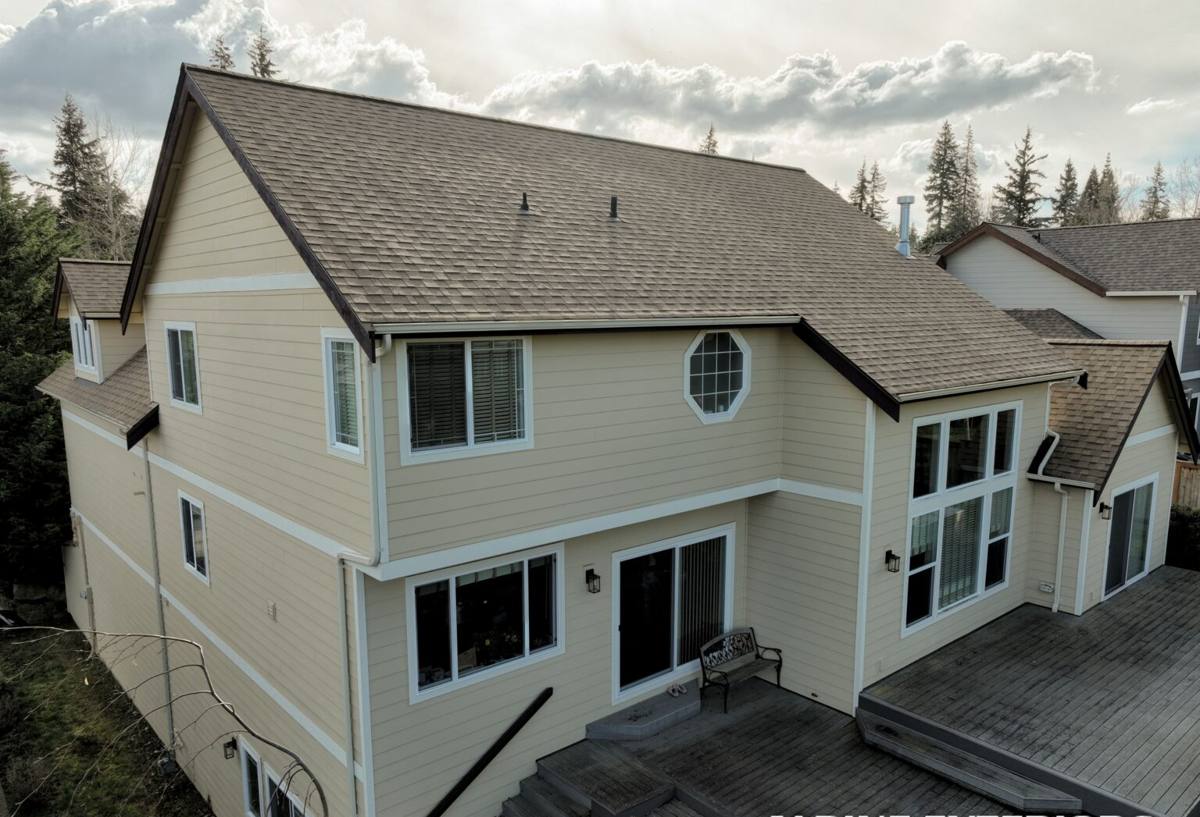
How Salt Air, Rain, and Moss Compound Roof Damage
Salt Air and Metal Fatigue
Flashing, fasteners, vent boots, and gutter hardware all corrode faster near open saltwater than they do a few miles inland. A nail or flashing seam that would last decades in a drier climate can start failing years early out here, and once a fastener loosens or a flashing seam opens, wind-driven rain finds its way in long before a homeowner sees a stain on the ceiling.
Driving Rain and Wind-Driven Water
Standard shingle installations are built to shed rain falling more or less straight down. Storms that push rain sideways — which is common with the wind patterns this area sees off the water — can force water up and under shingle edges, around chimney flashing, and into valleys that were never designed to handle water moving against gravity. This is one of the most common causes of "mystery leaks" that show up well after a storm has passed.
The Long Moss Season
Whatcom County's wet season runs long, and shaded or north-facing roof sections rarely get enough sun to dry out fully between rains. Moss and algae take hold in that moisture, working under shingle tabs and holding water against the roof deck. Over a few seasons, moss doesn't just look bad — it lifts shingle edges, traps debris, and creates the exact conditions that let storm damage turn into rot underneath.
Recognizing Storm Damage Before It Becomes a Bigger Problem
Most storm damage doesn't announce itself with an obvious hole. It shows up in smaller signs that are easy to miss from the ground, especially right after a storm when everyone's just relieved the power stayed on. Here's what we tell Lummi Nation homeowners to watch for:
- Shingles that look curled, cracked, creased, or are missing granules in patches
- Any shingle that's visibly lifted or no longer lying flat, even slightly
- Metal flashing around chimneys, skylights, or roof-wall junctions that looks bent, pulled loose, or rusted
- Granules collecting in gutters or at downspout outlets after a storm
- New or worsening moss growth, especially in streaks or clumps rather than a thin even coat
- Water stains on interior ceilings or upper walls, even faint ones
- Debris — branches, needles, gravel from asphalt shingles — sitting on the roof after wind events
- Gutters or downspouts pulled away from the fascia or sagging under weight
None of these on their own always means a major repair is needed. But any one of them is a reason to get a roof looked at before the next storm rolls through, not after.
What a Correct Storm Damage Repair Actually Involves
A rushed storm repair often just covers the visible damage and stops there. A correct one accounts for how water actually moves once it's inside a roof system, which is rarely a straight line down from the entry point.
Stabilize First, Assess Second
If a roof has active damage letting water in, the first priority is stopping further intrusion — tarping exposed sections or securing loose material — before any permanent repair work starts. Rushing straight to a patch without first confirming the full extent of the damage is how homeowners end up calling back a few months later for a second repair.
Match Materials, Not Just Color
Replacement shingles, underlayment, and flashing need to match not just in appearance but in how they perform. Mixing incompatible materials — a different shingle profile, a mismatched flashing metal, or underlayment that doesn't pair well with what's already installed — can create new failure points even when the repair looks fine on the surface.
Check What's Under the Shingles
Storm damage that's gone unaddressed for even a season can mean the roof deck or underlayment underneath has already taken on moisture. A repair that only replaces the top layer without checking what's beneath it is treating the symptom, not the cause.
Address the Cause, Not Just the Symptom
If moss contributed to the damage, or if flashing failed because of corrosion rather than storm force, a proper repair addresses that underlying issue — not just the hole it created. Otherwise the same spot fails again in the next season of weather.
Our Storm Damage Repair Process
- Initial assessment. We inspect the full roof, not just the area you're worried about — storm damage is often more widespread than what's visible from the ground.
- Emergency stabilization if needed. If the roof is actively letting water in, we secure it first to prevent further interior or structural damage.
- Written scope and honest estimate. You get a clear explanation of what's damaged, what needs to be repaired versus what can wait, and what it will cost — no inflated scope, no pressure to replace more than necessary.
- Repair work. We replace damaged shingles, flashing, and underlayment as needed, matching materials and installation methods to what's already on the roof wherever that's the sound choice.
- Final check. We confirm the repair is watertight and walk you through what we found and fixed, in plain language.
Repair or Replace? Cost Factors to Weigh
Not every storm-damaged roof needs full replacement, and not every roof can be reasonably patched. The right call usually comes down to a handful of factors:
| Factor | Favors Repair | Favors Replacement |
|---|---|---|
| Roof age | Under roughly half its expected lifespan | Already near or past its expected lifespan |
| Extent of damage | Isolated to one section or a few spots | Widespread across multiple slopes |
| Underlying deck condition | Solid, dry, no rot found | Soft spots, rot, or moisture damage present |
| Moss/algae history | Minor, manageable with cleaning | Long-term, has caused repeated shingle lifting |
| Prior repair history | First significant repair needed | Multiple past repairs in different areas |
We'll walk you through where your roof falls on these points during the assessment. Our goal is a roof that holds up through the next storm season, not the largest possible invoice.
Materials We Use and Why
For coastal, moss-prone conditions like this area sees, we lean toward materials chosen for how they hold up to sustained moisture exposure rather than just upfront cost. That generally means algae-resistant shingle products where they make sense for the existing roof, corrosion-resistant flashing metals suited to a salt-air environment, and synthetic or high-quality underlayment in areas most exposed to wind-driven rain — particularly around valleys, chimneys, and roof-wall intersections where storm damage tends to start.
We won't install a product just because it's cheaper if we know it's a poor match for this climate — that's a maintenance burden and moisture problem we'd rather help you avoid than sell you into. When there's a genuine trade-off between upfront cost and long-term performance, we'll explain it honestly and let you decide.
Working With Insurance on Storm Claims
Many storm damage repairs in this area are at least partly insurance-related. We can document damage clearly — with a written assessment and photos of the affected areas — to support a claim, but we're not a substitute for your adjuster or your policy's terms. What we can tell you honestly is whether what we're seeing looks like storm-related damage versus long-term wear, since insurers draw that distinction carefully and it affects what's covered.
If you're not sure whether damage is worth filing a claim over, we're happy to give you a straight answer during the assessment rather than push you toward a claim that may not be worth the deductible.
Why Hire a Crew That Already Works in Lummi Nation
Roofing crews unfamiliar with this specific area sometimes underestimate how much salt exposure and prolonged moisture affect material choices and repair longevity here. A crew that already works in Lummi Nation and the surrounding Ferndale area has seen how local roofs actually age — which flashing details tend to fail first, which slopes hold moss the longest, and which repairs from other contractors tend to need revisiting a year or two later.
That familiarity also means fewer surprises with access, scheduling, and any site-specific considerations that come with working in this community, since we're not learning the area for the first time on your roof. It's the difference between a repair based on general roofing knowledge and one based on what actually holds up in this specific environment.
Get an Honest Look at Your Roof
If a recent storm has you wondering about the condition of your roof, or you've noticed any of the warning signs above, it's worth getting a straightforward assessment before the next round of weather moves in. We'll give you a clear, honest picture of what's going on and what it would take to fix it right — no pressure, no inflated scope. Use the form below to request a free estimate.