 Ferndale Window
 Why Metal Roofing Makes Sense for Lummi Nation Homes
Homes in the Lummi Nation area sit close to open water, and that changes what a roof has to deal with compared to a house a few miles inland. Wind off the water carries salt, rain arrives sideways as often as it falls straight down, and shade from mature trees keeps roof surfaces damp for days after a storm passes through. Asphalt shingles can handle a lot, but in this specific mix of salt, moisture, and shade, they wear faster here than they do in drier parts of Whatcom County. Metal roofing was built for exactly this kind of exposure, which is why it has become the material we recommend most often for homes in this part of our service area.
This page isn't a general introduction to metal roofing. It's about what a metal roof specifically needs to do for a home near the water in the Lummi Nation area, and what separates a roof that holds up for decades from one that starts showing rust streaks or lifted panels within a few years.
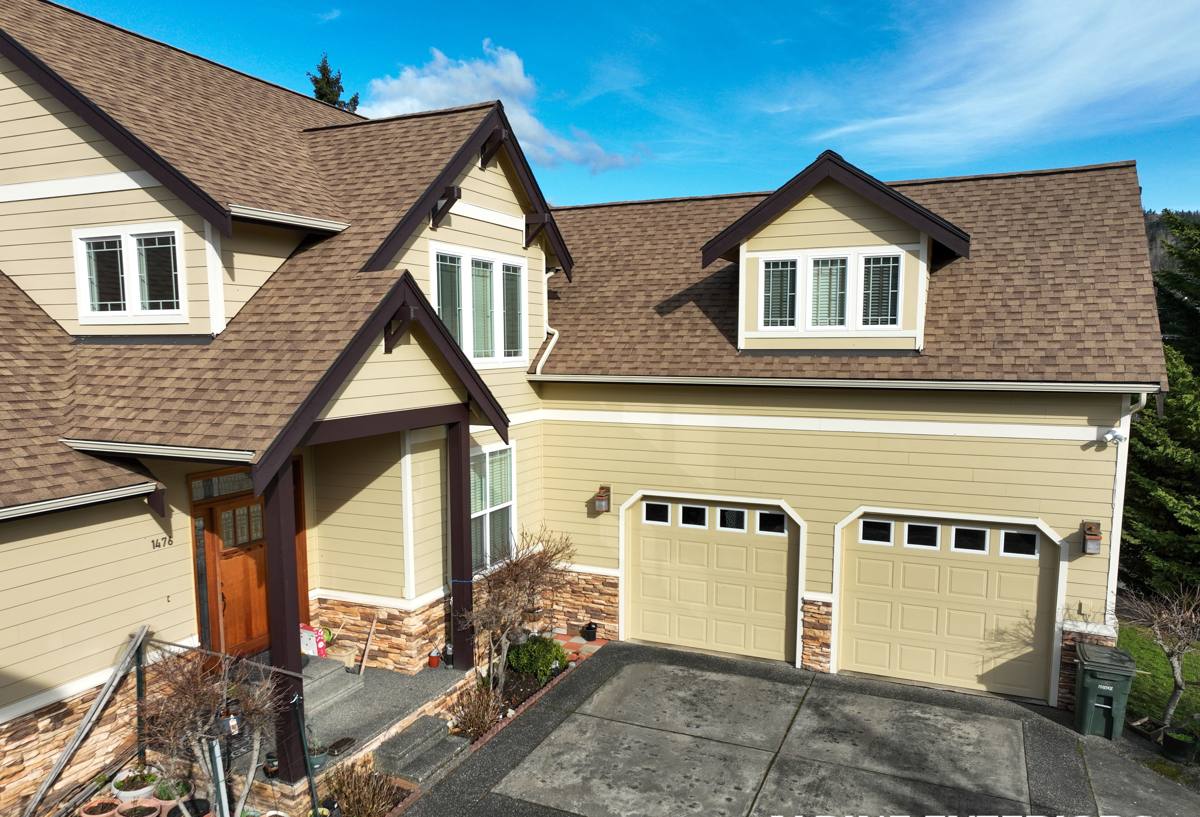
What Salt Air and Coastal Wind Do to a Roof Over Time
Corrosion doesn't show up where you'd expect
Salt-laden air is corrosive to metal, but it doesn't attack a roof evenly. It settles hardest at panel edges, exposed fastener heads, and any spot where two dissimilar metals touch each other. A roof can look fine from the ground while corrosion is already starting at a fastener washer or a flashing seam that was never rated for coastal exposure. Over several years, that kind of hidden corrosion is what leads to leaks at penetrations long before the roof panels themselves show any real wear.
Wind pulls at every seam and edge
Homes near open water also see stronger, more sustained wind than homes further inland. Wind doesn't just push down on a roof, it creates uplift at edges and ridges, and that uplift is exactly where a poorly fastened or improperly seamed metal roof fails first. Panel spacing, fastener pattern, and edge trim all need to be sized for that uplift, not just chosen for appearance.
Moss, Algae, and Whatcom County's Long Wet Season
Why moss finds these roofs so easily
Between fall and spring, roofs in this area can stay wet for days at a stretch, especially on north-facing slopes or sections shaded by trees. That combination of moisture and shade is exactly what moss and algae need to take hold. On an asphalt roof, moss works its way under the shingle mat and lifts granules, shortening the roof's life. On a metal roof, moss has nothing to grip into, since there's no granule mat for it to root in, so growth mostly stays on the surface and rinses off far more easily.
Roof pitch and panel profile still matter
Metal resists moss better than shingles do, but a low-slope section or a panel profile with a lot of flat area between ribs will still hold moisture longer than a steep, high-rib panel. Where a home's roofline includes low-slope sections, we account for that in the panel and underlayment choice rather than treating the whole roof as one uniform surface.
Material Choice: Steel vs. Aluminum in a Salt-Air Environment
Most metal roofing installed in this region is steel with a factory-applied protective coating, and for most homes that's the right call. It's strong, widely available, and holds up well when the coating and fasteners are matched to the environment. Aluminum is worth considering on homes with heavier, more direct salt exposure, since it doesn't rust the way steel can if a coating is ever compromised. Aluminum costs more and dents a little more easily, which is the trade-off. For most homes in the Lummi Nation area, a quality coated steel system is the practical choice; for a home sitting especially close to open water with heavy salt spray, we'll talk through whether aluminum is worth the difference in your case.
Coating matters as much as the base metal
Whatever the base metal, the factory coating is what actually faces the weather day to day. A coating rated for coastal, high-UV exposure holds its color and its protective properties far longer than a builder-grade finish. This is one area where it doesn't pay to cut cost, since the coating is doing most of the work of keeping salt air off the metal underneath it.
Standing Seam vs. Exposed-Fastener Panels
Both systems are metal roofing, but they behave differently in a coastal, high-moisture climate, and the right choice depends on the home, the budget, and how long the owner plans to stay in it.
| Factor | Standing Seam | Exposed-Fastener Panel |
|---|---|---|
| Fasteners | Hidden, clipped beneath the panel | Visible screws through the panel face |
| Coastal durability | Best, no exposed fastener to corrode | Good, but fasteners need periodic checking |
| Typical lifespan | 40-plus years with proper install | 25 to 35 years, fastener-dependent |
| Upfront cost | Higher | Lower |
| Best fit | Full re-roofs, long-term ownership | Shops, outbuildings, budget-conscious projects |
For a primary residence exposed to salt air, we generally steer owners toward standing seam. The exposed screws on a fastener panel are the first thing to loosen or corrode over time, and once a few start leaking, water tends to find its way under the panel before it's obvious from the ground. Exposed-fastener panels still have their place. They're a reasonable, lower-cost option for a detached garage or shop where replacing a fastener in fifteen years isn't a major inconvenience.
Expect metal roofing to cost more upfront than asphalt shingles, often by a real margin. Weighed against a lifespan that can run several decades longer and far less maintenance along the way, most owners planning to stay in their home find the total cost of ownership evens out, and often comes out ahead.
What a Correct Metal Roof Installation Actually Involves
The material is only part of the equation. Most metal roof problems we get called out to inspect trace back to installation shortcuts, not the panels themselves.
The deck and underlayment come first
Before any metal goes down, the roof deck needs to be sound, dry, and free of soft spots, and it needs an underlayment rated to sit under metal in a wet climate, not a generic felt left over from a shingle job. In valleys and along eaves, we use a self-adhering, waterproof membrane, since these are the areas most likely to see standing water during heavy rain.
Flashing is where roofs actually leak
Chimneys, skylights, wall intersections, and vent penetrations are where a roof either holds up for decades or starts leaking within a couple of winters. Flashing has to be formed to fit the specific detail, not stretched from a stock piece, and it has to be compatible with the panel metal so the two don't set up a galvanic reaction against each other.
Fastening and expansion
Metal roofing expands and contracts with temperature swings more than shingles do. Panels and clips need room to move without tearing loose or buckling, which means fastener spacing and clip type have to match the panel length and the local temperature range, not just whatever happened to be on the truck that day.
Here's what we check on every metal roofing job, before, during, and after installation:
- Roof deck inspected and repaired before any underlayment goes down
- Self-adhering waterproof membrane at valleys, eaves, and low-slope transitions
- Flashing custom-formed at every penetration, wall, and chimney
- Fastener and clip spacing matched to panel length and local wind exposure
- Compatible metals used throughout to avoid galvanic corrosion between dissimilar materials
- Panel finish and coating rated for coastal, salt-air exposure
- Ridge and edge trim sealed and fastened to resist wind uplift
Ventilation and Condensation: The Detail Many Roofs Miss
Metal conducts heat differently than shingles, and in a climate where damp, cool air sticks around for much of the year, condensation can form on the underside of metal panels if the attic or roof assembly isn't ventilated correctly. That moisture doesn't come from a leak. It comes from warm, moist indoor air meeting a cold metal surface, but it causes the same kind of rot and staining a leak would cause.
What proper ventilation looks like
A balanced system needs intake at the eaves and exhaust at the ridge, sized to the attic's square footage, along with a vapor barrier on the warm side of any insulated roof assembly. On homes with vaulted ceilings or finished attic space, this gets more complicated, and it's worth having it checked specifically rather than assuming the existing setup is adequate just because the old roof never showed problems.
Our Process, From Estimate to Finished Roof
Assessment
We start with a walk of the roof and attic where it's accessible, looking at deck condition, existing ventilation, and any trouble spots like valleys, low-slope sections, or areas already showing moss and moisture staining. This is also when we talk through standing seam versus exposed-fastener options based on the home and the budget.
Tear-off and deck prep
Old roofing comes off down to the deck so we can see what we're actually working with. Any soft or water-damaged sheathing gets replaced before underlayment goes down. Covering over a bad deck is one of the most common shortcuts that leads to early failure, and it's not one we take.
Installation
Panels, clips, and flashing go in following the fastening and flashing details covered above, with particular attention to the valleys and penetrations that see the most water in this climate.
Final walkthrough
We walk the finished roof with the homeowner, point out the flashing and drainage details, and go over what regular maintenance should look like going forward.
Maintaining a Metal Roof, and Why Local Experience in Lummi Nation Matters
Metal roofing is genuinely low-maintenance compared to shingles, but low-maintenance isn't no-maintenance, especially this close to the water. Gutters and downspouts should be cleared before the fall rains start, since a clogged gutter backs water up under the roof edge regardless of what the roofing material is. A periodic soft rinse to move along surface moss or debris buildup, particularly on shaded, north-facing slopes, keeps organic material from holding moisture against the panel finish. Any fastener or flashing point that shows a hint of rust staining is worth having looked at promptly. Caught early, it's a five-minute fix; ignored, it's a leak.
A crew that only occasionally works this close to the water can size a roof correctly on paper and still miss the details that matter here: the extra corrosion protection at fasteners, the flashing sequence that keeps driving rain from a coastal wind out of a wall intersection, the panel profile that sheds moss instead of holding it. We work in this part of Whatcom County regularly, which means we're not guessing about how a roof performs through a wet Ferndale winter or a windy stretch off the water. We're building to what we've already seen hold up, and what we've seen fail.
If you're weighing a metal roof for a home in the Lummi Nation area, we're glad to take a look and talk through what your roof specifically needs. The estimate is free, there's no pressure, and you'll walk away with a clear picture of your options. Just fill out the form below to get started.