 Ferndale Window
 Asphalt Shingle Roofing Built for Lummi Island's Conditions
Lummi Island sits out in the salt water of the Salish Sea, and that changes what a roof has to deal with compared to a house a few miles inland in Ferndale. You've got salt-laden air moving off the water, weather systems that hit the island before they hit the mainland, and a wet season that can stretch on for months. A shingle roof that would hold up fine in a drier, more sheltered spot can wear out faster out here if it wasn't built with these conditions in mind from the start.
This page is about one job done right in one place: asphalt shingle roofing for homes on Lummi Island. Not a general overview of roofing services, and not a sales pitch for products we don't fully stand behind — just a straightforward look at what local homes need, what a correct installation actually involves, and why the crew doing the work matters as much as the shingles themselves.
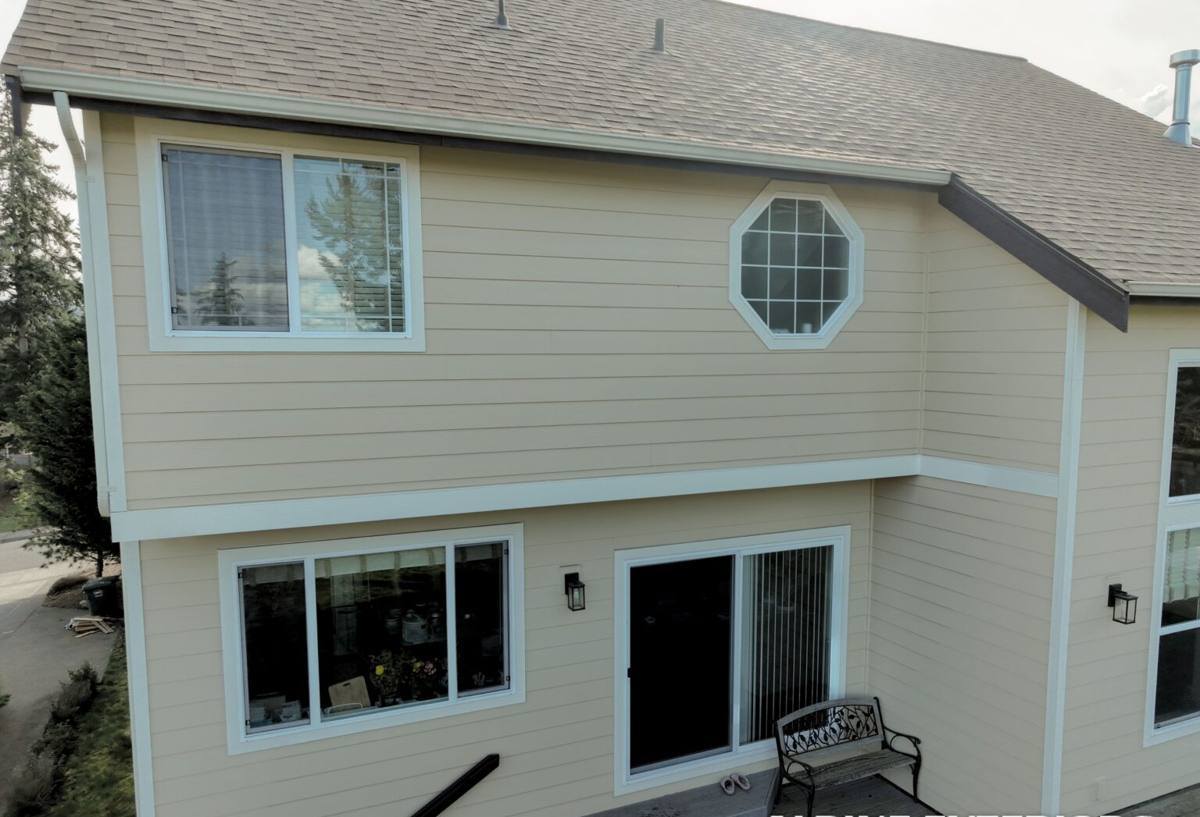
Why Salt Air, Rain, and Moss Are a Tougher Combination Than People Expect
Any one of these three things — salt air, driving rain, or moss — is manageable on its own. Roofs deal with rain everywhere in Western Washington. The problem on Lummi Island is that all three show up together, for most of the year, and they compound each other.
Salt air accelerates corrosion on any exposed metal — flashing, fasteners, drip edge, vent caps. Once that metal starts to degrade, water finds its way in around it faster than it would on a roof with fresh, intact metal components. Add in wind-driven rain coming off open water, which doesn't just fall straight down but gets pushed sideways and up under shingle edges and around penetrations, and you need details that a fair-weather installation can get away with skipping. Then there's the long moss season — cool, damp, shaded conditions for much of the year that let moss and moisture-loving growth get a foothold on north-facing slopes and anywhere debris collects. Moss holds water against the shingle surface, which shortens the life of the granules and the mat underneath, and it can lift shingle tabs enough to let wind-driven rain sneak underneath.
None of this means asphalt shingles are the wrong choice for Lummi Island — they're not. It means the installation details that matter everywhere matter more here, and cutting corners on them shows up sooner rather than later.
What a Correct Asphalt Shingle Roof Involves in This Climate
Underlayment and Water-Resistive Layers
A synthetic underlayment rated for the exposure, with self-adhered ice-and-water membrane at the eaves, valleys, and around every penetration, is not an upgrade out here — it's the baseline. These are the places wind-driven rain and moss-related backup are most likely to find a way in, and they're the cheapest place to over-build relative to the cost of a leak repair later.
Flashing and Fasteners
Given how salt air treats exposed metal, we pay close attention to the grade and finish of flashing, drip edge, and fasteners — not just what's cheapest to source, but what will actually hold up to years of salt exposure without corroding out from under the shingles. A roof is only as good as its metal details; shingles shed water across a flat plane, but flashing is what handles every edge, valley, and transition.
Ventilation
Balanced intake and exhaust ventilation keeps the underside of the roof deck dry and at a consistent temperature, which matters for two reasons here: it reduces the condensation that can form when warm, moist indoor air meets a cold deck in our damp winters, and it keeps the roof surface drying out evenly, which slows moss and algae growth. A roof with poor ventilation is fighting the climate with one hand tied behind its back regardless of how good the shingles are.
Shingle Selection
Algae-resistant shingles, which use copper-containing granules to slow the growth that causes the dark streaking you see on older roofs, are worth the modest upcharge in a moss-prone environment like this one. Beyond that, wind ratings matter more here than on a sheltered inland lot — we look at a shingle's rated wind resistance, not just its appearance, when helping a homeowner pick a product for an exposed island roof.
Signs a Lummi Island Roof Needs a Closer Look
Because moss and salt-air wear happen gradually, a lot of homeowners don't realize how much a roof has declined until something forces the issue — a stain on a ceiling, a spike in attic humidity, or a contractor pointing it out during an unrelated visit. Some things worth checking yourself, or having a professional check, on a regular basis:
- Moss or dark streaking concentrated on north-facing or shaded slopes
- Granules collecting in gutters or at the base of downspouts
- Shingle tabs that look curled, cupped, or lifted at the edges
- Rusty streaking around flashing, vents, or nail heads
- Soft or spongy spots when the roof is walked (a sign of deck moisture underneath)
- Daylight visible through the roof deck from inside an accessible attic
- Any interior ceiling staining, especially after a wind-driven storm
None of these automatically mean a full replacement is needed — some are maintenance items, others are early warnings. But on an island roof, we'd rather a homeowner catch these early and ask questions than wait until there's active interior damage.
Our Process, Start to Finish
We keep the process simple and honest, because that's what actually builds trust with homeowners who've been burned by vague estimates before.
- On-site assessment. We walk the roof (weather permitting) and inspect the attic where accessible, looking at deck condition, ventilation, flashing, and the extent of moss or wear — not just counting shingles from the ground.
- Written estimate. You get a clear breakdown of scope, materials, and cost — no vague allowances or surprise change orders once we're underway.
- Scheduling around the ferry and weather. Because Lummi Island is ferry-access only, we plan material deliveries and crew schedules with enough lead time to avoid a job stalling out because a load of shingles missed a sailing.
- Tear-off and deck inspection. Old roofing comes off down to the deck, and we inspect and repair any damaged sheathing before anything new goes down — this is where hidden moisture damage from a prior roof shows up.
- Underlayment, flashing, and shingle installation. Done in the sequence and to the details described above, with attention to the eaves, valleys, and penetrations that take the worst of the wind-driven rain.
- Ventilation check and correction. We confirm intake and exhaust venting are balanced for the attic space, correcting it as part of the job where it's inadequate.
- Cleanup and walkthrough. Magnetic sweep for stray fasteners, full site cleanup, and a walkthrough so you know what was done and why.
What Drives Cost on an Island Roofing Job
Every roof is different, so we won't quote a number without seeing the job — but homeowners deserve to know what actually moves the price up or down before they get an estimate.
| Factor | Why It Matters | Typical Effect on Cost |
|---|---|---|
| Tear-off vs. overlay | Full tear-off allows deck inspection and repair; overlay hides existing problems | Tear-off costs more upfront but avoids compounding hidden damage |
| Roof pitch and access | Steeper roofs and difficult access require more safety setup and slower work | Moderate increase |
| Deck repair needed | Rot or soft sheathing found during tear-off must be replaced before shingles go down | Variable — depends on extent found |
| Shingle grade selected | Standard 3-tab vs. algae-resistant architectural shingles | Moderate increase for upgraded product, offset by longer service life |
| Ventilation corrections | Adding or upgrading intake/exhaust venting where existing venting is inadequate | Modest, one-time cost |
| Ferry and delivery logistics | Material delivery and crew transport to the island require scheduling around sailings | Built into scheduling, not typically a separate line-item surcharge |
We walk through this table with every homeowner during the estimate so there's no mystery about where the money is going.
Getting a Crew and Materials to the Island
Working on Lummi Island isn't the same as working a job a few blocks from the shop in Ferndale. Everything — crew, tools, dump trailers, pallets of shingles — has to cross on the ferry, which means the job has to be planned around sailing schedules rather than squeezed in whenever it's convenient. A crew that hasn't done this before can lose a day just figuring out logistics on the fly, or worse, leave a roof partially torn off overnight because the timing didn't work out. We've worked out those logistics already, which means less risk of a job stalling mid-project with your roof exposed to the weather.
Why Local Experience on Lummi Island Specifically Matters
There's a difference between a contractor who does good roofing work in general and one who's actually worked this specific island's conditions. Homes here face wind and rain exposure that varies a lot depending on which side of the island they sit on and how much tree cover surrounds them — some lots get hammered by wind off open water, others are more sheltered but deal with heavier moss from shade and slower drying. A crew with actual Lummi Island experience has already seen how these conditions play out on real roofs, not just in general Whatcom County terms, and brings that judgment to the estimate and the install rather than treating every roof the same way a mainland job would be treated.
After Installation: Keeping a Lummi Island Roof Healthy
A correctly installed asphalt shingle roof still benefits from basic upkeep in this climate. Keeping gutters clear so water isn't backing up under the eaves, having moss treated or gently removed before it spreads rather than letting it establish, and keeping an eye on flashing and vent boots for early signs of salt-air corrosion will all extend the life of the roof well beyond what installation alone can guarantee. We're happy to walk any homeowner through a simple seasonal check they can do themselves, or to handle periodic inspections directly.
If you're dealing with an aging roof on Lummi Island, or just want a straight answer about what shape yours is in, we're glad to come take a look. There's a free, no-pressure estimate request form below — no obligation, just an honest assessment from a crew that already knows this island's conditions.