 Ferndale Window
 Siding Replacement Built for Kendall's Climate
Kendall sits inland from the coast in the Nooksack River valley, tucked against tree-covered foothills that get more rain, more shade, and more standing moisture than open ground closer to town. Add in the marine-influenced weather that moves through all of Whatcom County — salt-tinged air pushed inland off Bellingham Bay, driving rain that comes in sideways during fall and winter storms, and a moss season that can run eight months out of the year in shaded lots — and you get siding conditions that are genuinely harder on a house than a typical suburban lot. Siding replacement here isn't a cosmetic project. It's a moisture-management project that happens to also make the house look better.
We work Kendall regularly, along with the rest of Ferndale and the surrounding unincorporated county. That matters because siding failure patterns aren't the same everywhere — a crew that mostly works dry, open subdivisions will miss things that show up on a shaded, tree-lined Kendall lot.
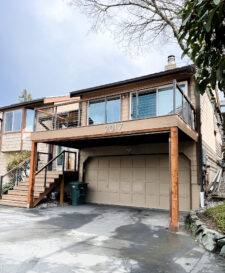
Why Kendall Homes Wear Out Siding Differently
Shade and moss do the real damage
Direct rain damage gets the attention, but the slower, quieter problem in Kendall is shade. Tree cover keeps siding wet for hours or days longer after a storm than it would take to dry on an open lot. That extended wet time is exactly what moss, algae, and mildew need to establish themselves, and once moss gets a foothold on a seam or a fastener head, it holds moisture against the material around the clock. On wood-based products, that's the beginning of soft spots and rot. On any product, it's the beginning of paint and finish failure.
Wind-driven rain finds the gaps
Storms coming off the Strait of Georgia and through the Nooksack valley don't fall straight down — they drive rain sideways into wall assemblies, which is exactly the condition that exposes bad flashing, gapped seams, and old caulk-and-hope installations. A siding system that isn't detailed correctly at windows, doors, and butt joints will let water in during these events even if it looks fine in dry weather.
Cool, wet air stresses whatever's behind the siding
Salt-influenced marine air carries more moisture year-round than a drier inland climate, which means the wall assembly behind your siding rarely gets a long stretch to fully dry out. Sheathing and framing that stay damp for extended periods are more likely to develop rot, and once that starts, no amount of surface-level siding work fixes it — the rot has to be found and repaired first.
Signs a Kendall Home Needs Siding Replacement
- Soft, spongy, or crumbling siding when pressed, especially near the bottom courses and around windows
- Persistent moss or algae growth that returns within weeks of being cleaned off
- Paint that's peeling, bubbling, or failing faster than the repaint cycle would suggest it should
- Visible gaps at seams, corners, or trim that weren't there when the siding was new
- Warping, buckling, or boards that no longer sit flat against the wall
- Stains or discoloration on interior walls near exterior corners — a sign moisture is already getting through
- A musty smell in rooms along exterior walls, particularly after wet weather
Any one of these on its own might just need a repair. Several of them together, especially if they're concentrated on the north or west-facing walls that get the most shade and weather, usually mean the siding system as a whole has reached the end of its useful life.
What a Correct Siding Replacement Actually Involves
It starts underneath, not on the surface
New siding over a damaged wall just hides the problem for a while. A correct replacement means stripping the old siding, inspecting the sheathing and framing underneath for soft or rotted wood, and repairing or replacing anything compromised before a single new piece goes up. In a wet, tree-covered area like Kendall, we treat this inspection step as mandatory, not optional — skipping it is the single most common reason a "new" siding job fails within a few years.
Water-resistive barrier and flashing come before the siding
A weather-resistant barrier goes over the sheathing, and flashing gets installed at every window, door, and horizontal transition so that any water that does get past the siding has a clear path down and out rather than into the wall. This detailing work is invisible once the siding is up, but it's the difference between a wall that sheds water and one that traps it.
Proper clearances and fastening
Siding needs the right gap above rooflines, decks, and grade so water and debris don't wick up into it, and it needs to be fastened according to the manufacturer's spec — not just "close enough." In a climate with this much sustained moisture, corner-cutting on fastener spacing or nail depth shows up as problems within a few wet seasons, not decades.
Why We Install Only James Hardie Fiber Cement
We don't install vinyl, LP SmartSide, primed spruce, cedar, or other fiber cement brands. That's a deliberate standard, not a limitation of what we're capable of installing. In a climate like Kendall's — heavy shade, extended wet periods, moss pressure, and driving rain — the material choice matters as much as the installation quality.
James Hardie fiber cement is non-combustible and dimensionally stable, meaning it doesn't swell, split, or delaminate the way wood-based products can when they stay damp for long stretches. The factory-applied ColorPlus finish is baked on under controlled conditions, which holds up better against the fading and peeling that field-applied paint struggles with in a wet, shaded environment. Hardie's HZ5 product line in particular is engineered for cold, wet climates like ours. It's also backed by a strong transferable warranty, which matters to a lot of Kendall homeowners thinking about resale down the road.
None of that means other products are unusable everywhere — it means that after years of doing this work in Whatcom County's climate, we decided we'd rather stand behind one system we trust completely than offer several we have reservations about.
Our Process for a Kendall Siding Replacement
- On-site inspection — we walk the exterior, check for soft spots and moisture signs, and look at how the house's shade, drainage, and exposure line up with the failure patterns common in the area.
- Written scope and estimate — what's being removed, what sheathing repair is anticipated versus what might be found once we open the wall, and what product and color are going on.
- Tear-off and sheathing inspection — old siding comes off in sections so the crew can assess and repair the wall assembly as they go, rather than guessing from the outside.
- Barrier, flashing, and trim — the weather-resistive barrier and flashing details go in before any new siding is hung.
- Hardie installation to spec — proper clearances, fastening, and joint treatment, following James Hardie's installation requirements for our climate zone.
- Final walkthrough — we go over the finished job with you before calling it done.
Cost Factors for Siding Replacement in Kendall
Every home is different, and we don't publish blanket per-square-foot pricing because it depends on what we find once the old siding comes off. But these are the factors that most often move a Kendall project up or down in cost:
| Factor | Why it matters here |
|---|---|
| Sheathing and framing condition | Shaded, moisture-prone walls are more likely to need repair before new siding goes on |
| Home size and wall complexity | More corners, gables, and trim detail mean more labor and material |
| Access and site conditions | Tree cover, slope, and driveway access affect equipment and staging on wooded Kendall lots |
| Product line and profile | HardiePlank, HardieShingle, and panel systems carry different material and labor costs |
| Trim and detail work | Window and door trim, corner boards, and fascia detailing add time but improve long-term water management |
Checklist: What to Confirm Before Siding Work Starts
- Has the crew inspected the sheathing, or are they planning to side over the existing wall without checking it?
- Is a weather-resistive barrier and proper window/door flashing included in the scope, not just the siding itself?
- Does the estimate specify the exact Hardie product line, profile, and finish — not just "fiber cement"?
- Are fastening and clearance details being installed to the manufacturer's published specifications?
- Is there a written plan for what happens if rot or damage is found once the old siding is removed?
- Does the contractor carry proper licensing and insurance for exterior work in Washington?
Why a Crew That Already Works Kendall Matters
A contractor who works this area regularly already knows which walls tend to hold moisture, how much shade a given lot gets through the seasons, and what a correctly detailed job needs to hold up against Whatcom County's wind-driven rain and moss pressure. That's not something you can fully substitute with a generic install checklist — it comes from having done the work here, on homes with the same climate exposure yours has. It also means a shorter drive for warranty follow-up or a quick look if a question comes up after the job is done.
If you're seeing moss buildup, soft siding, or paint that won't stay put on your Kendall home, we're happy to take a look and give you a straightforward, no-pressure estimate — no obligation, just an honest read on what your siding needs and what a correct fix would involve.