 Ferndale Window
 Siding Repair Built for Kendall's Microclimate
Kendall sits up the Mount Baker Highway corridor in Whatcom County, tucked into forested lots along the North Fork Nooksack River valley — a different world from the open, wind-scoured stretches closer to the water. Homes here get plenty of the same driving rain and long moss season that hits the rest of Whatcom County, but Kendall's tree cover and river-valley humidity add their own wrinkles: shaded north walls that almost never fully dry out, cooler overnight temperatures that hold dew on siding longer into the morning, and a steady drop of needles, leaves, and organic debris that traps moisture right against the wall. Salt air matters less here than it does closer to Bellingham Bay, but the combination of shade, standing moisture, and moss pressure is, if anything, more relentless on siding.
That's the environment we're repairing for when we come out to a Kendall property. A repair that would hold up fine on an open, sun-exposed lot in town can fail fast on a shaded Kendall wall if it doesn't account for how slowly things dry out here.
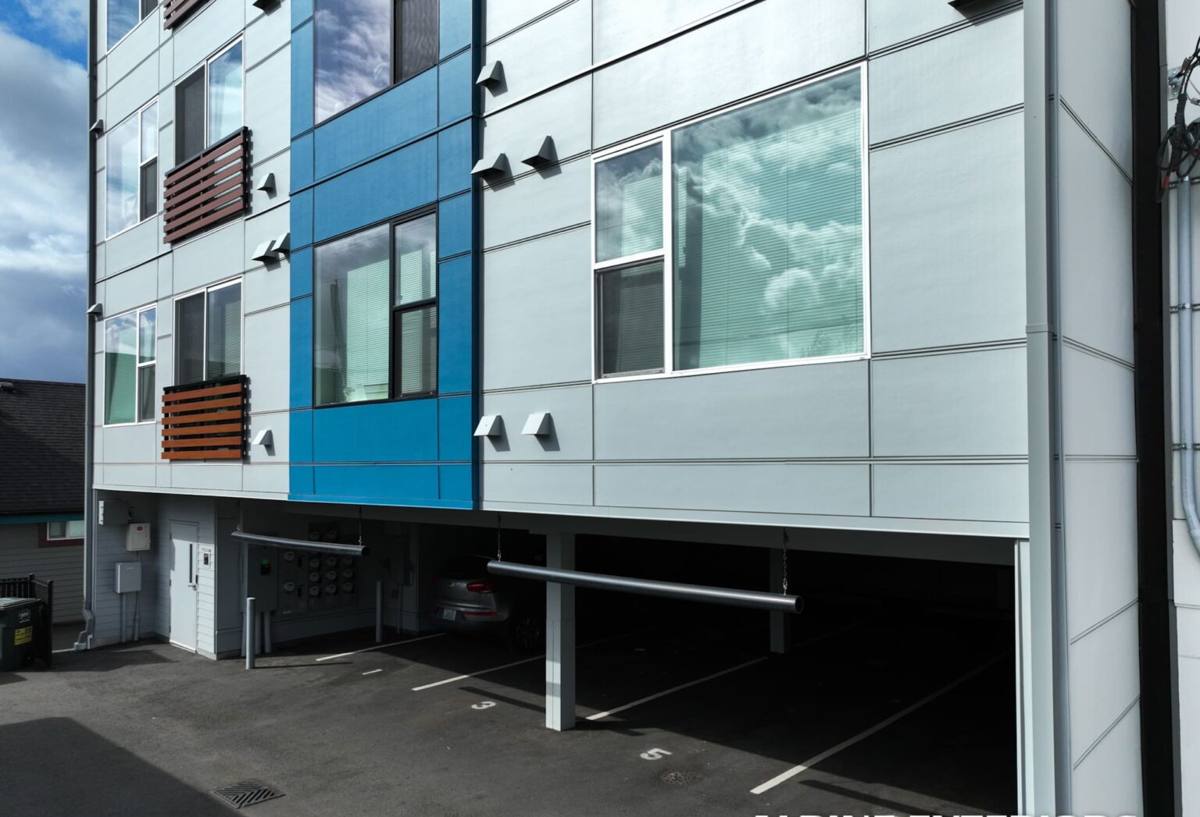
Why Siding Fails Differently on a Shaded, Forested Lot
Most siding damage isn't really caused by any single storm — it's caused by moisture that never gets a chance to leave. On a Kendall property surrounded by conifers and second-growth timber, that shows up in a few predictable ways:
- Moss and algae colonize faster. Damp, shaded siding stays wet longer after every rain, and moss doesn't need much of a foothold — a rough-cut edge, a caulk failure, a nail pop — to start spreading.
- Wood and wood-composite siding softens from below. Moisture wicks up from splash-back at grade or in from a failed joint, and because the wall never fully dries between rain events, rot can advance well before it's visible from the ground.
- Debris buildup hides problems. Needles and leaf litter collect in J-channels, behind trim, and at inside corners, holding water against the siding face long after the rain has stopped.
- Freeze cycles crack softened material. Kendall runs a few degrees cooler than the valley floor toward Ferndale on winter nights. Siding that's already saturated is far more likely to crack when that moisture freezes and expands.
Signs Your Kendall Home Needs Siding Repair
Most homeowners don't catch siding problems until they're significant, because the damage usually starts low, in shaded corners, or behind trim where nobody looks. Walk your exterior and check for these:
- Green or black staining that keeps coming back within weeks of being cleaned
- Soft spots you can press a thumb into, especially near the bottom courses or under windows
- Visible gaps, cracks, or separation at butt joints and corner trim
- Paint that's bubbling, peeling, or chalking unevenly — often worse on shaded walls
- Swelling or bulging panels, a classic sign of trapped moisture behind the surface
- Warping or "waviness" when you sight down the wall from one end
- Insect activity around damaged wood-based siding or trim
- Interior signs — musty smell, damp drywall, or peeling interior paint on an exterior wall
What a Correct Siding Repair Actually Involves
A repair that's just "patch the visible spot and repaint" is how the same section fails again in two years. A repair done right starts with figuring out why the damage happened, not just where.
1. Diagnose the moisture path
Before anything gets cut open, we look at how water is actually reaching that section — bad flashing, a failed caulk joint, a downspout dumping onto the wall, grade sloped toward the foundation, or simply a shaded area that never dries. Fixing the siding without fixing the water path just delays the next repair.
2. Open it up and check what's behind the siding
Visible surface damage is often smaller than what's happening behind it. We pull back the damaged section to check the weather-resistive barrier, sheathing, and framing underneath. If water has been getting behind the siding for a while, there may be sheathing or framing damage that needs to be addressed before new siding goes back on — patching over a soft substrate just hides the problem.
3. Address the water source
This is the step that actually stops the cycle: correcting flashing details, resealing joints with proper materials (not just caulk over a gap), redirecting downspout discharge away from the wall, and improving drainage at grade where needed.
4. Match or replace the affected section
Depending on the siding type, age, and condition, we either replace the damaged boards or panels with matching material, or — if the existing siding is a product prone to repeat failure in shaded, wet conditions — recommend replacing the affected wall section (or the whole elevation) with something built for this kind of exposure.
5. Finish and seal correctly
Trim, caulking, and paint or factory finish get restored to spec, not just close enough. On a shaded Kendall wall, sloppy caulk work or the wrong sealant is often the reason a "repaired" section fails again within a season or two.
Repair or Replace? How We Help You Decide
Not every damaged section needs to become a full re-side. But on a property with Kendall's moisture exposure, it's worth being honest about when a patch is a real fix and when it's just delaying the inevitable.
| Situation | Repair usually makes sense | Replacement is the better call |
|---|---|---|
| Damage extent | Isolated to one section or wall area | Recurring across multiple walls or the whole shaded side |
| Siding material | Fiber cement or sound wood with a clear, fixable moisture source | Older wood composite/hardboard, or material with a history of moisture-related failure |
| Underlying structure | Sheathing and framing test dry and solid | Rot has spread into sheathing or framing |
| Age of siding | Mid-life, otherwise in good condition | Near or past expected service life |
| Root cause | Identifiable, fixable water source (flashing, caulk, drainage) | Chronic exposure the original product was never built to handle |
We'll always give you the repair option first if it's a genuinely sound long-term fix. We only recommend replacement when a patch would just be putting new material on top of a problem that's going to come back.
Why Material Choice Matters More on a Shaded Lot
When a repair does turn into a partial or full re-side, the material decision matters even more on a property like a typical Kendall lot than it would somewhere sunnier and more exposed. Products that struggle with sustained moisture — untreated wood, older composite hardboards, and vinyl that can warp or fade unevenly under mixed sun and shade — tend to show their weaknesses fastest exactly where Kendall siding lives: damp, shaded, slow to dry.
This is why we install James Hardie fiber cement siding and don't offer LP SmartSide, vinyl, Cemplank, Allura, or primed wood as alternatives. It's not that those products have no place in the market — it's that we've made a standard for what we're willing to put our name on, and fiber cement is what holds up consistently in exactly the conditions Kendall throws at a wall: constant damp, shade, moss pressure, and freeze-thaw cycling. Hardie's fiber cement doesn't feed moss the way wood-based products can, it won't rot, and it's engineered specifically for Pacific Northwest moisture exposure through Hardie's HZ5 product line. The factory-applied ColorPlus finish also matters here — a shaded wall that stays damp is hard on field-applied paint, and a finish baked on at the factory holds color and resists peeling far longer than repeated repainting cycles can.
Our Process for a Kendall Siding Repair
- On-site inspection. We walk the full exterior, not just the spot you called about — moisture problems on a shaded lot are rarely isolated to one section.
- Honest diagnosis. We tell you what's actually causing the damage and whether a repair will hold or is likely to recur.
- Written scope and estimate. Clear on what's being repaired, what's being addressed at the source, and what it costs — no surprise change orders for problems we should have caught up front.
- Correct repair, not a patch. Moisture source addressed, structure checked, matching materials used, proper flashing and sealant details restored.
- Cleanup and walkthrough. We show you what was found and what was fixed before we call it done.
Hiring a Crew That Already Works in Kendall
Siding repair is one of those trades where local experience is hard to fake. A crew that's spent time on Kendall's shaded, tree-lined lots already knows to check the north-facing walls first, knows how fast moss comes back on a damp wall if the underlying issue isn't fixed, and knows the difference between a section that just needs a repaint and one that's hiding real rot. That kind of judgment only comes from having done the work here before, not from a general contractor passing through.
Before you hire anyone for siding repair in Kendall or elsewhere in Whatcom County, it's worth asking a few questions:
- Are you licensed and insured to do exterior work in Washington State?
- Will you inspect and address the moisture source, or only replace the visible damaged material?
- What will you check behind the siding before you close it back up?
- What siding products do you install, and why did you choose them?
- Can you give me a written scope before starting the work?
A contractor who's confident in their process will answer all of these without hesitation.
Get an Honest Look at Your Siding
If you're seeing moss that won't stay gone, soft spots, or paint that keeps failing on a shaded wall in Kendall, it's worth having it looked at before the damage spreads into the framing. We'll give you a straight read on what's causing it, whether a repair will actually hold, and what your options are if it's time to replace that section. The estimate is free and there's no pressure either way — fill out the form below and we'll get you scheduled.