 Ferndale Window
 Why Everson Roofs Wear Differently
Everson sits inland from Ferndale in Whatcom County, but the same weather pattern governs both towns: long wet winters, a marine air mass that carries salt-tinged moisture in off the Salish Sea, and a moss season that can run eight months of the year in shaded, north-facing roof planes. A roof built for a drier climate simply doesn't hold up the same way here. Shingles that would last three decades in Eastern Washington can show granule loss, moss colonization, and flashing failure well ahead of schedule once they've spent a few winters under Whatcom County's driving rain.
That's not a knock on any particular product — it's just what constant moisture exposure does to a roof system over time. A correct replacement accounts for it from the decking up, not just the shingle down.
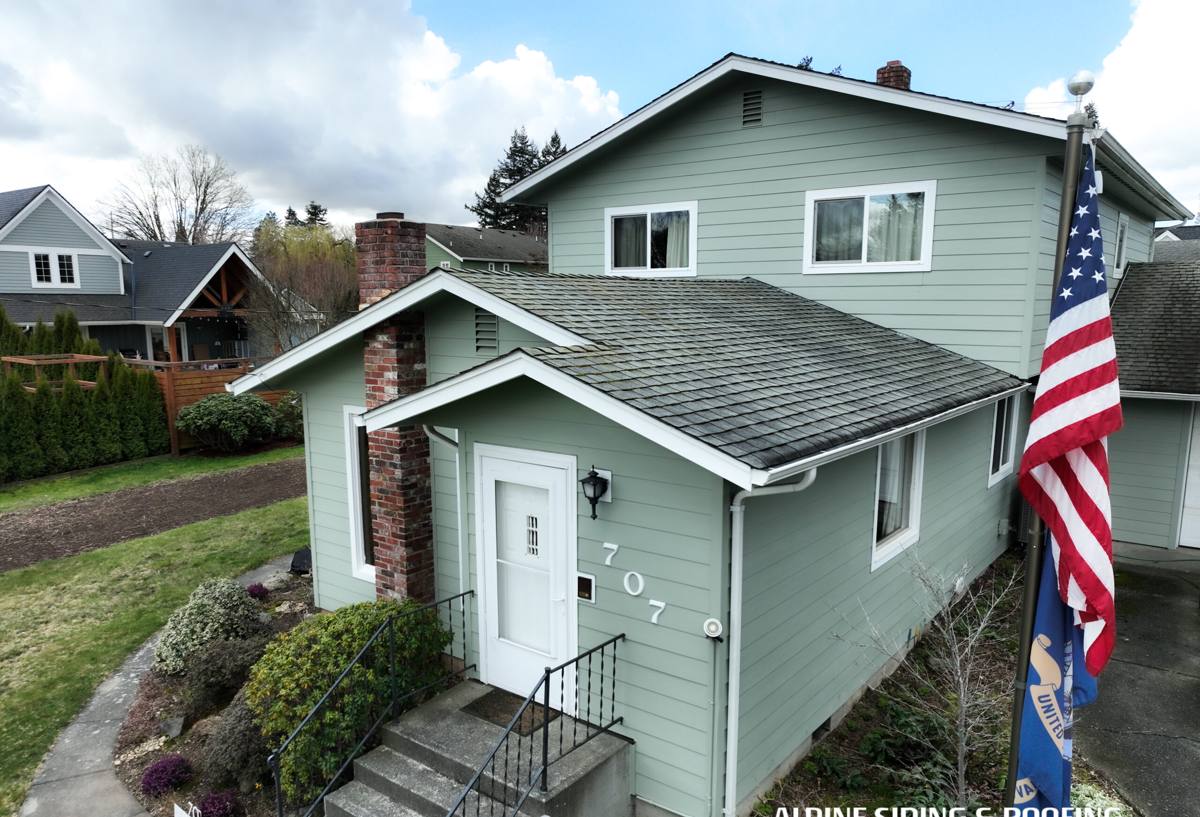
Signs an Everson Home Needs Replacement, Not Repair
Homeowners often call us for a "small leak" that turns out to be a symptom of a roof system near the end of its service life. Some signs point clearly toward full replacement rather than a patch:
- Granules collecting in gutters or at downspout outlets, especially after a hard rain
- Moss or algae streaking that keeps returning within a season of cleaning
- Shingles that are cupping, curling, or cracking at the tab edges
- Soft spots in the decking felt underfoot in the attic or during a walk-across inspection
- Daylight visible through the roof deck from inside the attic
- Repeated flashing leaks around chimneys, skylights, or roof-wall intersections
- A roof already past 20-25 years old, regardless of visible condition
If only one or two of these apply and the roof is younger, a repair may genuinely be the right call. We'll tell you that plainly rather than pushing a full tear-off you don't need yet.
What a Correct Roof Replacement Actually Involves
Tear-Off and Deck Inspection
We remove the old roofing down to the deck rather than layering over it. Layering over an existing roof hides deck damage, traps moisture, and voids most manufacturer warranties outright. Once the deck is exposed, we inspect every sheet of plywood or OSB for soft spots, delamination, or rot — common where old flashing has been leaking quietly for years — and replace only what's actually compromised.
Underlayment Built for Wet Climates
In a climate where wind-driven rain can push water sideways under shingle tabs, underlayment choice matters as much as the shingle itself. We use synthetic underlayment across the full deck and self-adhered ice-and-water membrane at the eaves, valleys, and any roof-wall transitions — the spots where water concentrates and where most leaks in this region actually start.
Flashing Done Right
Flashing failure, not shingle failure, causes the majority of leaks we find on Whatcom County roofs. That means new step flashing at every wall intersection, new counterflashing at chimneys, and properly lapped valley flashing — not caulk substituting for metal. Caulk is a maintenance item, not a flashing system, and we don't rely on it to do a flashing detail's job.
Ventilation That Matches the Deck
A roof system needs balanced intake and exhaust ventilation to keep the attic dry and the shingles at a stable temperature. We size ridge and soffit ventilation to the attic volume rather than installing a standard kit regardless of house layout — undersized ventilation is a common reason newer roofs still develop moisture problems in this climate.
Material Options for Everson's Climate
Every roofing material handles Whatcom County's rain and moss exposure differently. Here's how the common options compare for a wet, moss-prone climate:
| Material | Typical Lifespan Here | Moss Resistance | Maintenance |
|---|---|---|---|
| Architectural (laminate) asphalt shingle | 25-30 years | Moderate — benefits from copper/zinc strips | Periodic moss treatment recommended |
| 3-tab asphalt shingle | 15-20 years | Lower — thinner profile sheds less debris | More frequent moss and debris clearing |
| Standing seam metal | 40-50+ years | High — smooth surface discourages growth | Low; occasional debris clearing |
| Cedar shake | 20-30 years with upkeep | Low without treatment — absorbs moisture | High; needs regular treatment and inspection |
We install architectural asphalt shingle roofs most often on Everson homes because they balance upfront cost, appearance, and performance well in this climate. Metal roofing is a strong option for homeowners planning to stay long-term and wanting to minimize moss battles altogether. We generally steer clients away from cedar shake as a primary roofing choice in this climate — not because it's a bad product, but because its moisture-absorbing nature and upkeep demands are a poor match for eight months of wet weather a year, and we'd rather be upfront about that maintenance burden before you invest in it.
What Actually Drives the Cost
Roof replacement quotes vary house to house, and the shingle itself is often not the biggest line item. The factors that move the number most are:
| Cost Factor | Why It Matters |
|---|---|
| Roof pitch and accessibility | Steeper or higher roofs require more safety setup and slow the work down |
| Deck condition | Rotted sheathing found at tear-off adds material and labor to replace |
| Number of valleys, penetrations, and roof planes | Every chimney, skylight, and valley needs individual flashing work |
| Layers being removed | Tearing off two layers of old roofing costs more than tearing off one |
| Material selection | Shingle grade, metal panel, or specialty products shift price directly |
| Ventilation upgrades needed | Adding ridge or soffit venting where none exists is additional scope |
We give you a written estimate that breaks these out rather than a single lump number, so you can see exactly what you're paying for and where a different material or scope changes the price.
How Our Process Works
- On-site inspection: We walk the roof and attic, check the deck condition where accessible, and photograph problem areas so you can see what we see.
- Written estimate: A detailed, itemized quote covering material, labor, flashing, ventilation, and disposal — no vague allowances.
- Scheduling around weather: Tear-offs are scheduled for dry-weather windows whenever possible, with the deck tarped and protected if conditions shift mid-project.
- Tear-off and deck repair: Old roofing comes off, the deck is inspected and repaired, and any hidden damage is reviewed with you before we cover it back up.
- Underlayment, flashing, and roofing installation: Installed in that order, with attention to every valley, wall intersection, and penetration.
- Ventilation check: Intake and exhaust venting confirmed or upgraded to match the attic.
- Cleanup and magnetic sweep: Job site and yard cleared of debris and nails before we consider the job done.
- Final walkthrough: We review the finished roof with you and answer any questions before closing out the job.
Moss Season and Ongoing Roof Health
Even a correctly installed roof needs some seasonal attention in this climate. Moss thrives on north-facing and shaded roof planes where moisture lingers longest, and left unchecked it holds water against the shingle surface and works its way under tabs over time. A few habits extend a new roof's life significantly:
- Keep gutters clear so water doesn't back up under the eave line
- Trim back overhanging branches that shade roof planes and drop debris
- Have moss treated or gently removed before it forms a thick mat, rather than after
- Schedule a roof check after major windstorms to catch lifted shingles or displaced flashing early
- Watch for granule buildup in gutters as an early warning sign, not just an aesthetic issue
None of this replaces a properly built roof system — it just protects the investment once it's in.
Why a Crew That Already Works Everson Matters
Roofing code requirements, typical house ages, and common construction details vary by area, and a crew that regularly works Everson and the surrounding Whatcom County communities already knows what tends to show up on a tear-off in this specific area — the flashing shortcuts common in certain build eras, the deck materials typically used, and how local weather windows affect scheduling. That familiarity means fewer surprises mid-project and a more accurate estimate up front, because we're not guessing at conditions we've never encountered before.
It also means straightforward local accountability. A crew based in the region isn't disappearing after the invoice clears — we're back in this area on the next job, which is exactly the incentive that keeps workmanship honest.
Questions to Ask Before You Hire
Whoever replaces your roof, a few questions separate a properly run job from a rushed one:
- Is the deck inspected and any rot addressed as a separate line item, or is it just "included" with no detail?
- What underlayment and ice-and-water shield are specified, and where exactly are they used?
- How is flashing handled at walls, chimneys, and valleys — new metal, or reused?
- Is ventilation assessed and sized to the attic, or installed as a generic kit?
- What's covered under workmanship warranty versus manufacturer material warranty, and for how long?
- Is the crew licensed and insured for roofing work specifically, with proof available on request?
If a contractor can't answer these clearly, that's worth noting before you sign anything.
If your Everson roof is showing its age or you just want a straight answer on whether repair or replacement makes sense, we're happy to take a look. Reach out for a free, no-pressure estimate using the form below.