 Ferndale Window
 Why Sudden Valley Decks Wear Out Differently
Sudden Valley sits back in heavy tree cover along Lake Whatcom, and that setting changes how a deck ages compared to one out in the open. Shade from mature trees keeps decking damp long after a storm has passed, needles and leaf litter collect in the gaps between boards and hold moisture against the wood, and the same marine-influenced weather that moves across the rest of Whatcom County, driving rain, long stretches of overcast humidity, and a moss season that can run most of the year, still reaches back into these wooded lots. A deck built for a drier, more open site doesn't necessarily hold up the same way here.
We repair decks throughout the greater Ferndale and Whatcom County area, and Sudden Valley's combination of shade, slope, and sustained dampness is one of the more demanding environments we work in. This page covers what actually goes wrong with decks in that setting, what a correct repair involves, and how we approach the work.
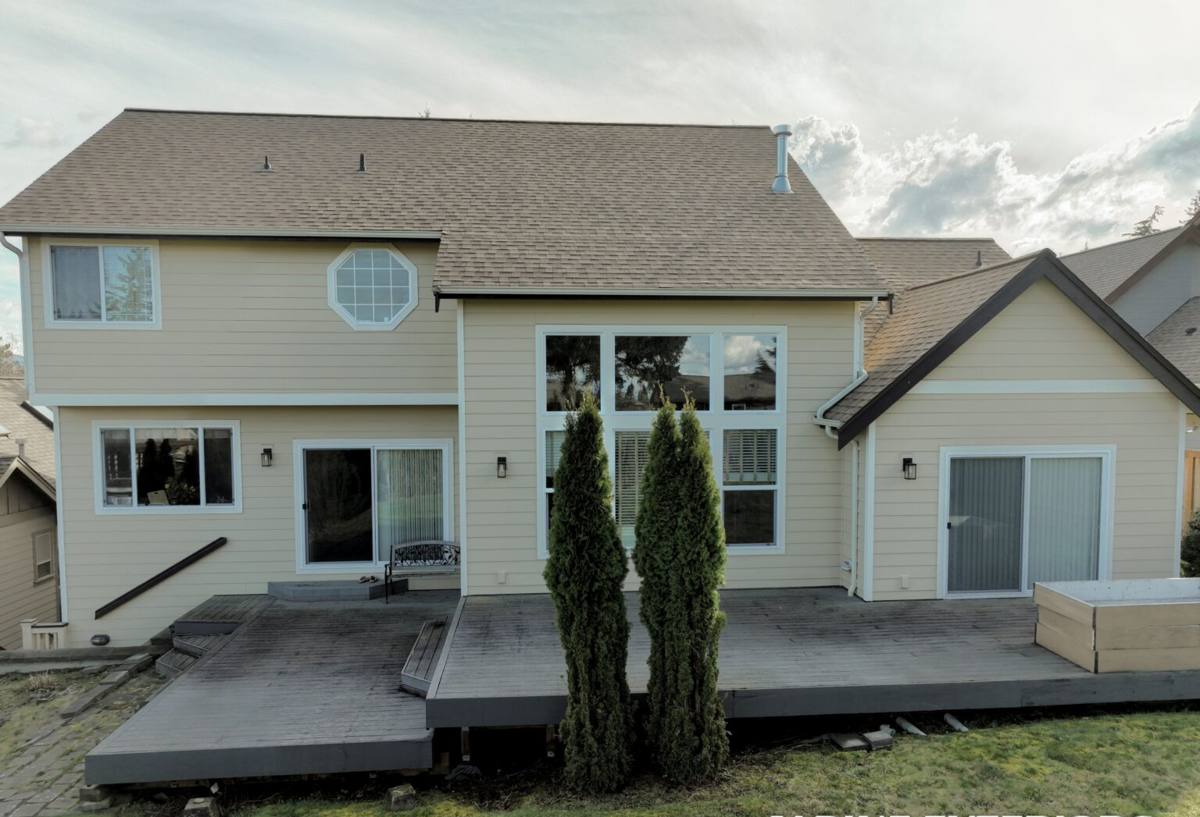
Common Deck Problems We See in This Area
Moss, Algae, and Trapped Debris
Shaded decking holds onto moisture far longer than decking that gets regular sun, and moss takes hold anywhere that dampness sits undisturbed. It's more than a cosmetic issue: moss and algae hold water directly against the wood surface, and on painted or stained decking that film traps moisture underneath a finish that's supposed to be shedding it. Left alone through a few wet seasons, that constant dampness is usually what starts the rot underneath.
Soft, Cupping, or Rotting Boards
Wood decking that's stayed wet for extended periods starts to cup, split, or go soft, especially at butt joints, around fasteners, and near the house where the deck gets the least sun and airflow. Once a board is soft enough to flex or feels spongy underfoot, the damage has usually gone past the surface and into the board's structure, not just the finish.
Rusted or Failing Fasteners and Hardware
Standard fasteners and connector hardware corrode faster under sustained damp conditions, and once a fastener starts rusting it loses grip on the wood around it, which is often what makes a board start to lift or squeak before the wood itself has failed. Older decks, especially ones built before corrosion-resistant hardware was standard practice, are the ones we see this on most.
Post Bases, Beams, and Footings
Because a lot of Sudden Valley lots have real slope to them, deck framing here often carries more structural load and sits higher off grade than a flat-lot deck would. Post bases that sit in standing water or damp soil, beams without proper flashing or drip edges, and footings that have shifted or settled are structural problems, not cosmetic ones, and they're the parts of a deck most likely to get missed by someone only looking at the decking surface.
Guardrails and Stairs
Guardrail posts and stair stringers take direct weather exposure and repeated stress from actual use, so they're often among the first structural elements to loosen or weaken. A guardrail that wobbles or a stair stringer that's splitting isn't just an eyesore, it's a safety issue that current building code addresses specifically for a reason.
Repair or Replace? How We Make the Call
Not every deck problem calls for a full tear-off, and not every problem is safely solved with a patch. The honest answer depends on how far the damage has spread and whether the structural framing underneath is sound.
| Factor | Usually Points to Repair | Usually Points to Replacement |
|---|---|---|
| Extent of soft or rotted boards | Isolated boards or a small section | Rot spread across most of the deck surface |
| Framing condition | Joists and beams solid, connections intact | Structural rot in joists, beams, or ledger board |
| Post bases and footings | Bases sound, minor hardware upgrades needed | Footings shifted, settled, or undersized for current code |
| Age and material | Newer deck, quality lumber, isolated wear | Older deck at or past its expected service life |
| Guardrails and stairs | Loose but structurally sound, needs hardware | Rotted posts, undersized framing, non-compliant spacing |
We'll walk the whole structure, not just the visible decking, before recommending either path, and we'll explain what we're seeing so the decision makes sense to you, not just to us.
What a Correct Deck Repair Involves
A Real Structural Inspection
A proper repair starts underneath the deck, not on top of it. That means checking the ledger board connection to the house, probing joists and beams for soft spots, checking post bases and footings, and confirming the framing was adequate to begin with. Skipping this step and only replacing what's visible from above is how the same problem comes back in a year or two.
Fixing the Structure Before the Surface
Any rot found in framing, ledger connections, or posts gets addressed before we touch decking boards. A new deck surface over a compromised structure looks fine for a season and then fails from underneath, which is a common shortcut we won't take.
Board-Level Repair and Replacement
Individual boards with isolated rot or splitting can often be pulled and replaced without disturbing the rest of the deck, provided the framing underneath is sound and we can source a reasonable match. Where damage is spread more broadly across the surface, a full re-decking on top of solid, repaired framing is usually the more honest long-term fix.
Hardware and Fastener Upgrades
Where we're doing structural repair work, we upgrade to corrosion-resistant structural screws, hangers, and post connectors rated for exterior use, rather than replacing like-for-like with the same fasteners that failed the first time. It's a small cost difference against a repair job that should last.
Guardrails and Stairs to Current Code
Guardrail height, baluster spacing, and stair stringer condition all need to meet current building code, not just look sturdy. When we're repairing a guardrail or stair system, we bring it up to code as part of the job rather than reattaching an undersized or non-compliant original.
Our Deck Repair Process
- On-site inspection: We walk the full structure, top and underneath, checking decking, framing, ledger connection, posts, footings, and railings.
- Honest assessment: We tell you what's structural, what's cosmetic, and what can wait, along with a repair-versus-replace recommendation and why.
- Written estimate: A clear scope of work and price before anything starts, with no pressure to sign on the spot.
- Structural repairs first: Framing, ledger, post base, and footing issues get corrected before any surface work begins.
- Decking, hardware, and railings: Board replacement, fastener upgrades, and code-compliant guardrail and stair work completed to match the rest of the structure.
- Final walkthrough: We check the finished work with you before we consider the job done.
Wood vs. Composite: Repair Considerations
What a deck is built from changes how it fails and what repairing it looks like. Both materials show up on Sudden Valley decks, and both can be repaired correctly if the framing underneath is sound.
Wood Decking
Wood decking is generally easier to repair board by board, since a new cedar or treated lumber board can be cut, fit, and finished on site. The trade-off in a shaded, damp setting like this is that wood needs regular cleaning, sealing, or staining to keep moisture from working its way in again, and skipping that maintenance is usually what leads to the rot we get called out for.
Composite Decking
Composite boards resist rot and don't need staining, which suits a shaded lot that stays damp longer than average. The trade-offs are that composite is more sensitive to correct installation, board expansion, gapping, and fastening all matter more than with wood, and matching an older composite board's color and profile exactly can be difficult once a product line has been updated or discontinued. We'll be upfront if a board-level match isn't realistic and a wider section needs replacing instead.
Signs Your Deck Needs Attention Now
- Boards that feel soft, spongy, or flex underfoot, especially near the house or in shaded areas
- Moss or algae that returns quickly after cleaning
- Rust streaks around fasteners or visibly corroded hardware
- A guardrail or post that wobbles or moves when pushed
- Gaps or separation where the deck meets the house at the ledger board
- Stair stringers that feel bouncy or show splitting
- Standing water on the deck surface or underneath it after rain has stopped
- Visible settling, tilting, or unevenness across the deck surface
Why a Crew That Already Works Sudden Valley Matters
Sudden Valley's wooded, sloped lots aren't like a flat, open-yard deck job, and a crew that already works this community knows that before they show up. That means understanding how shade and tree cover affect which boards rot first, how sloped lots change what a footing and post base actually need to carry, and how to work around the access and site conditions that come with a heavily treed, hillside neighborhood. It also means a more realistic estimate the first time, instead of a number that changes once the crew sees what the site actually involves.
Ready for an Honest Look at Your Deck
If your Sudden Valley deck has soft boards, persistent moss, a loose railing, or you're just not sure what shape it's really in underneath, we're glad to take a look. Reach out using the form below for a free, no-pressure estimate.