 Ferndale Window
 Sandy Point sits low and flat along Lummi Bay, a waterfront community carved out of tideland just outside Ferndale in unincorporated Whatcom County. Most lots here are canal-front or bay-front, laid out to put a water view right outside the living room, and that shapes what "custom windows" means in this neighborhood more than in most nearby areas. Many homes started out as small vacation cottages built in the 1960s and '70s, with window openings, headers, and framing sized for a weekend place rather than a full-time residence — and as those cottages get remodeled and lived in year-round, the openings rarely match anything a manufacturer sells off the shelf. Add in wind coming straight off Lummi Bay and the Strait of Georgia with nothing to slow it down, and a custom window project here has to solve two problems at once: fit an opening that doesn't match modern standards, and survive a stretch of coastline that doesn't forgive a shortcut installation.
Why Sandy Point Homes End Up Needing Custom Windows
A few things push window projects in Sandy Point out of stock-size territory more often than in a typical Ferndale neighborhood set back from the water. Original cottage construction from the community's early decades used smaller openings and lower header heights than current building practice, so a modern-size replacement often needs a reframed opening or a custom-built unit rather than a straight swap. Additions, dormers, and second-story conversions — common as these homes get upgraded for full-time living — create rough openings that don't match anything original to the house. And because the whole point of a canal-front or bay-front lot is the water view, a lot of owners want picture windows, slider walls, or corner window groupings that are custom by definition, not stock sizes that happened to need replacing.
None of that is unusual work for us — it's routine in this stretch of Whatcom County. But it changes how the project starts: with careful field measurement, an honest conversation about what the opening and the framing underneath it can actually support, and a realistic timeline, since custom units are built to order rather than pulled off a shelf.
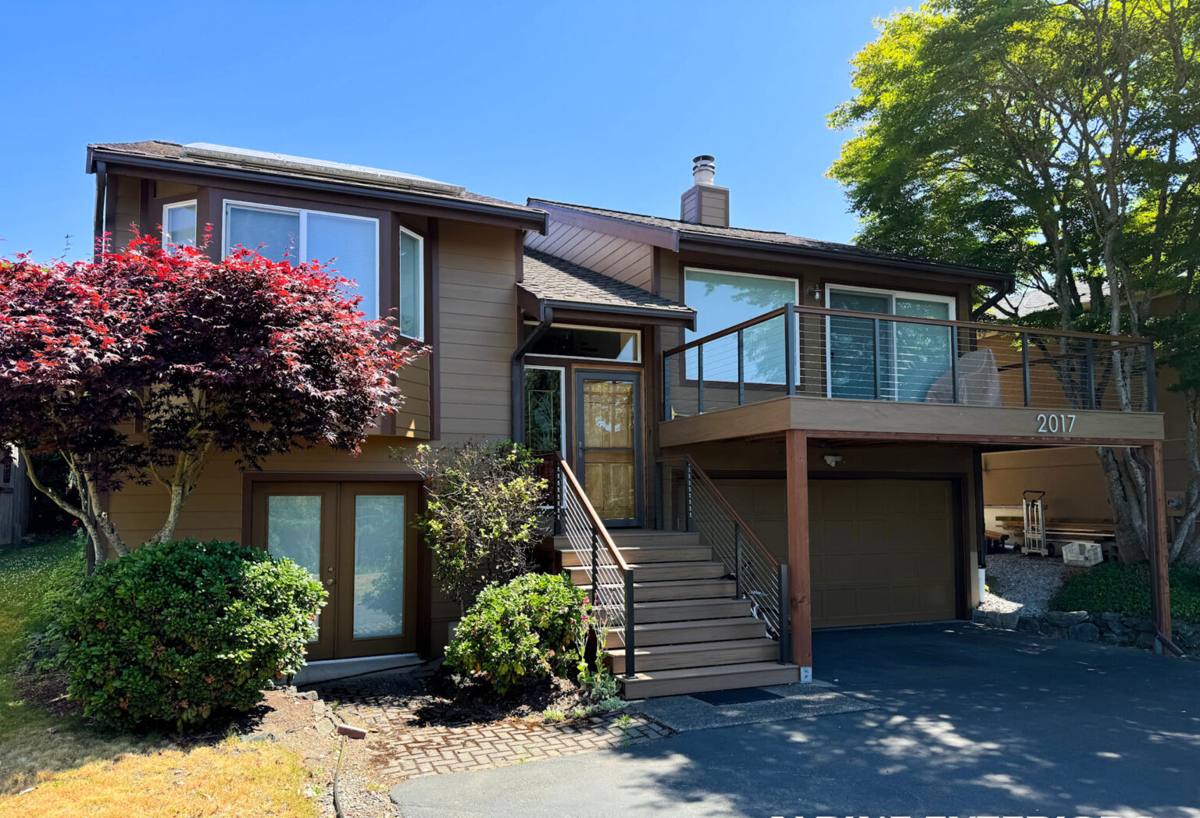
The Climate Factor Custom Windows Can't Ignore
Sandy Point's location is what makes the climate math different from most of Ferndale. The land here is low, flat, and diked, with little standing between open water and a house to break the wind before it arrives. Wind off Lummi Bay and the Strait of Georgia hits window walls more directly here than on higher, more sheltered lots elsewhere in Whatcom County, and it drives rain sideways into wall assemblies rather than letting gravity carry it straight down. Salt-laden air off the bay adds a steady corrosion load on hardware, fasteners, and lower-grade frame components — something original aluminum-frame sliders from the community's cottage era show clearly, with pitted tracks and hardware that stopped moving smoothly years before the glass itself failed. Tight lot spacing and the mature hedges many owners keep for privacy also create shaded, damp pockets around north- and east-facing windows, where moss and algae take hold and stay established for most of the year.
Custom windows raise the stakes on all of that. A wide picture window or a slider wall built to capture a canal or bay view has more glass area for wind load to act on and more sill and perimeter length that has to be flashed correctly. A dormer or second-story addition puts a window higher up, more exposed to wind, with a more complicated tie-in to the roofline below it. None of this rules custom windows out — it means the installation has to be built for Sandy Point's specific exposure, not the calmer conditions a standard installation guide assumes.
Where the Risk Actually Lives
On a custom window, it's rarely the glass or the frame material that fails first — it's the transition points. A wide slider-wall sill that doesn't shed water outward will hold moisture against the framing below it. A dormer window's tie-in to the roof is a spot where flashing has to be sequenced correctly or water finds its way behind the siding. Those spots take real time to detail properly, and they're exactly the spots a rushed installation is most likely to shortcut.
Custom Window Types We Build For
- Non-standard replacement sizes — matching openings in original Sandy Point cottages built before modern window sizing was standard
- Picture and large-format windows — fixed units built to capture a canal or bay view, with more glass area to manage for wind load and corrosion resistance
- Slider walls and multi-unit window groupings — combined window sets that open up an entire wall toward the water, each unit tied into one continuous flashing plan
- Dormer and second-story addition windows — new openings created as cottages get built up or out for full-time living, more exposed to wind than ground-floor units
- Corner and angled windows — openings that meet at or near a building corner to maximize a view, requiring custom framing and flashing where the two planes meet
- Matched replacement sets — full-house window replacements where every unit needs to sightline correctly and share the same frame material and finish
What a Correct Custom Window Job Involves
Measuring and Ordering
Custom work starts with precise field measurement, not a catalog lookup. We measure the actual opening, check for out-of-square or out-of-level conditions common in older Sandy Point cottages, and account for the clearance the finished trim and flashing will need. Because custom units are built to order, this also sets honest expectations on lead time — a custom window generally takes weeks, not days, to arrive, and we'll tell you that upfront.
Opening Prep and Structural Considerations
Older cottage framing in this area wasn't always built to carry a large picture window or a multi-unit slider wall, so we check what the existing wall can actually support before recommending a wider opening. On additions and dormers, we also confirm the new framing was built to the load and flashing details a window of that size and exposure needs, rather than assuming it was.
Flashing and Weatherproofing
This is the step that matters most on Sandy Point's open, wind-exposed lots. Every custom shape changes how flashing has to be sequenced — a wide picture-window or slider-wall sill needs to shed water outward instead of pooling against the frame, a corner window needs its two flashing planes tied together cleanly where they meet, and a dormer window needs its roof tie-in treated as its own weatherproofing detail, not an afterthought. We build the flashing plan around the specific shape and exposure of the opening, not a generic template.
Finish and Trim Integration
Custom windows in Sandy Point tend to sit in the most visible, most-used part of the house — the wall facing the canal or the bay — so the trim and finish work has to match the rest of the exterior and hold up to the same salt air and moisture. We plan that integration before the window arrives so the finished result looks like it belongs on the house.
A Quick Checklist Before You Order
- Confirm the opening has been field-measured, not estimated from old plans or a rough guess
- Ask what the flashing plan looks like for your specific shape and exposure, not a generic answer
- Verify the framing behind a wider opening was built, or will be built, to actually support it
- Get a realistic lead time in writing before you commit to a schedule
- Ask what frame material and hardware finish is recommended for a canal- or bay-front exposure
- Confirm what's covered under warranty, since the window unit and the installation labor are often covered separately
Our Process, Start to Finish
- On-site assessment — we measure the opening, check square and level, and evaluate structural or flashing concerns specific to Sandy Point's wind and moisture exposure
- Honest recommendation — custom order, modified stock size, or opening reframe, explained with the reasoning behind it
- Ordering and lead time — a realistic timeline for the custom unit to arrive, since this isn't a same-week job
- Removal and opening prep — the old unit comes out carefully, and any hidden rot, corrosion, or flashing issues get addressed before the new window goes in
- Installation and flashing — the new unit is set, shimmed, and flashed to a sequence built for its specific shape and this stretch of coastline
- Trim and finish — exterior trim is integrated to match the surrounding siding and hold up to the same conditions
Costs and Trade-Offs: Custom vs. Stock
What Actually Changes
| Factor | Stock Window | Custom Window |
|---|---|---|
| Lead time | Often available quickly in common sizes | Built to order — expect weeks, depending on shape and glass size |
| Fit | Standard sizes only — reframing needed if the opening doesn't match | Matched to the exact opening or the view it's built to capture |
| Wind and rain exposure | Fine for sheltered, standard openings | Needs a flashing and framing plan built for open, unbroken exposure to the bay |
| Flashing complexity | Straightforward, well-documented rectangular details | Shape-specific — slider walls, corner units, and dormers each need their own plan |
| Cost | Lower, especially for common sizes | Higher, reflecting manufacturing and installation complexity |
| Best fit | Simple replacements in standard, sheltered openings | Cottage-era homes, additions, view walls, and corner or dormer windows |
What Drives Cost
We won't quote a number without seeing the opening in person, but the factors that move price on custom work are consistent from project to project.
| Factor | Why It Matters |
|---|---|
| Size and glass area | Larger view windows cost more to manufacture and carry more wind load on an exposed lot |
| Shape complexity | Slider walls, corner windows, and dormer units require specialty manufacturing and more flashing labor |
| Frame material and hardware | Corrosion-resistant hardware and coastal-rated finishes cost more than standard-grade equivalents |
| Structural work | Wider openings sometimes need added framing support before the unit goes in |
| Opening condition | Rot, corrosion, or old flashing failures in cottage-era framing add repair work before the new unit is set |
| Number of units | A matched set for a full-house replacement typically has better per-unit economics than a single window |
Frame Materials for This Climate
Frame material matters even more on an exposed canal- or bay-front lot, where salt air and wind-driven rain work on hardware and seals harder than further inland. We'll walk through the honest trade-offs for your specific opening rather than defaulting to whatever installs easiest. Vinyl and fiberglass frames with corrosion-resistant hardware generally hold up to Sandy Point's exposure with less ongoing maintenance than an all-wood finish or original aluminum framing, which is why we lead with them on weather-facing replacements. A wood-look interior with a low-maintenance exterior cladding can still make sense when the interior appearance matters and the exterior is properly protected.
Why Local Experience Matters for This Kind of Work
Manufacturer installation guides are written for average, sheltered conditions, and neither Sandy Point's cottage-era framing nor its open exposure to Lummi Bay fits that description. A crew that has actually replaced windows in this community — reframed old cottage openings, built out slider walls facing the canal, flashed dormer additions — knows which details in a standard guide are worth extra time here, and which corners genuinely can't be cut on a lot with nothing between the house and open water.
That experience shows up in decisions that don't come up in a sales pitch — how much lap a flashing course needs on a picture-window sill facing open water, when a corner window assembly needs extra structural support, why an aluminum-frame slider that looked fine for forty years still needs a hardware upgrade once it's replaced. Those are the details that decide whether a custom window is still performing cleanly after a decade of Whatcom County storms and salt air, or showing leaks and stuck hardware within a few years.
Ready When You Are
If you're updating an original cottage window, planning an addition, or thinking about a picture window or slider wall to make the most of a canal or bay view, it's worth having someone look at the specific opening before you start pricing units. We offer free, no-pressure estimates for custom window projects in Sandy Point and throughout the Ferndale area — use the form below to get a time on the schedule.