 Ferndale Window
 Why Window Choices Are Different Near Bellingham
Homes in and around Bellingham sit in a tough spot for exterior building materials. You've got marine air rolling in off Bellingham Bay and the Strait of Georgia, frequent wind-driven rain that hits windows sideways instead of straight down, and a wet season that stretches long enough for moss and algae to get a foothold on anything that stays damp. None of that is unique to one street or subdivision — it's the baseline condition for most of Whatcom County. Windows here don't fail because they're old in a calendar sense. They fail because moisture found a way in and nobody caught it early.
That's the lens we use for every custom window job in this area: not "what's the nicest window we can sell," but "what will actually keep water, wind, and condensation out of this specific wall assembly for the next twenty-plus years."
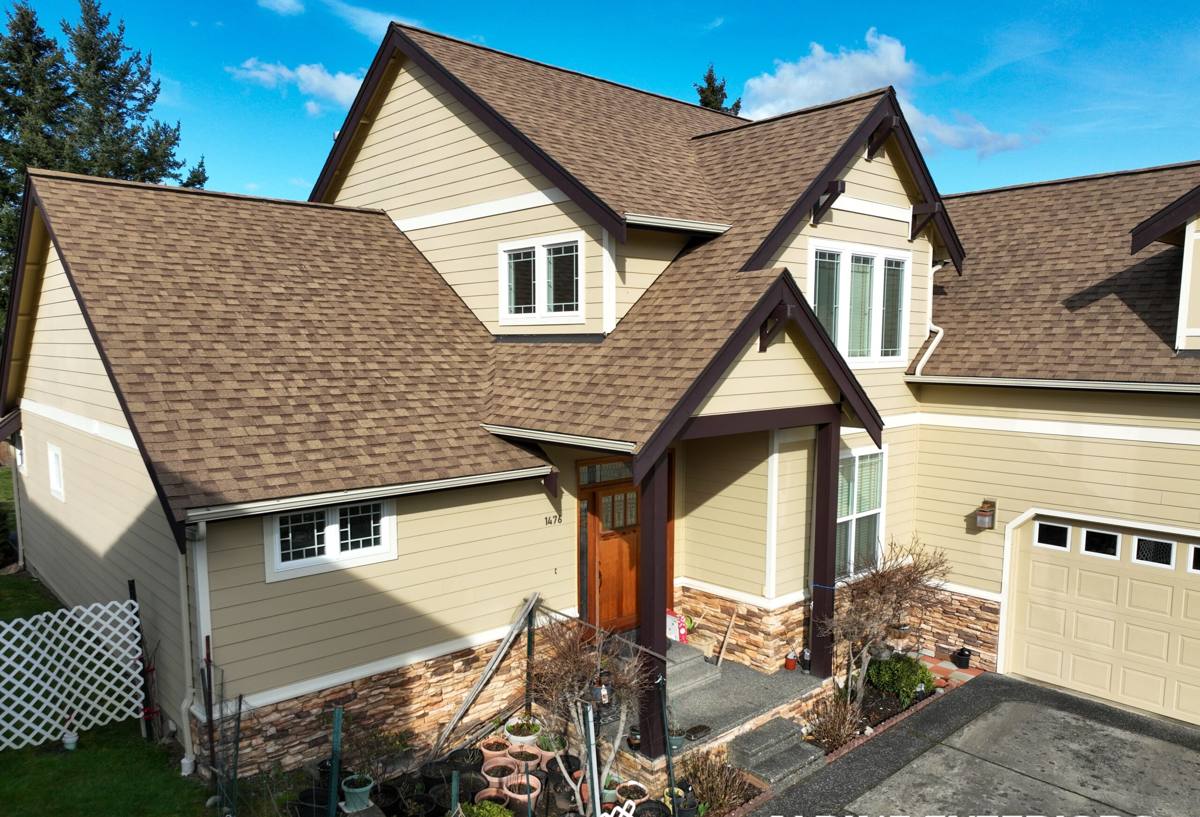
What "Custom" Actually Means Here
Custom windows aren't a product line — they're windows built to the actual opening, the actual wall depth, and the actual exposure of your house, rather than forced to fit a stock size. On older Bellingham-area homes, especially anything built before standardized window sizing became common, openings are rarely a perfect match for off-the-shelf units. A custom order means:
- Exact width and height measurements taken at the rough opening, not just the existing sash
- Frame depth matched to your wall construction so the window sits flush, not proud or recessed
- Sill and jamb details that account for how much weather that specific wall face actually takes
- Color, grille pattern, and hardware chosen to match the house rather than whatever's in stock
The tradeoff is straightforward: custom units cost more and take longer to arrive than stock windows, but they eliminate the shimming, gap-filling, and trim gymnastics that come with forcing a close-but-not-quite window into an odd opening. In a climate where every gap is a potential water path, that fit matters more here than it would somewhere dry.
When Custom Is Worth It vs. When Stock Sizing Works
Not every replacement needs a fully custom unit. If your existing openings are standard sizes and in good condition, a quality stock or made-to-order window can be the more cost-effective call. Custom really earns its cost when you're dealing with older, non-standard framing, a wall that's been modified over the years, or an opening with visible signs of past water intrusion that needs to be corrected as part of the install — not just covered up with a new window.
Frame Materials: What Holds Up in Salt Air and Long Wet Seasons
Frame material is the single biggest factor in how a window performs over time in this climate. Here's how the common options compare for a marine, high-rainfall setting like Bellingham's:
| Material | Moisture Behavior | Maintenance | Typical Lifespan Here |
|---|---|---|---|
| Vinyl | Won't rot or corrode; seams are the weak point if not welded well | Low — occasional cleaning | 20-30 years |
| Fiberglass | Excellent stability, resists swelling and warping in wet-dry cycles | Low | 30-40+ years |
| Aluminum | Durable but conducts cold and can corrode near salt air without proper coating | Moderate — coating matters | 25-35 years, coating-dependent |
| Wood (clad exterior) | Beautiful, but exposed wood is vulnerable to the wet seasons here | High — regular inspection and sealing | Varies widely with upkeep |
We're upfront about wood: a wood-interior window with a durable exterior cladding can look great and perform well, but any exposed, unclad wood on a house that sits in this much rain and salt air is signing up for a maintenance schedule most homeowners don't want. That's not a knock on wood as a material — it's just an honest read on what this specific climate does to it over time.
Glass Packages That Make Sense in This Climate
Glass matters as much as frame material. For Bellingham-area homes, we generally steer toward:
- Dual-pane, low-E glass as the baseline — it cuts heat loss and helps manage the condensation that shows up when warm indoor air meets cold glass during our long damp stretches
- Argon or krypton gas fill between panes for better insulating performance without added bulk
- Warm-edge spacers instead of older aluminum spacers, which reduces the cold edge that condensation and eventual seal failure tend to start at
- Tempered glass in any location required by code — near doors, low sills, or wet areas
Triple-pane is worth discussing on north- or west-facing exposures that take the brunt of the weather, but it's a real cost jump and isn't automatically the right call for every wall of the house.
Our Installation Process
The window itself is only part of the job. In this climate, the flashing and sealing details around the window are what actually determine whether water gets in five years from now. Our process on a custom window job runs like this:
- On-site assessment — we check the existing openings for rot, past water damage, and how the current windows were flashed, not just measure for size
- Precise measurement and ordering — exact dimensions and frame depth sent to the manufacturer, with lead times set clearly up front
- Removal — old units come out carefully so we can inspect the sill and framing underneath before anything new goes in
- Repair as needed — any soft wood, compromised sheathing, or old failed flashing gets fixed before the new window goes in, not painted over
- Correct flashing sequence — sill pan, side flashing, and head flashing installed in the right shingle-lap order so water sheds outward at every layer
- Setting and sealing the window — shimmed level and square, sealed with the right sealant for the substrate, insulated around the frame
- Interior and exterior trim — finished to match the house, with a final check of operation and seal
Skipping or rushing the flashing sequence is the most common reason a "new window" leaks within a few years. It's the part of the job you don't see once the trim is on, which is exactly why it needs to be done right the first time.
Signs an Older Bellingham-Area Home Needs Window Attention
Because problems here tend to be moisture-driven rather than sudden failures, they usually show up gradually. Worth checking for:
- Fogging or a permanent haze between panes — a sign the seal has failed and the gas fill is gone
- Soft or discolored wood trim or sill, inside or outside
- Visible gaps, dried-out caulk, or daylight around the frame
- Windows that are hard to open, close, or lock — often a sign of frame swelling or settling
- A musty smell or visible mold near the window frame, especially in less-ventilated rooms
- Moss or algae buildup on the sill or exterior trim that keeps coming back
- Noticeably cold drafts near the glass or frame on windy, rainy days
Any one of these on its own isn't necessarily an emergency, but a few of them together usually mean the window — or the flashing behind it — has been letting moisture in for a while.
What Custom Windows Typically Cost, and What Moves the Number
We won't quote a firm price without seeing the house, but here's what actually drives cost up or down on a custom window project in this area:
| Factor | Effect on Cost |
|---|---|
| Number of openings replaced at once | Per-unit cost usually drops with larger batch orders |
| Frame material (vinyl vs. fiberglass vs. clad wood) | Fiberglass and clad wood run higher than vinyl |
| Non-standard sizes or shapes | True custom shapes (arched, angled) cost more than rectangular custom sizing |
| Condition of the existing opening | Rot or water damage found during removal adds repair time and cost |
| Glass upgrades | Triple-pane, specialty tints, or extra tempering add per-unit cost |
| Access and second-story work | Harder-to-reach openings add labor time |
The honest advice we give most homeowners: don't chase the cheapest quote on this particular job. A poorly flashed window installed cheap is a repair project waiting to happen in a climate this wet — the labor and detailing around the window matter as much as the unit itself.
Why It Matters That the Crew Already Works This Area
A crew that regularly works Bellingham and the rest of Whatcom County has already seen how local wall assemblies, siding types, and older construction methods behave under this specific weather pattern. That's not a marketing point — it changes real decisions on the job, like how deep to set a sill pan, what sealant actually holds up against sustained wind-driven rain, and which older homes in this area are more likely to have hidden rot behind the trim before a single window comes out. A crew coming from a drier climate, or one that only sees a house once, doesn't have that same read on what tends to go wrong here and why.
It also means someone local is answerable if a question comes up after the job is done — not a call center, but a crew that's still working in the same neighborhoods.
Maintaining Custom Windows in a Salt Air, Long Wet Season Climate
A well-installed window still needs basic upkeep in this environment:
- Rinse frames and glass periodically to clear salt residue and organic buildup before it holds moisture against the frame
- Check exterior caulk lines once a year, especially after a hard winter, and re-seal if it's cracked or pulling away
- Keep gutters and downspouts clear so roof runoff isn't sheeting down across window heads
- Wipe down interior sills during the wettest months to catch condensation before it sits
- Trim back vegetation or moss growth near ground-level windows so it isn't holding damp against the frame
None of this is a lot of work, but skipping it is how a good installation slowly turns into a problem installation over a decade.
If you're weighing a window replacement for a Bellingham-area home, we're glad to take a look and give you a straight read on what your openings actually need — no pressure, no upsell. Fill out the form below and we'll get in touch to set up a free estimate.