 Ferndale Window
 Building Decks for One of Whatcom County's Toughest Micro-Climates
Point Roberts sits on its own peninsula, cut off from the rest of Washington by water and by the Canadian border that separates it from the mainland. That geography matters more than most homeowners realize when it comes to exterior construction. The community gets direct exposure to marine air off the Strait of Georgia, near-constant humidity, and a wind pattern that drives rain sideways into anything not properly detailed. A deck built to a generic spec sheet does not last long out here. A deck built for this specific exposure does.
We work throughout Ferndale and the surrounding Whatcom County area, and Point Roberts is part of that territory. We are not learning the local conditions on your project — we already know what salt air does to fasteners, what standing moisture does to framing, and how fast moss takes hold on a deck surface that does not shed water correctly.
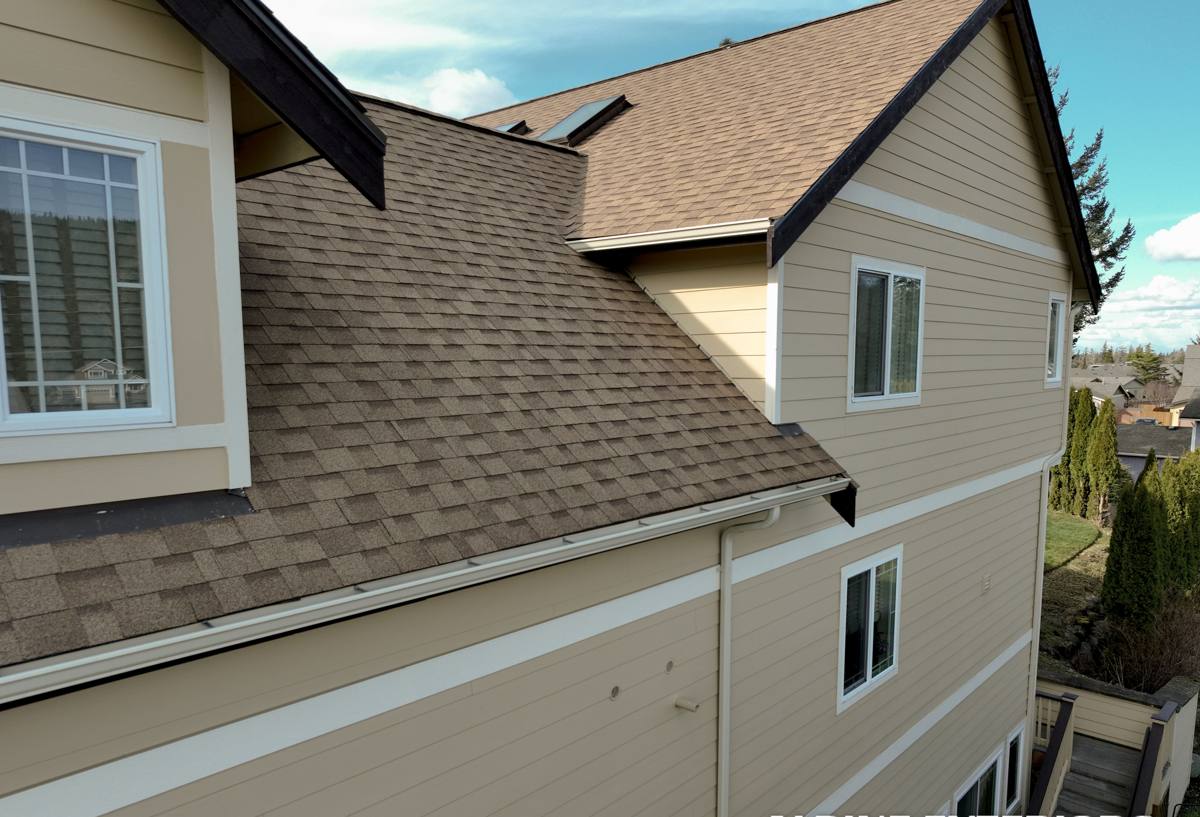
What Salt Air, Rain, and Moss Actually Do to a Deck
Three environmental factors drive almost every deck failure we see in this area, and they compound each other over time.
Salt-Laden Air
Airborne salt accelerates corrosion on any metal component that is not rated for coastal or marine exposure. Standard interior-grade screws, joist hangers, and bolts can start pitting and staining within a few seasons. Once corrosion starts on a structural fastener, it is not a cosmetic issue — it is a load-bearing one.
Driving, Wind-Blown Rain
Rain here does not just fall straight down. Wind pushes it under flashing, behind ledger boards, and into end grain that was not sealed. Water that gets trapped between decking boards, or behind a ledger attachment to the house, will rot wood and delaminate lower-grade composite far faster than the same rain falling on a sheltered, inland deck.
Extended Moss and Algae Season
Cool, damp conditions for much of the year mean moss and algae have a long runway to establish themselves on horizontal surfaces. Beyond looking bad, a mossy deck surface holds moisture against the board and becomes genuinely slick and dangerous underfoot, especially on stairs.
What a Correctly Built Deck Looks Like Out Here
Correct construction in this environment is less about any one flashy material and more about getting a handful of details right, consistently, everywhere they apply.
- Ledger board attachment flashed and sealed so water cannot track behind it into the house rim joist
- Structural fasteners and connectors rated for coastal/marine or at minimum ACQ-compatible corrosion resistance, not generic exterior-grade hardware
- Joist spacing and blocking sized for the actual decking material chosen, not the minimum code spacing for a different product
- Gapping between boards set to allow drainage and airflow without becoming a tripping or drainage hazard
- Post bases that keep wood off standing water, with proper drainage at the base of every footing
- Stair and railing hardware matched in corrosion resistance to the rest of the structure — this is a common place where builders cut corners
- A surface texture or board profile that sheds water and resists algae buildup rather than trapping it
None of this is exotic. It is standard deck-building knowledge applied with the discipline that a marine-influenced climate demands, rather than skipped because "it usually doesn't matter."
Choosing the Right Decking Material
There is no single "best" decking material for Point Roberts — there are trade-offs, and the right call depends on your maintenance tolerance, budget, and how exposed the deck is to weather.
| Material | Salt Air / Moisture Performance | Moss & Algae Resistance | Maintenance |
|---|---|---|---|
| Pressure-treated lumber | Good if sealed regularly; end grain is a weak point | Moderate — needs periodic cleaning | Highest — annual sealing recommended |
| Western red cedar | Naturally decay-resistant but softer, needs finish upkeep | Moderate to low without treatment | High — refinishing every few years |
| Capped composite | Excellent — does not absorb moisture like wood | Good, especially textured/capped profiles | Low — occasional washing |
| Uncapped composite (older style) | Fair — can absorb moisture at cut edges | Lower — more prone to surface algae | Moderate |
| Tropical hardwood (e.g. ipe) | Very good — dense and naturally weather-resistant | Good, but surface can go slick when green with algae | Moderate — periodic oiling for color retention |
We do not push one product line. We will lay out honestly what each option costs to buy, what it costs in upkeep over ten years, and how it behaves specifically in a damp, salt-influenced yard — then let you decide what fits your priorities.
Fasteners and Hardware: The Detail Most Homeowners Never See
The single biggest difference between a deck that looks fine for two years and one that lasts two decades is almost always hidden underneath the decking boards. Corrosion-resistant structural screws, hidden fastener systems rated for exterior and coastal use, and properly matched joist hangers cost more up front and are invisible once the project is finished. They are also the reason a deck stays structurally sound instead of developing rust streaks, loosening connections, or hidden rot at fastener penetrations. We treat this as a non-negotiable spec item on every Point Roberts project, not an upgrade option.
Design Considerations Specific to Point Roberts Properties
Beyond materials, a few design decisions matter more here than on a typical inland Whatcom County lot.
Orientation and Wind Exposure
Where the deck sits relative to prevailing wind and water views affects how much driving rain it takes on directly. This can inform railing style, whether a partial wind screen makes sense, and how aggressively we detail water management on the exposed side.
Elevation and Drainage
Properties near the shoreline or on sloped lots need extra attention to how water moves under and around the deck footings. Poor site drainage combined with our wet season is a common cause of premature post and footing problems.
Shade, Sun, and Moss Load
A deck tucked under tree cover holds moisture longer and grows moss faster than one with more open sun exposure. We factor this into material choice and into how we advise on cleaning frequency.
Our Process for Point Roberts Deck Projects
- Site visit and assessment — we look at sun/wind exposure, existing structure condition if this is a replacement, drainage, and access for material delivery.
- Design and material walkthrough — honest comparison of decking and railing options against your budget and maintenance expectations, not a single default recommendation.
- Permitting — decks attached to a home or above a certain height typically require a permit through Whatcom County; we handle that coordination as part of the project rather than leaving it on you.
- Construction — proper flashing at the ledger, corrosion-resistant fasteners and hardware throughout, correctly spaced framing, and drainage details built in from the footings up.
- Final walkthrough — we go over basic care so the deck holds up through its first wet season and beyond.
Keeping a Point Roberts Deck in Good Shape Year-Round
Even a well-built deck needs some seasonal attention in this climate. Most of it is simple and inexpensive if done on a regular schedule.
- Sweep debris and standing leaf litter off the surface regularly, especially in fall
- Wash the deck surface at least once a year to remove early moss and algae growth before it embeds
- Check railing and stair hardware annually for early signs of corrosion or loosening
- Reseal or refinish wood decking on the schedule appropriate to the species, rather than waiting until it visibly fades or grays
- Clear gaps between boards of debris so drainage paths stay open
- Inspect ledger flashing and any wall penetrations for signs of water intrusion
Why Local Experience on This Specific Peninsula Matters
Point Roberts is not just another Whatcom County address — reaching it means crossing into Canada and back, which affects scheduling, material delivery timing, and how a project needs to be planned around border logistics. A contractor unfamiliar with that reality can turn a straightforward deck build into a logistics headache, with delayed materials or crews caught off guard by crossing requirements. We already build that into our planning, so it does not become your problem mid-project.
Beyond logistics, experience with this exact exposure — the salt air, the wind-driven rain, the extended damp season — shapes real decisions on your project: which fastener grade we spec without being asked, which decking profile we steer you away from, and where we add flashing detail that a generic deck crew might skip. That knowledge only comes from having built and maintained decks in this specific environment repeatedly.
Get an Honest Look at Your Project
If you are planning a new deck or replacing one that has not held up to the Point Roberts climate, we are happy to come take a look and talk through what makes sense for your property, your budget, and how much upkeep you actually want to take on. There is no cost and no pressure to move forward — fill out the form below and we will set up a time to walk the site with you.