 Ferndale Window
 Deck Replacement in Custer: What Local Conditions Actually Demand
Custer sits close enough to the water and open farmland that decks here take a different kind of beating than decks in a sheltered subdivision further inland. Between the salt-tinged air rolling off the Strait, the long stretches of driving rain that define a Whatcom County fall and winter, and a moss season that can run six months or more, an aging deck in this area rarely fails gracefully. It usually fails quietly — soft spots under the surface, rusted fasteners, and rot in framing members that looked fine from above right up until they weren't.
We replace decks throughout the Custer area as part of our regular service territory out of Ferndale, and the approach we use here is shaped directly by these conditions. This page walks through what actually goes wrong with decks in this part of the county, what a correctly built replacement involves, and how we handle the job from first look to final walkthrough.
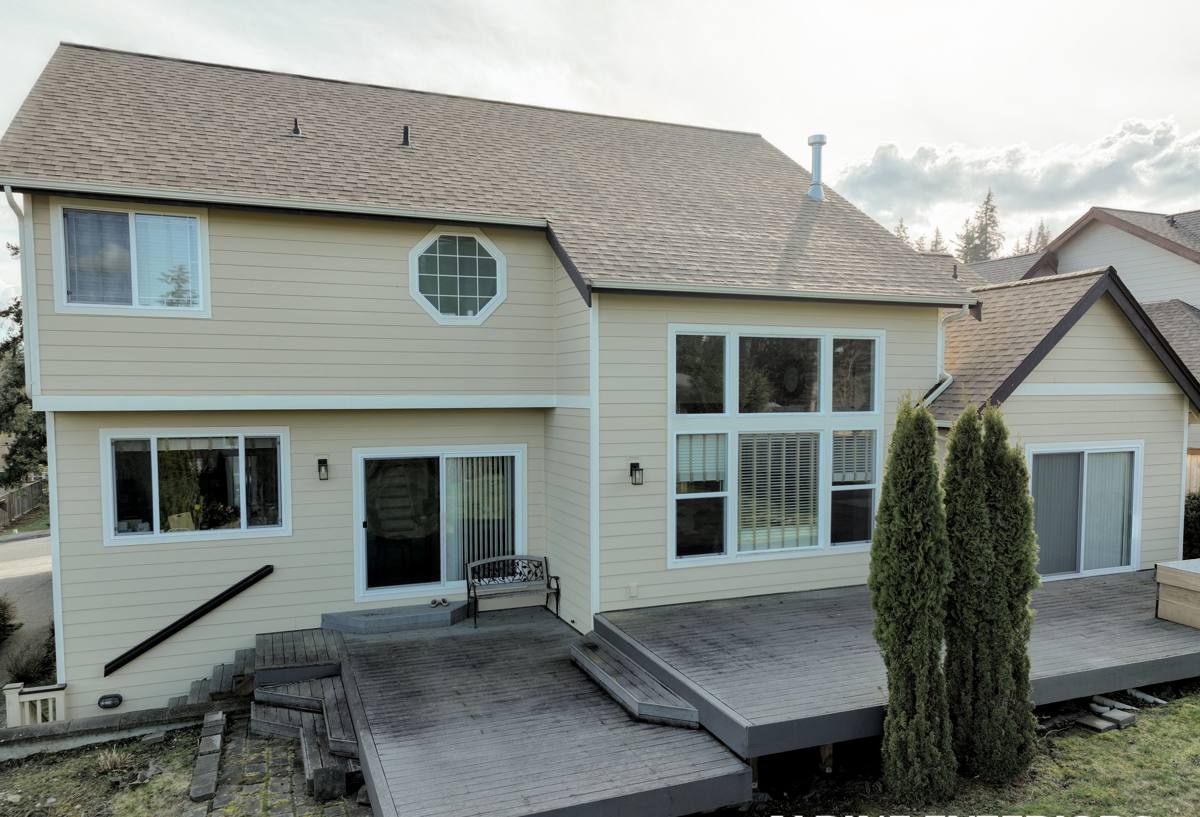
Why Decks Wear Out Faster Around Custer
Salt Air and Metal Fasteners
Even a few miles inland from the water, airborne salt accelerates corrosion on anything metal — nails, screws, joist hangers, bolts. Once a fastener starts rusting, it loses holding strength long before the wood around it shows obvious damage. A deck that looks solid can have connections that are quietly failing underneath. This is one of the most common issues we find when we pull up decking boards on older Custer decks: the wood is salvageable in places, but the hardware isn't.
Driving Rain and Water Intrusion
Rain that comes in at an angle, which is typical for this area during fall and winter storms, gets pushed under railings, into ledger board connections, and behind fascia in ways that straight-down rain doesn't. Over years, that moisture finds every gap in flashing, every unsealed fastener hole, and every spot where two boards meet without a drainage gap. The ledger board — where the deck attaches to the house — is usually the first place we check, because water intrusion there can affect the structure of the house itself, not just the deck.
Moss, Algae, and a Long Wet Season
Whatcom County's moss season stretches from fall through spring in a typical year, and a deck surface that stays damp and shaded for that long becomes a moss and algae host almost automatically. Beyond making the surface slippery, sustained moss growth traps moisture against the decking material, which shortens the life of wood decking specifically and can stain or degrade composite products that aren't rated for constant damp exposure.
Signs a Custer Deck Needs Replacement, Not Repair
- Soft, spongy, or bouncy spots in the decking or framing when you walk across it
- Visible rot or dark staining around the ledger board where the deck meets the house
- Rust streaks running down from nail or screw heads
- Railings or posts that wiggle more than they should when pushed
- Persistent moss or algae that regrows within weeks of cleaning
- Gaps opening up between boards, or boards cupping and warping
- A deck older than 15-20 years that has never had fasteners or flashing updated
A deck with one or two of these issues might be a candidate for targeted repair. A deck with several of them — especially anything involving the ledger board or the support posts — is usually past the point where repair makes financial sense, and we'll tell you honestly which category yours falls into.
What a Correct Deck Replacement Involves Here
Structure First
Before anything about decking material or railing style, we look at the structure: footings, posts, beams, joists, and the ledger connection. In this climate, we pay particular attention to joist hangers and structural fasteners, since these are the components most likely to have corroded quietly even when the visible wood looks fine. We use fasteners and hardware rated for the moisture and salt exposure typical of this area, not standard interior-grade hardware.
Flashing and Water Management
Proper flashing at the ledger board is not optional in a climate with this much driving rain. We install flashing designed to shed water away from the house rather than letting it wick behind the siding, and we build in drainage gaps between decking boards so water moves through the structure instead of sitting on top of it or getting trapped underneath.
Decking Material Choice
There's no single "best" decking material — there's a best material for how you use the deck, how much maintenance you want to do, and your budget. We walk through the honest tradeoffs with every Custer homeowner rather than pushing one product line.
| Material | Moss/Moisture Behavior | Maintenance | Typical Lifespan |
|---|---|---|---|
| Pressure-treated wood | Absorbs moisture; needs regular sealing to resist moss and rot | Annual cleaning and periodic re-sealing | 10-15 years before major issues surface |
| Cedar | Naturally rot-resistant but still needs sealing in this climate | Regular cleaning, occasional re-staining | 15-20 years with upkeep |
| Composite decking | Doesn't absorb moisture like wood, but moss and algae can still grow on the surface film in constant shade/damp | Periodic washing; no sealing or staining | 25-30 years, varies by product and warranty |
| PVC decking | Fully moisture-resistant surface; least hospitable to sustained moss growth | Occasional washing | 25-30+ years, varies by product and warranty |
Composite and PVC products cost more up front but generally make sense for homeowners who want to spend less time on upkeep, especially given how long the wet season runs here. Wood costs less initially but only holds up if someone actually keeps up with sealing and cleaning on a real schedule — which, honestly, a lot of busy households don't.
Railings and Fasteners
Railing posts need to be attached directly to the deck's structural framing, not just to the decking boards, or they'll loosen over time — accelerated here by the same rain and freeze-thaw cycling that stresses the rest of the deck. We use corrosion-resistant hardware throughout, matched to whatever decking and railing material we're installing.
Our Process for a Custer Deck Replacement
1. On-Site Assessment
We walk the existing deck, check the structure from underneath where possible, and look specifically at the ledger connection, footings, and any areas showing moisture damage. This tells us whether you're looking at a straightforward decking replacement over sound framing, or a full tear-down and rebuild.
2. Honest Scope and Estimate
You get a clear estimate that separates structural work from surface material costs, so you can see exactly what you're paying for and where the tradeoffs are if you want to adjust material choice or scope.
3. Demolition and Disposal
We remove the old deck, including any hidden rot in the framing, and haul away debris. This is also when hidden problems — a rotted ledger board, undersized old footings — sometimes surface, and we'll flag anything that changes the scope before proceeding.
4. Structural Rebuild
Footings, posts, beams, and joists are built or reinforced to current code requirements, with flashing and hardware selected for Whatcom County's moisture and salt exposure.
5. Decking, Railing, and Finish Work
Decking is installed with proper drainage gaps, railings are secured to structural framing, and all edges and fastener points are finished to shed water rather than trap it.
6. Final Walkthrough
We go over the finished deck with you, including any maintenance the specific material you chose will need going forward, so you know what to expect in year one versus year ten.
Why It Matters That We Already Work in Custer
A crew that mainly works drier, more sheltered areas can build a deck that's technically sound and still under-built for what this specific stretch of Whatcom County throws at it. Working regularly in and around Custer and Ferndale means we're not guessing at how much moss pressure a north-facing deck will see, or whether a given fastener will hold up against salt air over a decade — we're building based on what we've seen fail and what's actually held up on decks in this area.
It also means practical things: knowing typical permit requirements for the area, having a realistic sense of scheduling around the wetter months, and being reachable locally if a question comes up after the job is done.
What This Costs
Deck replacement costs vary widely based on size, material choice, structural condition, and whether framing needs to be rebuilt versus just the decking surface. Composite and PVC materials cost more per square foot than pressure-treated wood but reduce long-term maintenance costs. Structural issues discovered at the ledger board or footings — common in older decks in this climate — add to the scope but aren't optional to address safely. Rather than quote a number that won't match your actual deck, we provide a detailed written estimate after seeing the deck in person.
Get a Free Estimate
If your deck in Custer is showing soft spots, persistent moss, rust at the fasteners, or is simply old enough that you're not sure what's underneath the surface, we're happy to take a look. There's no pressure and no cost for the estimate — just a straight assessment of what your deck actually needs.