 Ferndale Window
 Custer sits in the open agricultural flatland north of Ferndale, a few miles inland from the Salish Sea but still squarely inside the wind, rain, and marine-influenced air that shape building conditions across this part of Whatcom County. What makes custom window work here different from a typical stock replacement isn't just the climate — it's the housing stock. Older farmhouses, converted outbuildings, and additions built onto original structures over the decades rarely have openings that match a manufacturer's standard catalog sizes. Add in wide-open exposure with almost nothing to break the wind, and a custom window project in Custer has two problems to solve at once: getting the fit right, and getting the weatherproofing right for a site that takes more direct wind and rain than a sheltered in-town lot would.
What "Custom" Actually Means for a Custer Window Project
A custom window is any unit that isn't a standard stock size or shape pulled straight from a manufacturer's shelf. That covers more ground than people expect: an odd-dimension opening in a farmhouse built before window sizing was standardized, a wider or taller unit added during a remodel, an egress window cut into a converted outbuilding or basement space to meet code, or a larger picture-style window sized to take in open sightlines across the surrounding farmland rather than a stock rectangle that happens to be close enough. None of these are unusual requests for us — they're a routine part of window work on rural Whatcom County property — but each one changes how the job has to be planned, ordered, and installed compared to a same-size swap.
The starting point is always the same: field measurement of the actual opening, not a guess based on the home's age or a look at old plans. From there we talk through what's realistic — a true custom unit, a modified stock size, or reframing the opening — before anything gets ordered.
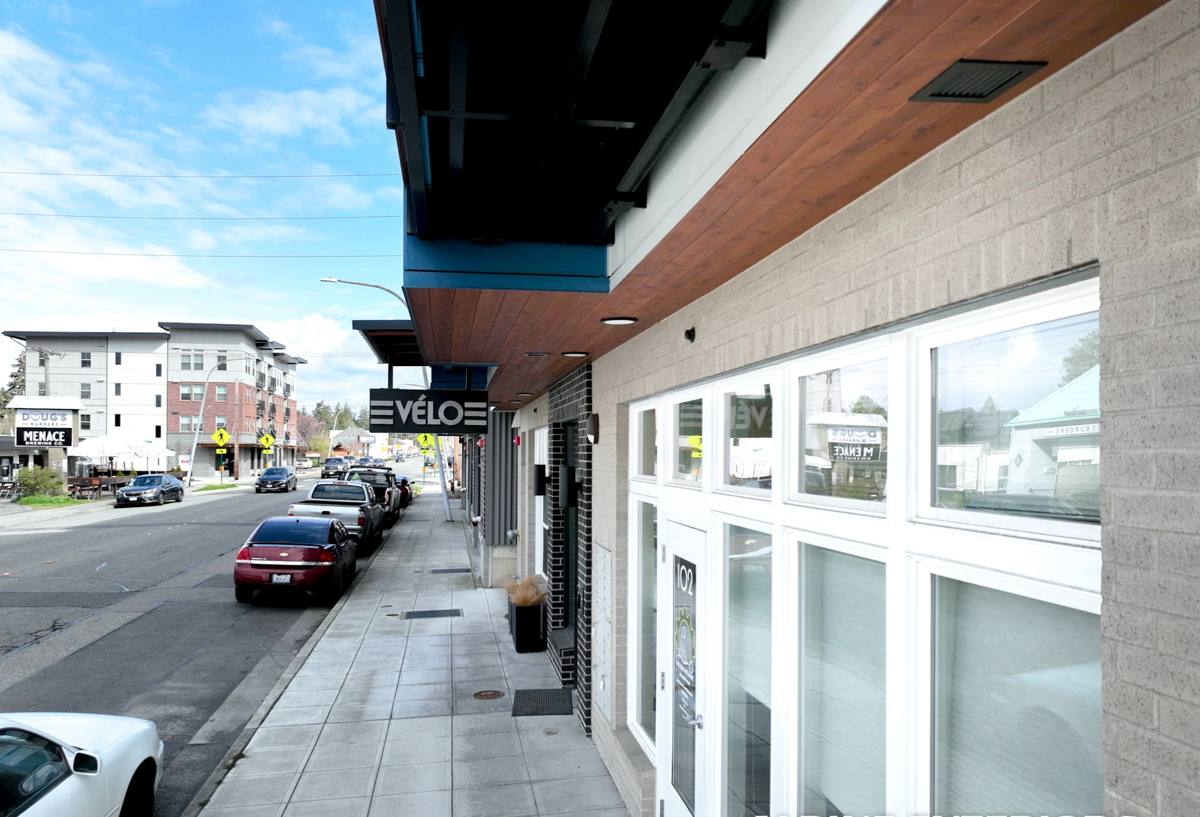
Why Custer's Open Farmland Changes the Calculation
Wind Exposure With No Windbreak
A lot of Custer properties sit on open, flat agricultural land with few trees, structures, or terrain features to slow the wind down before it hits the house. That matters for windows specifically because wind pressure is what drives rain sideways into a wall assembly instead of letting gravity handle it. On a sheltered in-town lot, a modest flashing detail might hold up fine for years without ever getting tested by real wind-driven rain. On an exposed Custer property, that same shortcut gets tested every storm season, and a custom-shaped opening — with more perimeter, more seams, or an unusual roofline detail — gives water more places to find a gap if the flashing wasn't planned for the shape.
Marine Air Carried Inland
Custer isn't waterfront, but it's close enough to the Salish Sea that salt-laden marine air still reaches inland on winter storms. Over time that accelerates corrosion on hardware, fasteners, and lower-grade frame components faster than a drier inland climate would. On a custom unit — which often has more hardware, a larger sash, or a heavier operating mechanism than a small stock window — that corrosion risk is worth planning around from the start rather than discovering years later.
Where Moss and Trapped Moisture Take Hold
Mild temperatures and near-constant moisture through fall, winter, and spring give moss and mildew a long growing season across this part of the county. Around windows specifically, it shows up on sills, trim, and the wood framing of older openings — anywhere porous material stays damp instead of shedding water. Custom units with wider sills, projecting trim, or shaded placement under an eave need a drainage plan that accounts for that, not just a caulk bead and hope.
The Custom Window Situations We See Most in Custer
- Non-standard openings in older farmhouses — framed to whatever dimensions made sense decades ago, before manufacturers standardized common sizes
- Converted outbuildings and additions — shops, barns, or add-on rooms being brought up to living-space standards, often requiring code-driven egress sizing
- Egress and code-required openings — bedroom or basement conversions where the minimum opening size is set by code, not convenience
- Oversized or picture-style units — larger fixed or semi-fixed windows sized to open up a room to the surrounding property
- Matched sets for remodels — new windows that need to sightline correctly with existing openings elsewhere on the house
- Reframed openings — cases where the existing rough opening is out of square or damaged enough that a straight swap isn't realistic
What a Correct Custom Installation Involves
Measuring and Ordering
Every custom job starts with precise field measurement of the actual opening — width, height, square, and level — along with a look at what the finished trim and flashing will need in terms of clearance. Because custom units are built to order rather than pulled from stock, this step also sets honest expectations on timeline. We'll give you a realistic lead time before you commit, not a best-case number that falls apart once the order is placed.
Flashing Built for Wind-Driven Rain
This is the step that matters most given how exposed a lot of Custer sites are. Every custom shape changes how flashing needs to be sequenced — a wider sill needs to shed water outward instead of letting it pool, a reframed opening needs the weather-resistive barrier tied in cleanly at every lap, and a larger unit needs enough flashing overlap to handle sustained wind pressure, not just light rain falling straight down. We build the flashing plan around the specific opening in front of us rather than applying a generic template meant for calmer conditions.
Frame Material for Sustained Exposure
Frame material matters more on a custom unit because it's often larger, more exposed, or carries more hardware than a small stock window. We'll walk through the real trade-offs for your specific opening rather than defaulting to whatever's fastest to install.
| Frame Material | How It Handles This Climate | Trade-Off |
|---|---|---|
| Vinyl | Resists rot and corrosion well; consistent performance in wet, mild conditions | Fewer color and finish options; can flex on very large custom units |
| Fiberglass | Dimensionally stable across temperature swings; holds up well to sustained wind load | Higher material cost than vinyl |
| Wood-clad | Preferred interior look; exterior cladding protects against direct weather exposure | Requires correct cladding detail and ongoing attention at seams and joints |
Our Process for a Custer Custom Window Project
- On-site assessment — we measure the opening, check square and level, and evaluate wind exposure and drainage conditions specific to the site
- Honest recommendation — custom order, modified stock size, or opening reframe, explained with the reasoning behind it
- Ordering and lead time — a realistic timeline for the unit to arrive, since custom windows aren't a same-week job
- Removal and opening prep — the old unit comes out carefully, and any hidden rot, old flashing failures, or framing issues get addressed before the new window goes in
- Installation and flashing — the unit is set, shimmed, and flashed to a sequence built for its specific shape and this site's wind exposure
- Trim and finish — exterior trim is integrated to match the rest of the house
Cost Factors on Custom Window Work
We won't quote a number without seeing the opening, but the factors that consistently move price on custom work in this area are the same ones worth understanding before you start shopping.
| Factor | Why It Matters |
|---|---|
| Size and glass area | Larger units cost more to manufacture and are heavier and slower to install correctly |
| Opening condition | Rot, old flashing failures, or out-of-square framing on older farmhouses add repair work before the new unit goes in |
| Code requirements | Egress-driven sizing for a converted outbuilding or basement space can limit which units qualify |
| Frame material | Vinyl, fiberglass, and wood-clad units differ in both material cost and long-term maintenance under sustained wind and moisture exposure |
| Number of units | A matched set for a remodel or full-house project generally has better per-unit economics than a single window |
A Checklist Before You Commit
- Confirm the opening has been field-measured, not estimated from old plans or the home's original build date
- Ask what the flashing plan looks like for your specific opening and site exposure, not a generic answer
- Get a realistic lead time in writing before you commit to a schedule
- If the project involves a converted space, confirm the opening size meets current egress code before ordering
- Ask what's covered under warranty — the window unit and the installation labor are usually separate
- Confirm current Washington contractor licensing and active liability insurance
Why a Crew That Already Works in Custer Matters
Manufacturer installation guidance is written for average, sheltered conditions — not a wide-open farm lot in Whatcom County with nothing to slow the wind down. A crew that already installs windows on this kind of property knows how much extra flashing lap an exposed opening actually needs, when a custom unit calls for reframing instead of a straight swap, and which hardware grade is worth the extra cost given how far marine air travels inland here. Those are decisions that don't show up in a sales conversation, but they're what determines whether a custom window is still performing cleanly in fifteen years or showing drafts and rot in five.
If you're planning an addition, converting an outbuilding, or dealing with an odd-sized opening in an older farmhouse, it's worth having someone look at the specific site before you start pricing units. We offer free, no-pressure estimates for custom window projects in Custer and the surrounding Whatcom County area — use the form below to get a time on the schedule.