 Ferndale Window
 Building New in Bellingham? The Windows Aren't a Finishing Touch
On a new-construction project, windows aren't something you pick out of a catalog after the walls are already dry. They're part of the building envelope — installed into open framing, tied into the weather-resistive barrier, and expected to keep water out of the wall cavity for decades. Get that wrong, and the mistake gets covered by siding and trim before anyone notices. In Bellingham and the surrounding Whatcom County area, where the building sees salt air off the bay, wind-driven rain most of the year, and a long stretch of damp, mossy months, that margin for error is smaller than it is in drier parts of the state.
This page is about one job specifically: installing new-construction windows correctly in a Bellingham-area build, whether that's a custom home, a spec house, an ADU, or an addition with new framed openings. It's a different job than swapping out old windows in an existing wall, and it deserves to be planned and priced differently.
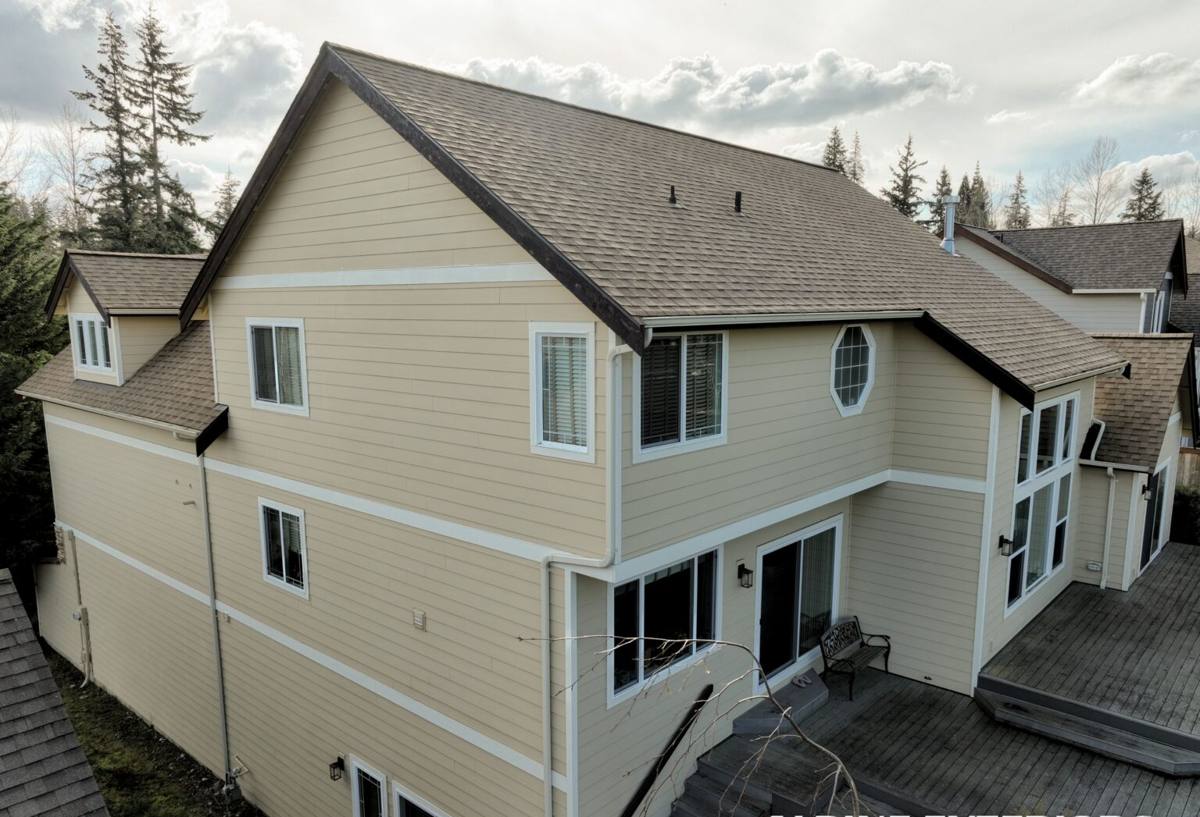
What Bellingham's Climate Actually Demands From a Window Install
Salt Air and Corrosion
Homes closer to Bellingham Bay and the Whatcom County shoreline live with a steady low dose of salt in the air. It doesn't destroy a window overnight, but it accelerates corrosion on fasteners, hardware, and any exposed metal flashing that isn't rated for coastal exposure. Cheap fasteners or bare aluminum trim pieces show pitting and staining years before they should. On new construction, this is easy to solve up front — it's much harder to fix once the wall is closed up.
Wind-Driven, Sideways Rain
Whatcom County doesn't just get rain — it gets rain pushed sideways by wind coming off the water. A window that would stay dry in a calm, straight-down downpour can leak in a driving storm if the flashing details aren't built to shed water that's moving horizontally, not just falling vertically. This is the single biggest reason new-construction window failures show up as wall rot two or three years after a house is finished, not as a visible leak on day one.
The Long Moss Season
Western Washington's moss season runs long — often eight or nine months of the year with enough moisture and shade to keep organic growth going on horizontal surfaces. On windows, that shows up as moss and algae building up on sills, sloped trim, and anywhere water sits instead of draining. Left alone, it holds moisture against wood trim and can clog the weep holes that are supposed to let incidental water escape the frame. A correctly sloped sill and clear weep path matters more here than in a dry climate, because the window doesn't get a break from the moisture for most of the year.
New-Construction Windows vs. Replacement Windows: Why the Distinction Matters
These are genuinely different products installed in genuinely different ways, and mixing them up is one of the more expensive mistakes we see on job sites.
| Factor | New-Construction Window | Replacement / Retrofit Window |
|---|---|---|
| Installed into | Open stud framing, before siding and interior finish | An existing finished wall, working within the old frame |
| Water management | Nailing fin flange integrates directly with the WRB and flashing tape | Relies on sealants and the condition of the existing opening |
| Access to structure | Full view of framing, sheathing, and rough opening | Limited — old materials often stay in place |
| Best fit for | New builds, additions, gut remodels down to studs | Existing homes keeping their trim and siding |
New-construction windows use a nailing flange around the perimeter of the frame. That flange gets integrated into the wall's water-resistive barrier in a specific sequence — this is the detail that decides whether the house stays dry through a Whatcom County winter or develops a slow leak nobody sees for years.
What a Correct New-Construction Install Actually Involves
The window itself is often the easy part. The sequence around it is where the job is won or lost:
- Rough opening checked for square, level, and correct size before the window ever shows up
- Sill pan flashing installed and sloped to drain water outward, not into the wall
- Weather-resistive barrier lapped correctly above and behind the flashing at the sides and head — water always sheds over the layer below it, never under
- Window set, shimmed square and plumb, and fastened through the nailing fin per manufacturer spacing
- Flashing tape applied at the jambs and head in the correct shingle-lap order
- Head flashing or drip cap installed to kick water away from the top of the frame
- Backer rod and quality sealant at the interior air seal, not relied on as the only water barrier
- Interior sill and trim finished so any incidental moisture has somewhere to go
Miss one step — especially the flashing lap order — and the window can look perfect from the outside while quietly feeding water into the wall assembly.
Choosing Frame Materials for a Bellingham-Area New Build
Frame material is a real decision on new construction, not just an aesthetic one, given the salt air and constant moisture exposure.
| Frame Material | How It Handles This Climate | Trade-Off to Know |
|---|---|---|
| Vinyl | Doesn't corrode or rot; handles moisture well; lower cost | Limited color options once installed; can't be repainted easily |
| Fiberglass | Very stable in temperature swings and moisture; strong long-term performer near the coast | Higher upfront cost than vinyl |
| Wood-clad | Warm interior look; clad exterior resists some weather | Any exposed or damaged cladding lets moisture reach the wood core — more maintenance sensitivity in a wet climate |
| Bare aluminum | Strong and slim sightlines | Poor thermal performance and higher corrosion exposure in salt air unless properly finished |
We'll walk through this with you based on your budget, the home's design, and how close the lot sits to the water — a house a few blocks from Bellingham Bay gets a different recommendation than one further inland in Ferndale.
How We Handle New-Construction Window Installs
We work directly with the framing and building schedule rather than treating the windows as a separate, later trade:
- Plan review: we confirm window sizes, egress requirements, and rough opening dimensions against the actual plan set before framing locks them in.
- Rough opening check: once framed, we verify openings are square, plumb, and correctly sized — catching a framing error here is far cheaper than after siding is on.
- Flashing and install: sill pan, WRB integration, window setting, and flashing tape go in following manufacturer instructions and sound water-management sequencing, not shortcuts.
- Inspection-ready documentation: our sequence is built to pass local building inspection without callbacks or rework.
- Coordination with your builder or GC: we slot into the framing-to-siding schedule so the crew isn't waiting on us, and we're not waiting on an unfinished opening.
Timing the Install Around Whatcom County Weather
New-construction windows go in after framing but before the wall is closed up — which means the opening is exposed to weather for a window of time no matter how efficiently the schedule runs. In a region with as much driving rain as Whatcom County gets, that timing matters. We plan installs to minimize how long a rough opening sits open, and we use temporary weather protection when a stretch of framing has to wait on windows or when rain moves in faster than the schedule. The goal is never to rush a flashing detail just to beat the weather — a wall that's protected for an extra day is a much smaller problem than a flashing shortcut that leaks for years.
What Drives Cost on a New-Construction Window Job
| Cost Factor | Why It Matters |
|---|---|
| Number and size of openings | More glass and larger units mean more material, labor, and structural coordination |
| Frame material | Vinyl, fiberglass, and wood-clad carry different unit costs |
| Performance glass package | Low-E coatings and gas fills improve comfort and lower energy bills but cost more upfront |
| Special shapes or large spans | Custom sizes, sliders, and large fixed units cost more to engineer and install |
| Site access and scheduling | Coordinating around an active job site and weather windows affects labor time |
We won't quote a job without seeing the plans or the actual openings — anyone who gives you a firm number over the phone for new construction is guessing.
Why It Matters That We Already Work in Bellingham
A crew that already installs windows across Whatcom County has already worked through the details that trip up out-of-area contractors: how much lap and coverage a WRB needs to handle this region's wind-driven rain, how to detail a sill so moss season doesn't clog the weep path, and what local building departments expect to see at inspection. We've also worked alongside builders in this area before, which means fewer surprises coordinating around a framing schedule. That local familiarity is worth more than it sounds on paper — it's the difference between a window install that's a formality and one where problems get caught before they're buried behind siding.
If you're building new in Bellingham, Ferndale, or elsewhere in Whatcom County, we're happy to look at your plans and talk through window selection, flashing details, and scheduling. Reach out for a free, no-pressure estimate using the form below.