 Ferndale Window
 Deck Repair Built Around Bellingham's Weather
Bellingham decks live a hard life. Between the marine air rolling in off the bay, long stretches of driving rain from fall through spring, and a moss season that can run half the year in shaded yards, a deck here ages differently than the same structure would in a dry inland climate. We're a Ferndale-based crew that works Bellingham regularly, and most of the repair calls we get trace back to the same handful of climate-driven problems repeating year after year.
This page is about deck repair specifically — not full replacement, not new builds. If your deck is structurally sound but showing its age, or if you've got soft spots, loose railings, or standing water that never quite dries out, this is the service that gets it back to safe and solid without tearing the whole thing out.
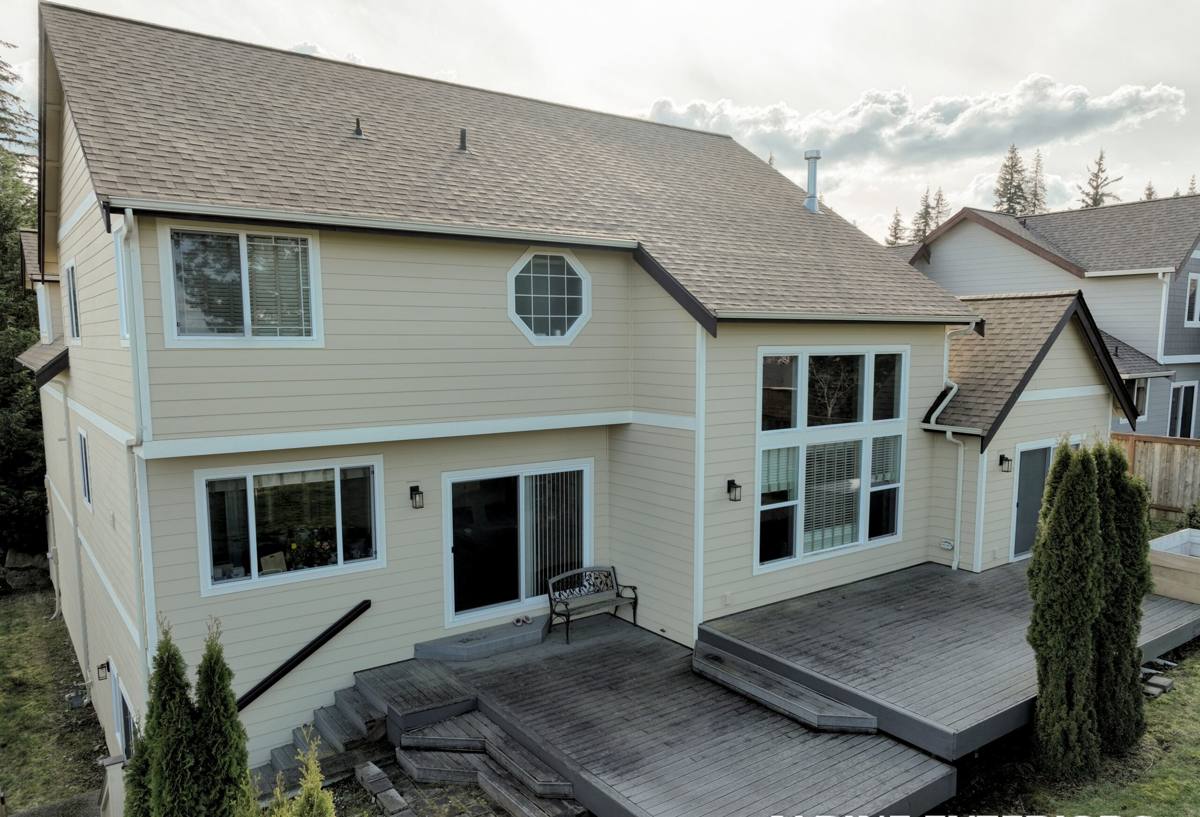
What Whatcom County Weather Does to a Deck
Moisture That Never Fully Leaves
Bellingham doesn't get brutal winters, but it gets long, low-intensity soak seasons. Wood decking, ledger boards, and joists that stay damp for weeks at a time are far more prone to rot than wood that gets a hard rain and then dries out fast. The problem areas we see most are spots with poor airflow underneath, decking boards installed tight together with no gap for drainage, and ledger board connections where the deck meets the house — that seam is one of the most common places for hidden water damage to start.
Salt Air and Metal Fasteners
Proximity to Bellingham Bay means salt-laden air reaches decks that are nowhere near the waterline. Over time, that air accelerates corrosion on screws, nails, joist hangers, and other structural hardware. Corroded fasteners lose holding strength long before the surrounding wood looks obviously bad, which is why a deck can feel "a little bouncy" without any visible rot — the connections are the actual problem, not the boards.
Moss, Algae, and the Slip Hazard Underneath
Shaded yards, tree cover, and consistent moisture make Whatcom County about as good a growing environment for moss and algae as it gets. Beyond looking bad, moss holds water against the wood surface and creates a genuinely dangerous slip hazard, especially on stairs. Moss growth on a deck surface is also often a sign that the boards aren't draining or drying properly, which points to a design or spacing issue worth addressing while you're already doing repairs.
Signs Your Deck Needs Repair, Not Just Cleaning
- Boards that feel spongy, soft, or flex noticeably when you walk on them
- Railings or posts that wiggle or have visible gaps at their base
- Stairs that feel unstable, squeak under load, or show gaps at the stringers
- Dark staining or a musty smell near the ledger board where the deck attaches to the house
- Rust streaks running down from fasteners or hardware
- Persistent moss or algae that comes back within weeks of cleaning
- Gaps opening up between decking boards, or boards cupping and warping
- Visible daylight or gaps where support posts meet footings
Any one of these on its own might be minor. Several together, especially near the ledger or the stair stringers, usually means it's time to get underneath the deck and actually look at the framing, not just the surface.
What a Correct Deck Repair Actually Involves
A repair done right starts below the surface, not on top of it. Cosmetic fixes — sanding, staining, replacing a board here and there — feel productive but do nothing for hidden structural issues, and in a climate like ours, hidden structural issues are exactly what tends to be causing the visible symptoms.
Our General Process
- Inspection from underneath. We check joists, beams, ledger board attachment, post bases, and footings for rot, movement, and fastener condition — not just the walking surface.
- Moisture and rot mapping. We probe suspect areas to find the actual boundary of damage. Rot spreads along the grain and often extends further than it looks from the surface.
- Structural repair first. Any compromised joists, beams, posts, or ledger connections get repaired or sistered/replaced before anything cosmetic happens. A deck's safety lives in the framing, not the decking boards.
- Fastener and hardware upgrade. Corroded hardware gets replaced with fasteners and connectors rated for exterior, coastal-adjacent use — this matters more here than in a lot of other climates.
- Decking and railing repair. Damaged boards are replaced, railings are re-secured to solid framing, and stairs are checked for level and secure attachment.
- Drainage and airflow correction. Where moss or standing water is a recurring problem, we look at board spacing, grading underneath the deck, and ventilation — fixing the cause, not just the symptom.
Common Repair Types and What They Address
| Repair Type | What It Fixes | Typical Cause Locally |
|---|---|---|
| Ledger board reattachment | Deck pulling away from the house, deck bounce | Water intrusion at the house connection point |
| Joist sistering or replacement | Soft, spongy decking; sagging | Long-term moisture exposure, poor underside airflow |
| Post and footing repair | Leaning, shifting, or unstable deck structure | Ground moisture, inadequate original footing depth |
| Fastener and hardware replacement | Loose railings, weak connections | Salt-air corrosion of screws and joist hangers |
| Board replacement and re-spacing | Cupping, splintering, poor drainage | Boards installed too tight, trapping moisture |
| Stair stringer repair | Unsafe, wobbly, or uneven stairs | Concentrated foot traffic plus moisture exposure |
| Moss and algae remediation | Slip hazard, surface degradation | Shade, low airflow, extended damp season |
Repair vs. Replacement: How We Decide
Not every deck problem calls for a full rebuild, and we won't push you toward one if a targeted repair genuinely solves the issue. The deciding factors are usually:
- Extent of framing damage. Isolated rot in a joist or two is repairable. Widespread rot through the main beams or multiple posts often makes replacement more cost-effective than piecemeal repair.
- Age and material of the original build. An older deck built with lower-grade lumber or undersized framing may not be worth chasing repairs on indefinitely.
- Code and safety compliance. If railing height, stair rise, or guard spacing don't meet current code, repair is a good opportunity to bring things up to standard.
- Your plans for the deck. A deck you're keeping for years justifies more investment in doing it right than one you plan to eventually replace anyway.
We'll give you a straight answer on which category your deck falls into after we've actually been underneath it — not a guess from the surface.
Why a Local Crew Matters for This Kind of Work
Deck repair is one of those jobs where local experience genuinely changes the outcome. A crew that works Bellingham and Ferndale regularly has already seen how Whatcom County's moisture and salt air affect decks over 5, 10, and 20 years — which connection points fail first, which materials hold up and which don't, and where a "quick fix" tends to come back as a bigger problem two winters later. That's knowledge you don't get from a one-off job or a crew driving in from out of the area.
Being close by also means we can respond quickly if something urgent comes up — a stair that suddenly feels unsafe, a railing that's come loose — without a long wait for someone to make the trip out.
Maintenance That Extends the Life of a Repair
A good repair job lasts a lot longer with a little seasonal attention. A few things worth doing on your own between professional inspections:
- Sweep debris off the deck surface regularly, especially in fall when leaves trap moisture
- Clean moss and algae early, before it has time to hold water against the wood
- Check railings and stair handrails periodically for looseness
- Keep gutters and downspouts near the deck clear so water isn't draining directly onto or under it
- Trim back vegetation that's shading the deck and keeping it damp longer than necessary
None of this replaces a real structural inspection, but it does slow down the moisture and moss cycle that drives most of the repair calls we see in this area.
Get an Honest Look at Your Deck
If your Bellingham-area deck has soft spots, loose railings, persistent moss, or just feels less solid than it used to, we're glad to come take a look. We'll tell you plainly whether you're looking at a targeted repair or something bigger, with no pressure either way. Reach out for a free estimate — we'll get underneath it and give you the real picture before any work starts.