 Ferndale Window
 Building a Deck That Actually Holds Up in Bellingham
Bellingham sits right on the water, and that changes what a deck has to deal with compared to a deck built inland. Salt-tinged air off Bellingham Bay, long stretches of driving rain through fall and winter, and a moss season that can run for months all work on wood, fasteners, and finishes in ways that dry-climate deck advice doesn't account for. A deck built the same way you'd build one in a drier part of the state will show its age here faster — soft spots in the decking, streaking and staining, slick green growth on the walking surface, and rust bleeding through fastener heads within just a few seasons.
None of that is inevitable. It's a function of material choices, framing details, and drainage decisions made before the first board goes down. We build decks for homes in and around Bellingham with those conditions in mind from the start, not as an afterthought once the moss shows up.
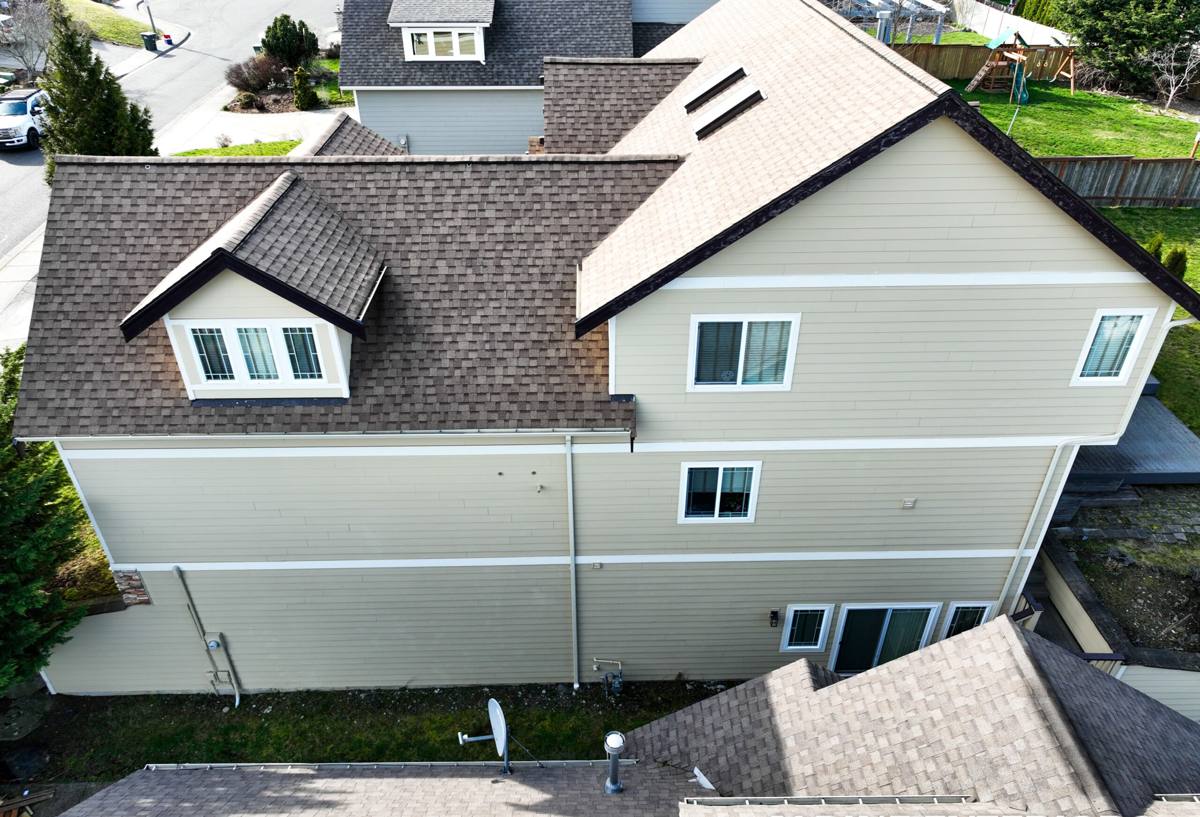
What Bellingham's Climate Actually Does to a Deck
Salt Air and Moisture
Proximity to the bay means airborne moisture carries trace salt, which accelerates corrosion on any exposed metal — fastener heads, joist hangers, structural screws, railing hardware. Standard hardware that would last for years elsewhere can start showing rust streaks on a bay-adjacent deck much sooner. It's a slow, cosmetic problem at first, but rust migrating into wood fibers weakens the wood around the fastener over time.
Driving Rain and Standing Water
Whatcom County's weather pattern means rain doesn't just fall straight down — wind-driven rain gets pushed under railings, into ledger connections, and along the underside of decking boards. Any deck design that doesn't actively shed that water, rather than just tolerating it, ends up trapping moisture where it can't dry out between storms.
Moss and Algae
Shade from mature trees, combined with mild, wet winters, gives moss and algae a long runway to establish themselves on horizontal surfaces. Once moss gets a foothold in the grain of a board or in the gap between boards, it holds moisture against the wood constantly — and a slick, mossy deck surface is also a real slip hazard on stairs and walkways.
Choosing Decking Material for This Climate
There's no single "best" decking material — the right choice depends on how much upkeep you want to do and what you're willing to spend upfront versus over time. Here's how the common options actually compare for a wet, shaded, coastal-adjacent property.
| Material | Upfront Cost | Maintenance | Moss/Moisture Behavior |
|---|---|---|---|
| Pressure-treated wood | Lowest | Annual cleaning, periodic sealing | Absorbs moisture; needs sealing to resist moss and rot |
| Cedar | Moderate | Regular sealing/staining to maintain appearance | Naturally rot-resistant but still needs upkeep in constant shade/wet |
| Composite decking | Higher | Occasional washing, no sealing/staining | Doesn't rot, but moss can still grow on the surface if shaded and damp |
| PVC/capped decking | Highest | Lowest — mostly rinsing | Fully moisture-resistant board; best resistance to staining and moss adhesion |
We're honest with homeowners about trade-offs rather than pushing one product. Composite and PVC decking cost more upfront but cut way down on the sanding, staining, and re-sealing that wood decks need — a real consideration if your deck sits under trees or gets limited sun exposure for drying. Wood costs less to install but only performs well long-term if you keep up with maintenance, which matters more here than in a drier climate.
Framing and Substructure: Where Decks Actually Fail
Most deck failures don't start at the surface — they start underneath, where nobody's looking until there's a problem. The parts of a deck that matter most for long-term performance in a wet climate are the parts that are hardest to inspect once the decking is installed.
- Ledger board attachment: where the deck connects to the house is the single most common source of hidden rot if flashing isn't installed correctly, since water running down the siding has to be directed away from that joint, not into it.
- Joist protection: joist tops and cut ends absorb water readily; joist tape or a comparable moisture barrier keeps standing water from soaking into the framing lumber under the decking boards.
- Fastener selection: hot-dip galvanized or stainless structural screws and hangers resist the corrosion that salt-influenced air accelerates — mixing coated and uncoated hardware is a common shortcut that causes premature rust staining and hardware failure.
- Post bases and footings: posts should sit on bases that keep the wood end off the concrete and out of standing water, not buried directly in or against it.
A deck can look finished and still be set up to fail early if these details were rushed. This is the part of the job that's invisible to a homeowner walking on the finished deck, and it's also the part that's expensive to fix after the fact.
Designing for Drainage and Airflow
Beyond material and framing, how a deck is laid out physically affects how well it handles this climate.
Board Spacing and Ventilation
Proper gapping between boards lets water drain through instead of pooling on the surface, and it lets air move underneath the deck so the substructure can actually dry out between rain events. Decks built low to the ground with little airflow underneath are the ones that develop chronic moss and mildew problems, because that space never fully dries.
Height and Grading
Where the ground slopes toward the house or a deck sits low with poor clearance, water has nowhere to go and lingers under the structure. Grading and post height need to account for that during design, not be treated as a problem to solve after the deck is built.
Railings and Guards
Railing posts and baseplates are another spot where wind-driven rain collects if they're not detailed with the same moisture protection as the ledger and framing — a railing post base is a small area, but it's exposed to as much weather as anything else on the deck.
Our Deck Building Process
- On-site assessment: we look at sun exposure, shade from trees, drainage patterns, and how the deck will tie into the house before recommending materials or layout.
- Design and material selection: we walk through the honest trade-offs between wood, composite, and PVC decking based on your budget and how much maintenance you want to take on.
- Permitting: decks over a certain height or attached to the home typically require a building permit in Whatcom County jurisdictions — we handle that process rather than leaving it to you.
- Framing and structural work: ledger flashing, joist protection, and corrosion-resistant hardware go in first, since this is the work that determines how long the deck lasts.
- Decking, railing, and finish work: surface materials and railings are installed with proper spacing and fastening for drainage and long-term stability.
- Final walkthrough: we go over basic care for whatever material you chose so you know what upkeep, if any, to expect.
Permits and Code Basics in Whatcom County
Most attached decks and any deck built above a certain height above grade require a permit and an inspection before and after construction. Requirements around footing depth, guardrail height, stair geometry, and ledger attachment are there because they address real failure points — not paperwork for its own sake. Skipping permitting on a deck project can create real problems later, from failed inspections on a home sale to insurance complications after a structural issue. We pull the required permits as part of the job rather than treating it as optional.
Maintenance Checklist for Bellingham Decks
Whatever material you choose, a little seasonal attention goes a long way in this climate. A general maintenance rhythm looks like this:
- Clear leaves and debris from between boards and off the surface before fall rains set in, since trapped organic matter is what feeds moss and algae growth.
- Rinse or wash the deck surface at least once or twice a year to remove the early film of algae before it becomes established moss.
- Check railing posts, stair stringers, and any visible hardware annually for rust staining or looseness.
- Keep gutters and downspouts near the deck clear so roof runoff isn't dumping extra water onto or under the structure.
- For wood decks, plan on resealing or staining on a regular cycle rather than waiting until the wood looks gray and dry.
- Trim back overhanging branches where practical to improve sun exposure and airflow across the deck surface.
Why Hire a Crew That Already Works in Bellingham
Deck-building fundamentals don't change from region to region, but the details that make a deck last do. A crew that regularly builds decks around Bellingham and the rest of Whatcom County already knows which hardware holds up near the bay, how to detail a ledger connection for driving rain, and how much airflow a substructure actually needs to fight off a Pacific Northwest moss season. That's knowledge that comes from working this specific climate repeatedly, not from a general deck-building checklist.
If you're planning a new deck or need to know whether an existing one is holding up the way it should, we're happy to take a look and talk through honest options — no pressure, no upsell. Reach out using the form below for a free estimate.