 Ferndale Window
 Roofing Built for Sumas, Not a Catalog Photo
A roof in Sumas earns its keep differently than a roof three states away. Whatcom County sits under a long wet season, marine-influenced air rolling in off the water, and a tree canopy that keeps roof surfaces shaded and damp for weeks at a time. None of that is dramatic on any single day. It's the accumulation that gets homeowners — moisture that never fully dries out, granule loss that speeds up under constant rain impact, and moss that takes hold in the shaded, north-facing sections of a roof and works its way under shingle edges over a few seasons if it's never addressed.
Asphalt shingle roofing is still the right call for the large majority of homes here. It's cost-effective, it repairs cleanly, and modern shingle lines have closed a lot of the gap on algae and moss resistance. But "asphalt shingles" covers a wide range of products and installation quality, and in this climate the difference between a roof that lasts its full rated life and one that needs early attention almost always comes down to details most homeowners never see: what's under the shingles, how the roof breathes, and how the edges and penetrations were flashed.
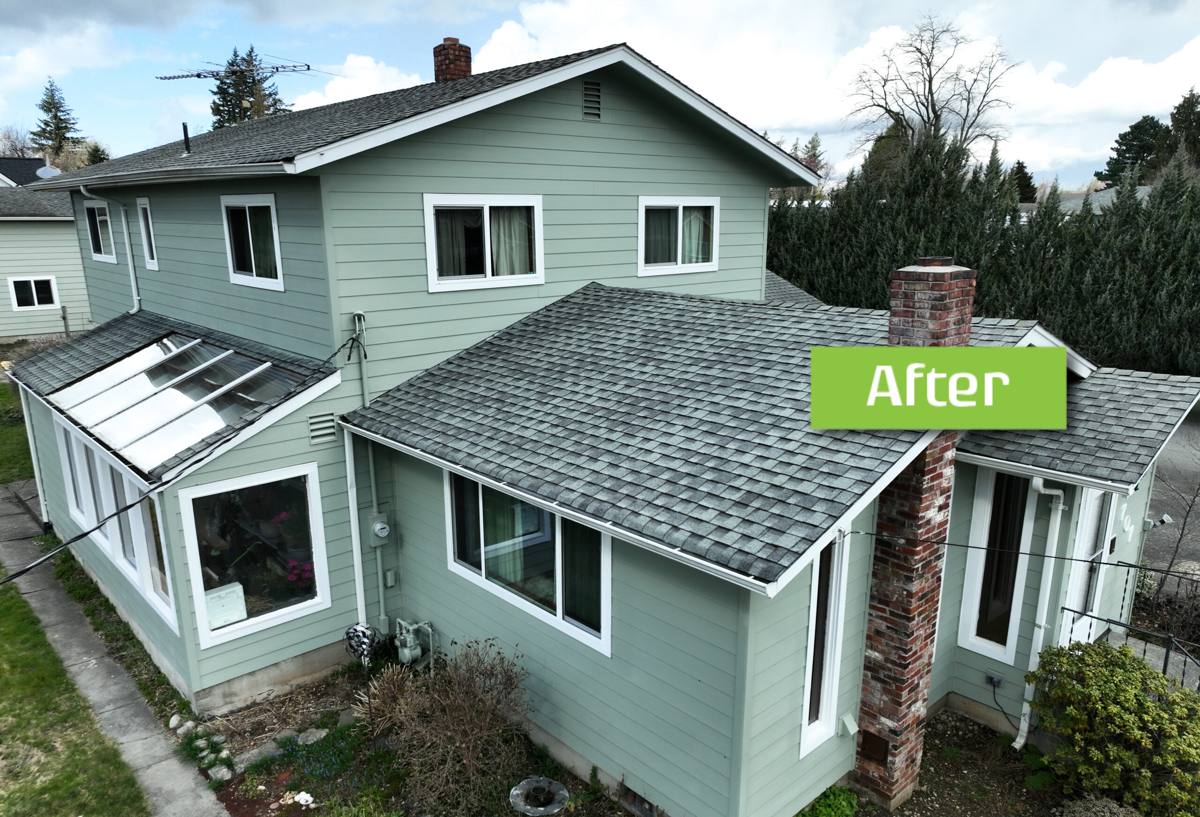
What Sumas Homes Actually Need From a Roof
Before talking about shingle brands or colors, it's worth being honest about what the local climate demands from a roofing system:
- Reliable underlayment. With as much driving rain as this region gets, wind-driven water can find its way under shingles at eaves, valleys, and low-slope sections. A synthetic underlayment, backed up with self-adhered ice-and-water membrane at vulnerable areas, gives the roof a real second line of defense — not just a formality.
- Balanced attic ventilation. A roof deck that can't breathe stays damp longer after every storm. That shortens shingle life from underneath, which nobody sees until it's a leak.
- Algae and moss resistance. Shaded, damp roof sections are where moss gets its foothold first. Shingle lines with copper- or zinc-infused granules resist algae staining and slow moss growth — it's not a magic fix, but it buys meaningful time between cleanings.
- Correct nailing and fastening. Underdriven or overdriven nails are one of the most common causes of early shingle failure, and it's purely a workmanship issue, not a product one.
Choosing the Right Shingle for This Climate
Most Sumas homeowners are choosing between a handful of asphalt shingle categories. Each has real trade-offs — none of them is wrong for every situation, but they perform differently once wind, rain, and moss are part of the equation.
| Shingle Type | Typical Lifespan | How It Handles This Climate |
|---|---|---|
| 3-tab (standard) | 15–20 years | Lowest upfront cost; flatter profile sheds moss less easily and has a lower wind rating than laminate options |
| Architectural / laminate | 25–30 years | Thicker, layered profile handles driving rain and wind better; the most common choice we install locally |
| Algae-resistant (AR) laminate | 25–30 years | Same durability as standard laminate with granules formulated to slow algae staining and moss growth on shaded slopes |
| Impact-rated (Class 4) | 25–30+ years | Higher upfront cost, but some insurers offer premium discounts; worth pricing out on exposed or high-value roofs |
For most Sumas homes, an algae-resistant laminate shingle is the practical middle ground — it costs a modest amount more than standard laminate up front and pays that back in fewer years spent fighting moss and streaking on the shaded sides of the roof.
Color and Ventilation Interaction
Darker shingles run warmer in direct sun, which can help shed light frost and moisture faster on south-facing slopes — but on the shaded, north-facing sections common on wooded Sumas lots, color has far less effect than airflow and shade. We factor both into the recommendation rather than treating color as a purely cosmetic choice.
Our Process, Start to Finish
Inspection and Estimate
We start on the roof, not on paper. That means checking the actual condition of the deck where accessible, looking at flashing around chimneys, vents, and valleys, and noting any moss buildup or soft spots before we ever talk numbers. The estimate reflects what your roof actually needs, not a generic package.
Tear-Off and Deck Check
Full tear-off lets us see the deck itself — plywood or sheathing that's been holding moisture from a slow leak won't show from the outside, and it's far cheaper to replace a section of deck during a re-roof than to discover it later. We won't cover up a soft deck; we'll show you what we found and what it takes to fix it before moving forward.
Underlayment, Flashing, and Ventilation
This is where a roof's real weather resistance gets built. Synthetic underlayment across the field, ice-and-water membrane at eaves and valleys, new flashing where the old flashing is worn or undersized, and ventilation checked and corrected if the attic isn't breathing properly.
Shingle Installation
Correct nailing pattern, proper exposure, and attention to valleys and penetrations — the parts of the job that don't show up in a walk-by but determine whether the roof performs in year twelve the way it did in year one.
Final Walkthrough and Cleanup
We walk the property, check gutters and downspouts for debris from the job, and do a magnetic sweep for stray nails. You should be able to tell we were there by the new roof — nothing else.
Living With an Asphalt Shingle Roof in Whatcom County
A well-installed asphalt roof doesn't need much, but it does need occasional attention — and skipping it is the single biggest reason roofs in this region underperform their rated lifespan.
- Clear gutters and valleys of needles and leaf debris at least twice a year — clogged valleys hold water against shingles far longer than they're designed for.
- Have moss on shaded slopes treated or gently removed before it spreads under shingle tabs — don't pressure wash it, which strips granules and can force water under the shingle line.
- Trim back overhanging branches where practical to reduce shade and debris on north-facing slopes.
- Check attic ventilation isn't blocked by insulation, especially after any attic work.
- Have the roof looked at after any major windstorm, even if nothing looks obviously wrong from the ground.
Signs a Roof Needs Attention
Most asphalt roof problems in this area start small and stay hidden until a leak shows up inside the house. Watch for:
- Granules collecting in gutters or at downspout outlets in noticeably larger amounts than usual
- Dark streaking or thickening moss patches on shaded slopes
- Curling, cracking, or lifted shingle edges, especially after wind events
- Soft spots underfoot if you're ever up there, or sagging visible from the ground
- Daylight or water stains in the attic near vents, chimneys, or valleys
Catching these early is usually the difference between a repair and a full replacement.
Repair or Replace?
Not every roofing issue in Sumas means a full tear-off. The honest answer depends on the roof's age, how widespread the damage is, and what's happening underneath the surface.
| Situation | Usually Points To |
|---|---|
| Isolated storm damage or a single failed vent boot, roof under 15 years old | Targeted repair |
| Granule loss and curling spread across multiple slopes | Full replacement — patching won't hold long-term |
| Roof near or past its rated lifespan with ongoing moss issues | Replacement, especially before it forces an emergency repair |
| Soft or damp decking discovered during inspection | Replacement with deck repair included |
We'll tell you plainly which category your roof falls into. A repair recommendation costs us a bigger job — we make it anyway when that's what's actually needed.
Why Local Experience Matters for This Job
Roofing crews that work Sumas and the surrounding Whatcom County area regularly develop a working sense of which lots hold shade and moisture longest, which shingle lines actually hold up to years of driving rain rather than just a manufacturer's lab test, and how local permitting and inspection expectations run. That's not something a crew passing through for a one-off job picks up. It shows in smaller decisions — where extra ice-and-water membrane is worth the cost, which valleys need closer attention, how much ventilation a given attic actually needs — that add up to a roof that performs the way it's supposed to for its full rated life.
If you're weighing a repair, a full replacement, or just want a straight answer about what condition your roof is really in, we're glad to come take a look. The estimate is free, there's no pressure attached to it, and you'll get a plain explanation of what we find — just fill out the form below to get started.