 Ferndale Window
 Point Roberts Roofs Deal With Weather Most Neighborhoods Don't
Point Roberts sits on a small peninsula that catches wind and salt spray off the water from nearly every direction, which is a different exposure than most homes elsewhere in Whatcom County see. A roof out here isn't just shedding rain — it's absorbing salt-laden air, taking wind-driven water sideways under poorly lapped shingles, and sitting under tree cover that keeps sections of the roof damp and shaded for weeks at a time. Asphalt shingles can hold up well against all of that, but only when the install accounts for it from the start. A roof detailed the same way you'd detail one inland tends to show problems years earlier than it should.
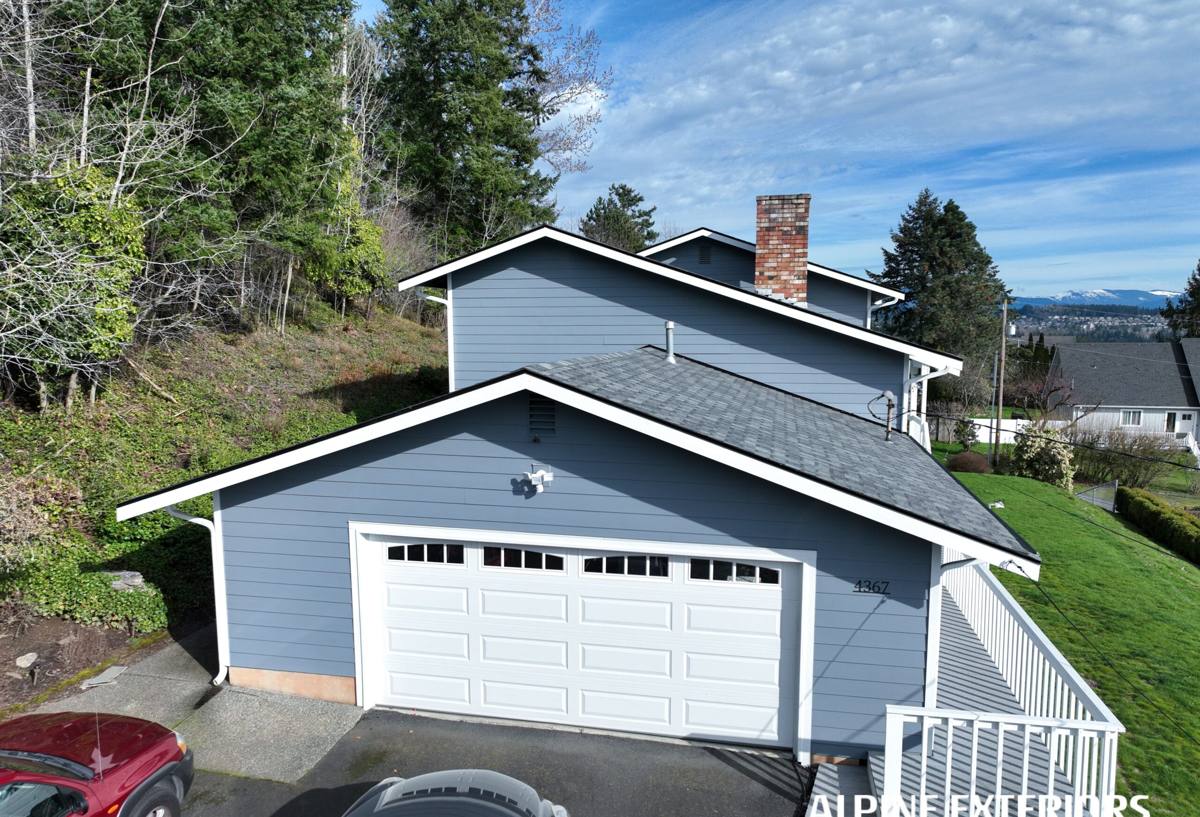
What Salt Air, Driving Rain, and Moss Actually Do to a Shingle Roof
Salt-laden air
Salt in the air doesn't rot asphalt shingles the way it corrodes metal, but it does accelerate wear on exposed metal components — flashing, drip edge, nail heads, and roof vents. Once those fasteners and flashings start to corrode, water finds its way past them long before the shingles themselves are worn out. Coastal exposure also tends to dry out and age asphalt granules faster than inland sun exposure alone would.
Wind-driven, sideways rain
Standard rain falls straight down and a properly lapped shingle sheds it easily. Driving rain off open water pushes water sideways and upward under shingle edges, at ridge caps, and around any roof penetration — vent pipes, chimneys, skylights. If the underlayment, flashing, and nailing pattern aren't built for that kind of wind-driven moisture, water gets underneath the shingles even while the shingles themselves look fine from the ground.
Moss and prolonged shade
A long moss season is one of the biggest threats to an asphalt roof in this part of Washington. Moss holds moisture against the shingle surface, lifts shingle edges as it grows, and works its way under tabs and flashing over time. Shaded, north-facing slopes and roof valleys that stay damp longest are almost always where moss establishes first and where granule loss and soft spots eventually show up.
What a Correctly Installed Asphalt Shingle Roof Actually Includes
A shingle roof is a system, not just the visible shingle layer. For a Point Roberts exposure, every layer of that system matters more than it would somewhere with milder weather.
Underlayment and water protection
A synthetic underlayment (or felt, depending on the job) goes down first as the roof's backup water barrier. In valleys, along eaves, and around penetrations, self-adhering waterproof membrane belongs underneath — these are the spots where wind-driven rain and ice most often force water past the shingles themselves.
Flashing at every transition
Chimneys, skylights, vent pipes, and roof-to-wall junctions all need properly formed, correctly lapped flashing — not just caulk covering a gap. Caulk fails; correctly installed flashing sheds water on its own. Given the salt exposure out here, we favor flashing materials and fasteners that resist corrosion rather than the cheapest option available.
Ventilation that actually moves air
A shingle roof needs balanced intake and exhaust ventilation to keep the attic dry and the shingles at a stable temperature. Poor ventilation traps moisture, which speeds up sheathing rot and shortens shingle life from underneath — a problem you won't see from the ground until it's advanced.
Fastening and layout
Nail placement, nail count per shingle, and starter strip installation all affect wind resistance. This matters more on an exposed peninsula than it does on a sheltered inland lot, and it's one of the easiest things for a rushed crew to get wrong.
Signs a Point Roberts Roof Needs a Closer Look
- Moss or dark streaking building up on shaded slopes or in valleys
- Granules collecting in gutters or at the base of downspouts
- Curling, cracked, or missing shingles, especially after a windy winter storm
- Rust staining or visible corrosion at flashing, vent boots, or exposed nail heads
- Soft or spongy spots underfoot when walking the roof
- Daylight or water stains visible in the attic around chimneys, vents, or skylights
- Ceiling stains or peeling paint on an interior wall below an exterior roof line
Any one of these on its own isn't necessarily an emergency, but out here they tend to compound quickly once moisture gets a foothold.
Choosing the Right Shingle for This Kind of Exposure
Not every asphalt shingle product is built the same way, and the right choice depends on the roof's exposure, slope, and how much shade and moss pressure it deals with.
| Shingle Type | Typical Lifespan | Best Fit For |
|---|---|---|
| 3-tab (standard) | 15–20 years | Budget-conscious jobs on lower-exposure slopes |
| Architectural / laminate | 25–30+ years | Most Point Roberts homes — better wind resistance and thickness |
| Algae-resistant (AR) granule shingles | Same as base product, slower discoloration | Shaded, north-facing, or moss-prone slopes |
| High wind-rated shingles | Rated to higher sustained wind speeds | Fully exposed roof planes facing open water |
For most homes out here, an architectural shingle with algae-resistant granules and a wind rating suited to open exposure is the practical middle ground — it costs more up front than a basic 3-tab shingle but holds up noticeably longer against this specific combination of salt, wind, and moss.
What Drives the Cost of a Roofing Job in Point Roberts
| Factor | Why It Matters Here |
|---|---|
| Roof pitch and access | Steeper roofs and limited staging area affect labor time and safety setup |
| Existing roof condition | Rotten sheathing or hidden moisture damage found during tear-off adds repair scope |
| Number of penetrations | Each chimney, skylight, and vent needs its own flashing detail |
| Shingle grade selected | Basic 3-tab vs. architectural vs. algae-resistant changes material cost directly |
| Ventilation upgrades | Adding or correcting intake/exhaust vents during the same job is more efficient than doing it later |
| Scheduling and logistics | Point Roberts' location affects crew travel time and materials delivery scheduling |
We give a written estimate that spells out these factors for your specific roof rather than a flat per-square number that ignores what's actually going on up there.
How We Handle a Point Roberts Roofing Job
- On-site inspection. We walk the roof, check the attic for ventilation and moisture issues, and look closely at valleys, flashing, and any shaded slopes for early moss or granule loss.
- Written estimate. You get a clear breakdown of scope, materials, and cost — no pressure, no same-day-signature tactics.
- Tear-off and deck inspection. Old roofing comes off and we inspect the sheathing underneath before anything new goes down, since that's where hidden rot or moisture damage shows up.
- System installation. Underlayment, ice/water membrane at vulnerable spots, flashing, ventilation, and shingles go in as a complete system built for this exposure — not just the visible layer.
- Cleanup and final walkthrough. We clear debris and nails from the property and walk the finished roof with you before we consider the job done.
Why Hiring a Crew That Already Works in Point Roberts Matters
Point Roberts is geographically separated from the rest of Whatcom County — the only road route in and out passes through Canadian border crossings. That's not a small detail when it comes to scheduling a roofing job. A crew unfamiliar with that reality can underestimate travel time, delivery logistics for shingles and underlayment, or how weather windows for tear-off work need to be planned more carefully than on a mainland job where you can simply reschedule for the next afternoon.
Beyond logistics, a crew that's already worked roofs on this peninsula knows which slopes tend to hold moss longest, which roof orientations take the worst of the wind-driven rain, and which flashing and fastener choices actually hold up against sustained salt exposure instead of failing early. That kind of familiarity comes from doing the work here repeatedly, not from a general roofing background alone.
Maintenance That Extends the Life of Your Roof Out Here
- Have moss removed gently (not pressure-washed) as soon as it appears, rather than waiting for a full season of growth
- Keep gutters and downspouts clear so water isn't backing up under the shingle edge
- Trim back overhanging branches to reduce shade and speed up drying after rain
- Schedule a roof check after major windstorms, not just once a year on a fixed calendar
- Address small flashing or nail issues immediately — they're inexpensive fixes until water gets underneath
If your roof is showing any of the signs above, or it's simply been a long time since anyone got a close look at it, we're happy to come out to Point Roberts and give you a straightforward, no-pressure estimate. Use the form below to get started.