 Ferndale Window
 Storm Damage Roof Repair Built for Kendall's Climate
When a storm moves through Kendall, the damage it leaves behind isn't always obvious from the driveway. A shingle or two on the lawn is easy to spot. What's harder to see is the tab that lifted but didn't quite tear off, the flashing that got bent just enough to open a gap, or the underlayment that's now exposed to weather it was never meant to face directly. In this part of Whatcom County, that kind of damage doesn't sit quietly until you get around to it. Salt-tinged air off the water, wind-driven rain that keeps coming sideways long after the worst of a storm has passed, and a moss season that runs across most of the year all work faster on a roof that's already been compromised than on one that's still intact.
This page covers storm damage repair specifically for Kendall homes: what storm damage actually looks like here, what a correct repair involves, how to think about repair versus replacement, and why it matters to call a crew that already knows this area rather than whoever shows up first after the wind dies down.
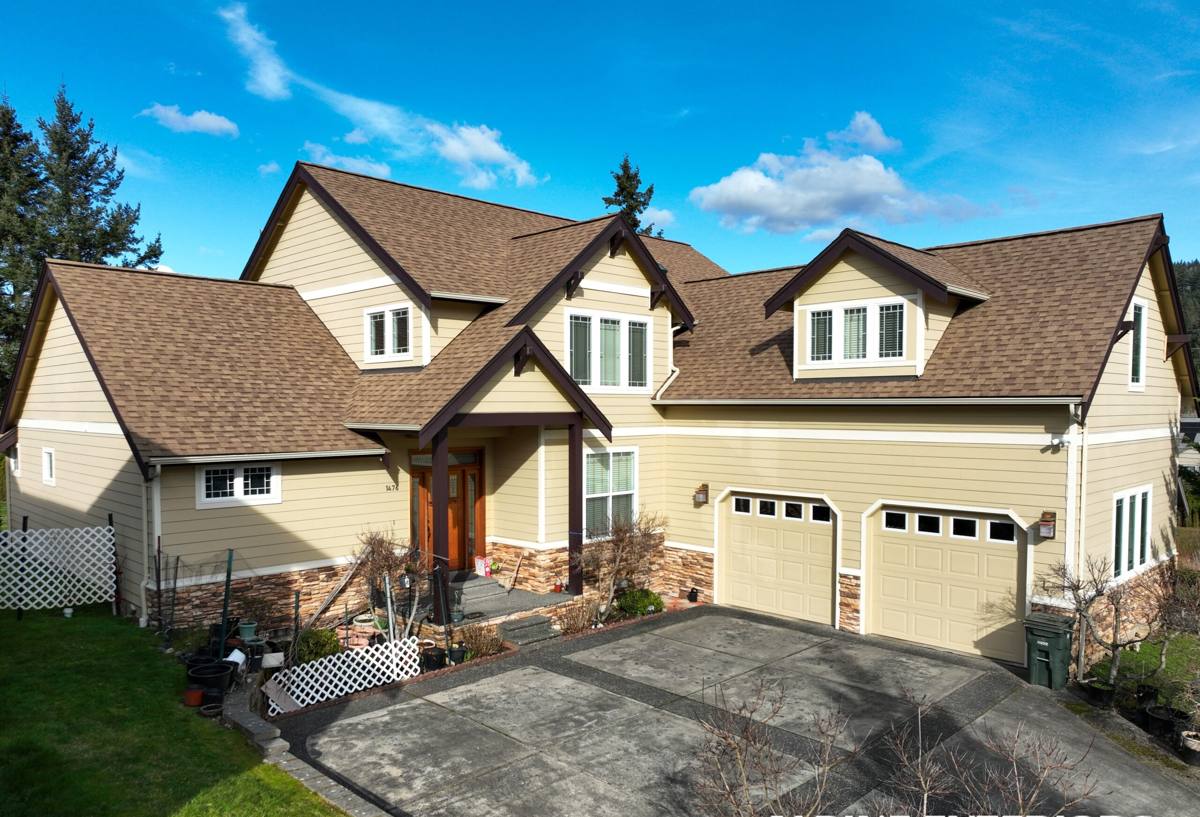
What Storm Damage Actually Looks Like on a Kendall Roof
Storm damage isn't always the dramatic kind. Some of the most costly damage is the kind that looks minor at first glance and gets worse quietly over the following months.
Wind Damage and Wind-Driven Rain
Wind doesn't just tear shingles off outright — more often it lifts a tab just enough to break the seal underneath without fully detaching it. That shingle can look fine from the ground while wind-driven rain gets pushed up and under it every time weather rolls through afterward. Ridge caps and shingles along roof edges and hips tend to take the worst of this because they catch the most direct wind exposure.
Impact Damage from Falling Debris
Branches, cones, and wind-thrown debris from nearby trees are a routine part of storms in this area, and impact damage from debris can bruise or crack shingles, dent metal flashing and vents, and occasionally punch straight through in a hard enough hit. Bruised shingles in particular can look nearly normal but lose the granule coverage that protects them from sun and weather, which shortens their remaining life even without a visible hole.
Damage That Doesn't Show From the Ground
Some of the most important damage to catch is only visible from the roof surface itself or from inside the attic: a flashing seam pushed open at a chimney or wall intersection, a valley where granules have been scoured away, or a soft spot on the decking where water has already gotten through. Ground-level or drive-by assessments miss this consistently, which is one reason a proper storm damage inspection has to happen on the roof, not from the street.
Why Storm Damage Doesn't Wait for a Better Season
A small gap in a roof's weather barrier doesn't stay small on its own timeline here. Once wind-driven rain has a way in, it keeps finding that same path with every subsequent storm, and Kendall doesn't go long between them during the wetter months. Add in a moss season that keeps shaded and north-facing slopes damp for extended stretches, and a minor breach that would dry out and go unnoticed in a drier climate instead stays wet long enough to reach the decking and, eventually, the framing underneath. Waiting for a better time to deal with storm damage in this area usually just means paying for water damage repair on top of the roof repair that would have prevented it.
What a Correct Storm Damage Repair Involves
An On-Site Assessment, Not a Drive-By Estimate
A real storm damage assessment means getting on the roof and, when there's any sign of a leak, into the attic — not estimating scope from a photo or a look from the ground. This is the only way to catch the damage described above that doesn't show from street level.
Emergency Tarping When It's Needed
If a roof has active exposed decking or a leak that's actively letting water in, the first job is stopping further water intrusion with a properly secured tarp, not scheduling the permanent repair for whenever it's convenient. A tarp done right is fastened so wind can't get under it and start the same lifting problem all over again.
Matching Materials to What's Already There
A storm repair should blend into the existing roof as closely as possible in color, profile, and granule style, not just seal the leak with whatever's on the truck. When an exact match isn't available because a product's been discontinued, that's worth discussing honestly up front rather than discovering after the repair is done.
Flashing Repair, Not Just Shingles
Most of the storm-related leaks we deal with in Kendall trace back to flashing — at valleys, chimneys, vent boots, and wall intersections — not to open shingle field. A repair that only replaces shingles and leaves damaged or displaced flashing in place is treating the symptom, not the actual entry point.
Repairing Only What's Damaged
A correct storm repair addresses the area actually affected, plus enough surrounding material to tie in properly and re-establish a weathertight seal. It shouldn't turn into an unnecessary full tear-off unless the roof's condition or the extent of damage genuinely calls for one.
Repair or Full Replacement? Making the Right Call
Not every storm-damaged roof needs to come off entirely, and not every roof should be patched indefinitely either. The right call usually comes down to a handful of factors.
| Situation | Repair Usually Makes Sense | Replacement Worth Considering |
|---|---|---|
| Extent of damage | Isolated to one slope, valley, or penetration | Spread across multiple slopes or the whole roof field |
| Roof age | Roof still has significant service life left | Roof was already near the end of its expected lifespan |
| Deck condition underneath | Decking and underlayment are sound once opened up | Rot or widespread moisture damage found at the deck |
| Shingle match availability | Existing color and profile can still be closely matched | Discontinued product forces a visibly mismatched patch |
| Storm history | First significant damage event on an otherwise healthy roof | Roof has taken repeated storm damage over several seasons |
We'll give you an honest read on which side of that table your roof falls on rather than defaulting to whichever answer costs more.
Storm Damage and Insurance Claims: What Kendall Homeowners Should Know
Most homeowners insurance policies cover sudden, storm-related roof damage from wind and impact, though coverage details, deductibles, and documentation requirements vary by policy, so it's worth confirming specifics directly with your insurer or agent rather than assuming. What we can help with is the practical side: documenting damage thoroughly with photos before any repair work begins, providing a clear written scope an adjuster can review, and being available to meet an adjuster on-site if that's useful to your claim. We're not in the business of inflating a scope to maximize a payout — we document what's actually storm-related and let the estimate reflect that honestly, which tends to hold up better with insurers than an inflated one anyway.
What Affects the Cost of a Storm Damage Repair
| Factor | What It Affects |
|---|---|
| Extent and location of damage | An isolated flashing or valley repair costs far less than damage spread across multiple slopes |
| Shingle or material match | Whether the existing product can be matched exactly or a wider blend-in repair is needed |
| Deck repair, if needed | Any rot or soft decking found once shingles are pulled back adds material and labor |
| Roof pitch and access | Steeper or harder-to-reach roofs take longer and require more staging and safety setup |
| Flashing scope | A full flashing replacement at a damaged valley or wall intersection versus a spot repair |
| Emergency tarping | Whether temporary protection is needed before the permanent repair can be scheduled |
A minor, well-defined flashing repair is a modest expense in the range of a few hundred dollars; damage spread across multiple slopes with deck repair involved can run into the low thousands. An itemized written estimate is the only way to know where a specific job actually falls, and it's worth asking any contractor to break their number down rather than accepting a single lump sum.
How Our Process Works
- On-site inspection: We walk the roof and, when there's any sign of a leak, the attic in person, and document what we find with photos.
- Emergency tarping, if needed: Any active exposure or leak gets a properly secured tarp before anything else, so the damage doesn't spread while a permanent fix is scheduled.
- Written, itemized estimate: You get a clear scope covering material match, flashing work, any deck repair, and labor — not a vague single-line number.
- Insurance documentation, if you're filing a claim: We provide photos and a written scope your adjuster can work from, and we're glad to meet them on-site.
- Repair work: We repair the affected area with matched materials and correct flashing detailing, tying it into the surrounding roof properly.
- Final walkthrough: We review the completed repair with you and do a site cleanup and magnetic nail sweep before calling the job done.
Why Hiring a Crew That Already Works in Kendall Matters
After a significant storm, it's common for unfamiliar crews to show up in a hard-hit area offering fast repairs, and it's worth being deliberate about who you let on your roof during that window. A crew that works in Kendall year-round, not just after a storm, has a reputation and an address to be accountable to long after the repair is finished — which matters for a workmanship warranty that's only as good as the company standing behind it. They've also already seen how salt air corrodes underspecified flashing, how wind-driven rain finds its way through a poorly matched repair, and which roof orientations hold moss and moisture longest through the wet season, and that experience shows up in the small decisions made during a repair.
A Practical Checklist Before You Hire a Storm Repair Contractor
- Do they inspect the roof and attic in person before writing an estimate, rather than quoting from a drive-by or a photo?
- Is the estimate itemized by scope — material match, flashing, any deck repair, labor — rather than one lump sum?
- Do they carry current Washington contractor licensing, liability insurance, and workers' compensation?
- Can they show recent, verifiable work in or near Kendall, not just projects from out of the area?
- Will they document damage with photos and work directly with your insurance adjuster if you're filing a claim?
- Do they have a permanent local address and phone number, not just a temporary number tied to one storm season?
If a recent storm has left your Kendall roof with missing shingles, a new leak, or damage you're not sure how to assess, we're glad to take a look and give you an honest, written estimate — no pressure, no inflated scope. Use the form below to request a free estimate.