 Ferndale Window
 Why Siding Fails Faster Near Lummi Nation
Homes around Lummi Nation sit close to the water, and that proximity changes how siding ages. Salt-laden air carries moisture and fine mineral deposits that settle into every seam, joint, and fastener on a home's exterior. Combine that with Whatcom County's long, wet winters and the shaded, moisture-holding conditions that let moss and algae take hold on north-facing walls, and you have a climate that is genuinely tougher on siding than what homes fifty miles inland deal with.
Driving rain off the Strait and the bay doesn't just fall straight down here — wind pushes it sideways into laps, corner boards, and trim joints. Siding that isn't detailed correctly for wind-driven rain will take on moisture behind the surface long before any damage becomes visible from the street. By the time a homeowner notices soft trim or a musty smell in a wall cavity, moisture has often been working on the sheathing for a year or more.
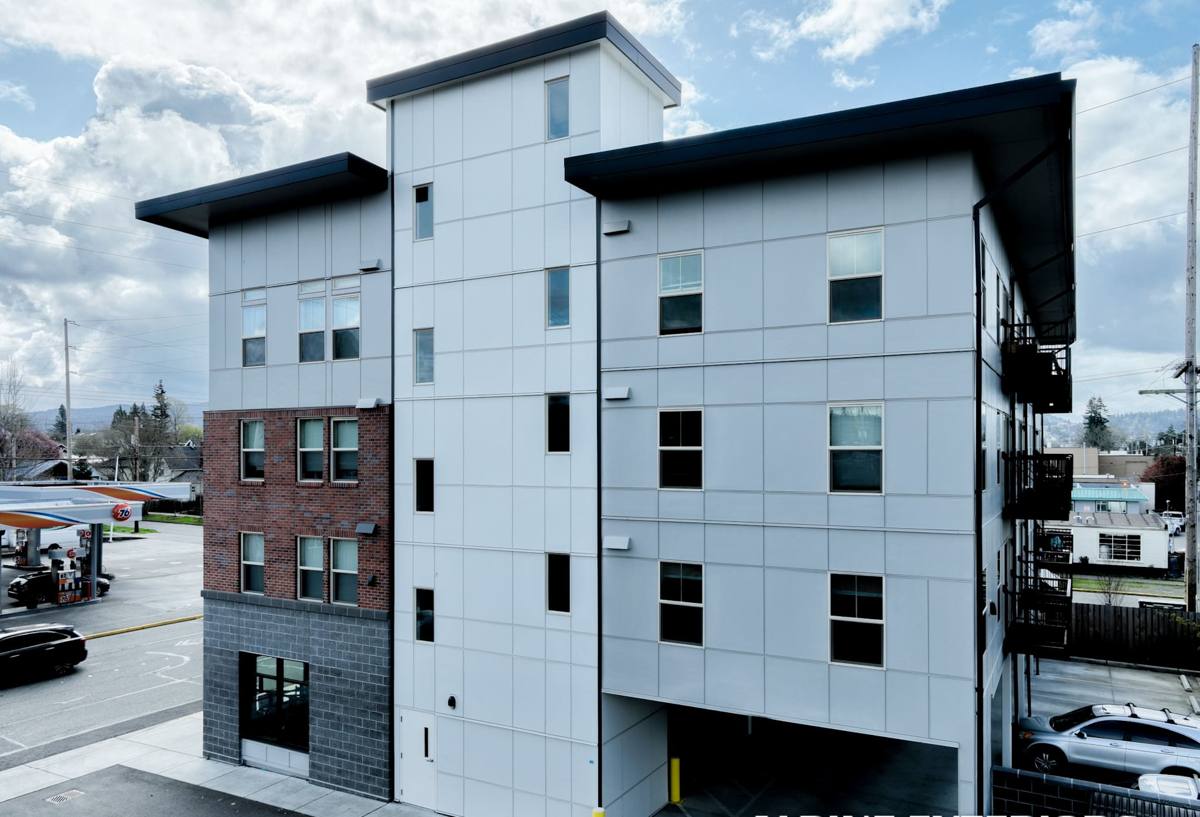
What This Climate Does to Different Siding Materials
Not all siding responds the same way to salt air, standing moisture, and moss. Some materials tolerate it well; others need constant upkeep just to look presentable, and a few will actually break down from the inside if water gets past the surface.
| Material | Behavior in salt air & heavy moss climate |
|---|---|
| Vinyl | Doesn't rot, but seams and edges trap moisture and organic growth; UV and salt exposure can fade and warp panels over time |
| Cedar | Attractive but absorbs moisture readily; needs regular refinishing to resist moss and rot in a wet, shaded coastal setting |
| Primed spruce/wood composite | Field-applied primer and paint are the only moisture barrier; any breach lets water into the wood substrate |
| Uncoated/lower-grade fiber cement | Resists rot but relies entirely on field-applied paint for weather protection, which fails faster in salt air |
| James Hardie fiber cement (ColorPlus) | Non-combustible, engineered for moisture resistance, factory-baked finish holds color and resists the fade/peel cycle salt air causes |
Signs Your Siding Has Reached the End of Its Service Life
Homeowners near Lummi Nation usually notice one of these first, often on the shaded or water-facing side of the house:
- Persistent moss or dark streaking that returns within months of cleaning
- Soft or spongy spots when you press on siding or trim, especially near the bottom courses
- Cupping, buckling, or visible gaps at panel seams and corner boards
- Peeling or bubbling paint that keeps coming back no matter how it's touched up
- A musty smell in an exterior wall, or interior drywall staining near an outside corner
- Fastener heads showing through the surface, or nails backing out
Any one of these can be a cosmetic nuisance. Several together, especially soft spots combined with staining, usually mean moisture has already reached the wall assembly and a full siding replacement — not a patch — is the honest recommendation.
What a Correct Siding Replacement Involves
Replacing siding well in this climate isn't just swapping old panels for new ones. The work that matters most happens underneath the surface, where it never gets checked again once the wall is closed up.
Full Tear-Off and Substrate Inspection
We remove the old siding and inspect the sheathing underneath for rot, soft spots, or prior moisture damage. Any compromised sheathing gets replaced before anything new goes on — covering damaged wood with new siding just hides a problem that keeps getting worse.
Weather-Resistive Barrier and Flashing
A correctly lapped weather-resistive barrier, along with properly integrated window, door, and penetration flashing, is what actually stops wind-driven rain from reaching the wall cavity. This detail work matters more here than in drier parts of the state, because the volume of driving rain gives water more opportunities to find a gap.
Rainscreen or Drainage Gap
A small air gap between the siding and the weather barrier lets any moisture that does get past the surface drain and dry out instead of sitting against the substrate. In a climate with this much standing humidity and moss growth, that drainage plane is one of the biggest factors in how long a siding job actually lasts.
Correct Fastening and Clearances
Proper nailing patterns, fastener type, and clearance from grade, decks, and roof lines all affect how well the assembly sheds water long-term. Manufacturer installation instructions exist for a reason — skipping them is the single most common cause of premature siding failure we see when we're called to fix someone else's work.
Why We Install Only James Hardie Fiber Cement
We do not install vinyl, LP SmartSide, primed spruce, cedar, or other fiber cement brands. That's a deliberate standard, not a sales pitch. In a climate defined by salt air, sustained moisture, and moss, the material has to hold up on its own — most upkeep problems we get called about trace back to a product that depended on field-applied coatings or moisture-sensitive substrates to do a job the material itself couldn't.
James Hardie fiber cement is non-combustible and engineered specifically for demanding climates, including HardiePlank and HardiePanel lines built for high-moisture, high-UV regions like the Pacific Northwest coast. The ColorPlus factory finish is baked on under controlled conditions rather than applied on-site, which is a meaningful difference when the alternative is painting siding outdoors in a marine climate where humidity and salt residue work against paint adhesion from day one. Hardie also backs its products with a strong, transferable warranty — worth real money if you sell the home down the road.
None of this means other products can't perform when installed and maintained perfectly. It means we've chosen to build our business around one system we can install to spec every time and stand behind without hedging.
Our Process for Lummi Nation Siding Replacements
- On-site inspection of existing siding, trim, and any visible moisture damage
- Written estimate detailing scope, material, and any sheathing repair allowances
- Confirmation of permitting requirements for your property before work begins
- Full tear-off, substrate repair as needed, and weather barrier/flashing installation
- James Hardie siding installation to manufacturer specification, including rainscreen detailing
- Final walkthrough covering trim, caulking points, and care instructions for the new siding
Permitting and Jurisdiction Near Lummi Nation
One detail worth flagging early: depending on whether a property sits on tribal trust land or fee land, siding and exterior work near Lummi Nation may fall under Lummi Nation's own building and planning authority rather than Whatcom County's. This isn't something to guess about — it's worth confirming which jurisdiction applies to your specific property before scheduling work, since it can affect permit timelines. We factor this into scheduling once we know a property's status, rather than assuming one process fits every job in the area.
What Homeowners Should Check Before Hiring
A crew that already works in Lummi Nation and the surrounding Ferndale area understands the moss cycle, the salt exposure, and the permitting nuances mentioned above — that local familiarity saves time and avoids surprises mid-project. Before hiring anyone for a siding replacement here, it's worth confirming:
- They carry current Washington contractor licensing and insurance, and can show proof without hesitation
- They can explain, specifically, how they'll handle flashing and drainage — not just "we'll put new siding up"
- They inspect and address sheathing condition as part of the job, not as a surprise change order
- They've done work in your specific area and understand local permitting steps
- Their warranty covers workmanship separately from the manufacturer's material warranty, in writing
Cost Factors for Siding Replacement in This Area
| Factor | Why it affects cost here |
|---|---|
| Sheathing condition | Hidden moisture damage from years of salt air and rain often isn't known until tear-off |
| Home size and wall complexity | More corners, trim, and penetrations mean more flashing and labor detail |
| Existing siding removal | Multiple layers or difficult-to-remove materials add labor time |
| Rainscreen/drainage detailing | Proper drainage gap installation adds labor but pays off in longevity here |
| James Hardie product line and finish | Panel style and ColorPlus color selection affect material cost |
We give straightforward, itemized estimates rather than a single vague number, so you can see exactly where the cost is going and what's driving it.
Get a Straightforward Estimate
If moss, soft spots, or peeling paint have you wondering whether your siding still has years left in it, we're happy to take a look. We'll give you an honest read on what's going on, what it would take to fix it right, and a clear estimate — no pressure, no upsell. The form below is the easiest way to get started.