 Ferndale Window
 Metal Roofing on Lummi Island: Why the Details Matter More Out Here
Lummi Island sits out in the water, reachable only by ferry from the Whatcom County mainland near Ferndale, and that geography changes what a roof has to deal with. Homes on the island get less shelter from surrounding hills and tree cover than a comparable home tucked into town, which means more direct wind, more salt-laden air coming off the water, and rain that doesn't just fall straight down — it gets driven sideways into every seam, lap, and fastener a roof has. Metal roofing can handle that environment better than most materials when it's installed correctly, but "correctly" means something more specific here than it does on a sheltered inland lot.
This page is about metal roofing specifically for Lummi Island homes: what the local climate demands from the material and the installation, what separates a roof that holds up for decades from one that starts showing rust streaks and leaks within a few years, and why working with a crew that already understands the island's conditions and logistics is worth more than a lower bid from an outfit that's never worked out there.
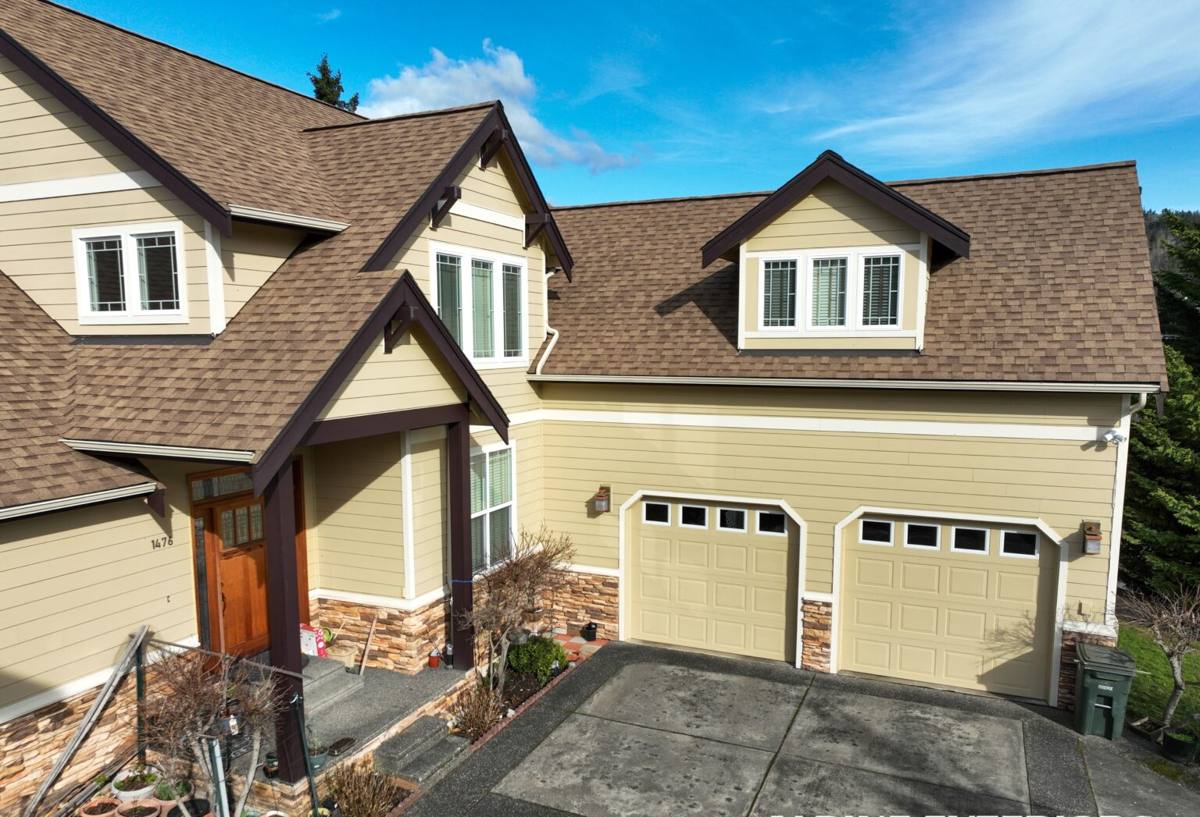
What Salt Air, Wind, and a Long Moss Season Do to a Metal Roof
Salt air, driving rain, and a long moss season all take a toll on roofing across Whatcom County, and an island setting concentrates every one of those factors.
Salt-Driven Corrosion
Airborne salt accelerates corrosion on any exposed metal — fasteners, cut panel edges, flashing, and lower-grade coatings all show it first. You don't need a home right at the waterline for this to matter; salt-laden marine air travels well inland on wind, and a piece of land surrounded by water on every side gets more of it, more of the time, than a comparable home a few miles inland.
Wind Exposure
Without the windbreak that dense neighboring development provides, island homes tend to see higher sustained wind loads and more direct gusts off the water. That affects fastening patterns, panel gauge, and how ridges and edges get secured — details that matter less on a heavily sheltered lot but become the difference between a roof that stays put and one that doesn't in a bad blow.
Driving Rain
Wind-driven rain gets pushed sideways and even upward under laps and around penetrations instead of simply running downhill. That's exactly the failure mode that separates a well-flashed metal roof from one that leaks at the first hard storm off the water.
Moss and Organic Growth
Shaded, north-facing, or heavily treed roof slopes in this region hold moisture long enough to grow moss for much of the year. Metal roofing resists this far better than shingles do, but panel finish, slope, and gutter design still affect how much organic buildup a roof collects over time.
Getting the Roof Deck and Underlayment Right — Before Any Metal Goes Down
A metal roof is only as good as what's underneath it. This part of the job is invisible once it's finished, and it's also where corners get cut on a rushed install.
- Deck inspection first: Any rot, delamination, or soft spots in the existing roof deck need to be found and repaired before underlayment goes down, not discovered later as a leak.
- Self-adhered underlayment at eaves, valleys, and penetrations: These are the spots most exposed to wind-driven rain intrusion and cold-weather ice backup.
- Full synthetic underlayment across the field: A secondary water barrier in case any seam or fastener ever fails — more important on an exposed, wind-loaded roof than on a sheltered one.
- Proper attic and roof ventilation: Trapped moisture under a metal roof condenses against the underside of cold panels; good intake and exhaust ventilation keeps that moisture off the deck.
Skipping or shortcutting this layer is invisible on installation day and expensive to discover later, usually as a leak that shows up nowhere near where the water actually got in.
Choosing the Right Metal Roofing System
Not all metal roofing is the same, and the right choice for an island home depends on budget, roof pitch, and how much value you place on a fully concealed fastening system versus a lower up-front cost.
| System | How It's Fastened | Best Fit |
|---|---|---|
| Standing seam | Concealed clips under raised, interlocking seams — no exposed fasteners in the field of the roof | Higher wind and salt exposure, longer expected service life, higher up-front cost |
| Exposed-fastener panel | Screws driven through the panel face with gasketed washers | Lower up-front cost; works well on outbuildings or budget-conscious projects with regular fastener inspection |
| Stone-coated steel | Interlocking panels shaped like shingle or tile profiles, fastened similarly to standing seam | Homeowners who want metal's durability with a more traditional roof appearance |
Standing seam tends to be the stronger choice for the most exposed island lots, specifically because it has no field fasteners for salt air to attack and no exposed screw heads that can loosen or corrode over years of wind cycling. An exposed-fastener system can still be a sound choice on a budget or on a less exposed structure, as long as the fasteners and washers are rated for coastal exposure and someone actually checks them periodically.
Fasteners, Flashing, and Finish: Where Metal Roofs Actually Fail
When a metal roof fails early, it's almost never the panel itself that gives out. It's one of three things.
Fasteners
Cheap or mismatched fasteners are the single most common early-failure point on an exposed-fastener metal roof. Screws need to be a corrosion-resistant grade matched to the panel metal, with intact rubber washers, driven at the correct torque — overdriven washers crack and stop sealing, while underdriven ones work loose over time.
Flashing
Valleys, ridge caps, wall-to-roof transitions, and any penetration for a vent or chimney are where wind-driven rain finds its way in. Flashing needs to be formed to actually match the panel profile and lapped for the direction water and wind-driven rain hit this particular roof — a generic detail that works fine inland can fail on a more exposed island lot.
Finish and Coating
The paint or coating system on the panel is what actually stands between the base metal and salt air over the roof's lifetime. Lower-grade coatings chalk, fade, and lose their protective value years before a premium finish does, right around when salt-driven corrosion starts showing at cut edges and fastener heads.
Why Ferry Access Changes How a Metal Roofing Job Should Be Planned
Reaching Lummi Island means working around a ferry schedule, and that has real practical effects on a roofing project that a mainland job simply doesn't have to account for.
- Materials, equipment, and crew all need to cross on the ferry, so the full scope and material order need to be locked down and staged before the crew commits to a sailing — not figured out mid-job with a return trip for a forgotten part.
- Weather windows matter twice over: once for the roofing work itself, and once for the crossing carrying material and crew.
- A crew that already works the island regularly builds the logistics into how it plans a job — order lead times, load-out sequencing, realistic day-by-day scheduling — instead of learning it for the first time on your roof.
None of this changes what a correctly installed metal roof needs. It changes how much a homeowner should expect a contractor to have already thought through before the first panel ever crosses the water.
What Our Process Looks Like for a Lummi Island Metal Roof
- In-person inspection and measurement: We walk the existing roof, check deck condition, note wind exposure and slope, and measure precisely so the material order is correct the first time.
- Written estimate with system and finish specified: Panel type, gauge, finish system, underlayment, and flashing scope spelled out — not a one-line "metal roof" quote.
- Material staging before crossing: Panels, fasteners, underlayment, and flashing are ordered and staged together so the crew makes the trip with everything the job needs.
- Deck repair and underlayment first: Any deck issues get addressed and a full underlayment system goes down before a single panel is installed.
- Panel installation with attention to fastening and flashing detail: Correct fastener spacing, torque, and flashing sequencing for the wind and rain direction this roof actually sees.
- Final walk-through: We go over the finished roof, ridge, valleys, and penetrations with you before calling the job done.
What a Metal Roof Asks of an Island Homeowner Afterward
Metal roofing is genuinely low-maintenance compared to asphalt shingles, but low-maintenance isn't zero-maintenance, especially in this environment.
- Rinse off heavy salt residue or storm debris during an annual check, especially after the wetter, windier months
- Keep gutters and downspouts clear so water isn't backing up against panel edges or fascia
- If your roof uses an exposed-fastener system, check fasteners periodically and replace any washer showing cracking
- Trim back overhanging branches that hold moisture against the roof and feed moss growth
- Have any scratch or ding in the panel finish touched up promptly — exposed bare metal is where corrosion actually starts
Why Hiring a Crew That Already Works Lummi Island Matters
A metal roof that's correctly specified and installed for this environment should outlast most other roofing materials by a wide margin. But that outcome depends on decisions made before, during, and after installation day — deck prep, underlayment, fastener grade, flashing detail, finish quality, and a realistic plan for getting materials and crew to an island that's only reachable by ferry. A contractor who's never worked out here can still do honest, competent work, but they're solving these logistics and climate questions for the first time on your project instead of the tenth or twentieth.
If you're weighing a metal roof for a Lummi Island home, we're happy to come take a look, walk you through what your specific roof needs, and put together a straightforward, no-pressure written estimate.