 Ferndale Window
 Decks Built for Marietta's Weather, Not Just Its Layout
A deck in Marietta has to do more work than a deck somewhere dry. This stretch of Whatcom County sits close enough to the water that salt-laden air reaches wood, metal, and finishes year-round, and the winter rain doesn't let up for weeks at a time. Add in the shade from mature trees that many Marietta lots have, and you get long stretches where a deck surface simply doesn't dry out between storms. That combination is exactly what breaks down decks that were built to a generic spec instead of a coastal Pacific Northwest one.
We build and rebuild decks in this area regularly, which means we're not guessing at how a given material or fastener will hold up here — we've seen what five, ten, and twenty winters in Ferndale-area conditions actually do to a deck. This page walks through what that means for a Marietta project specifically: the risks, the material tradeoffs, and how we structure the work so it lasts.
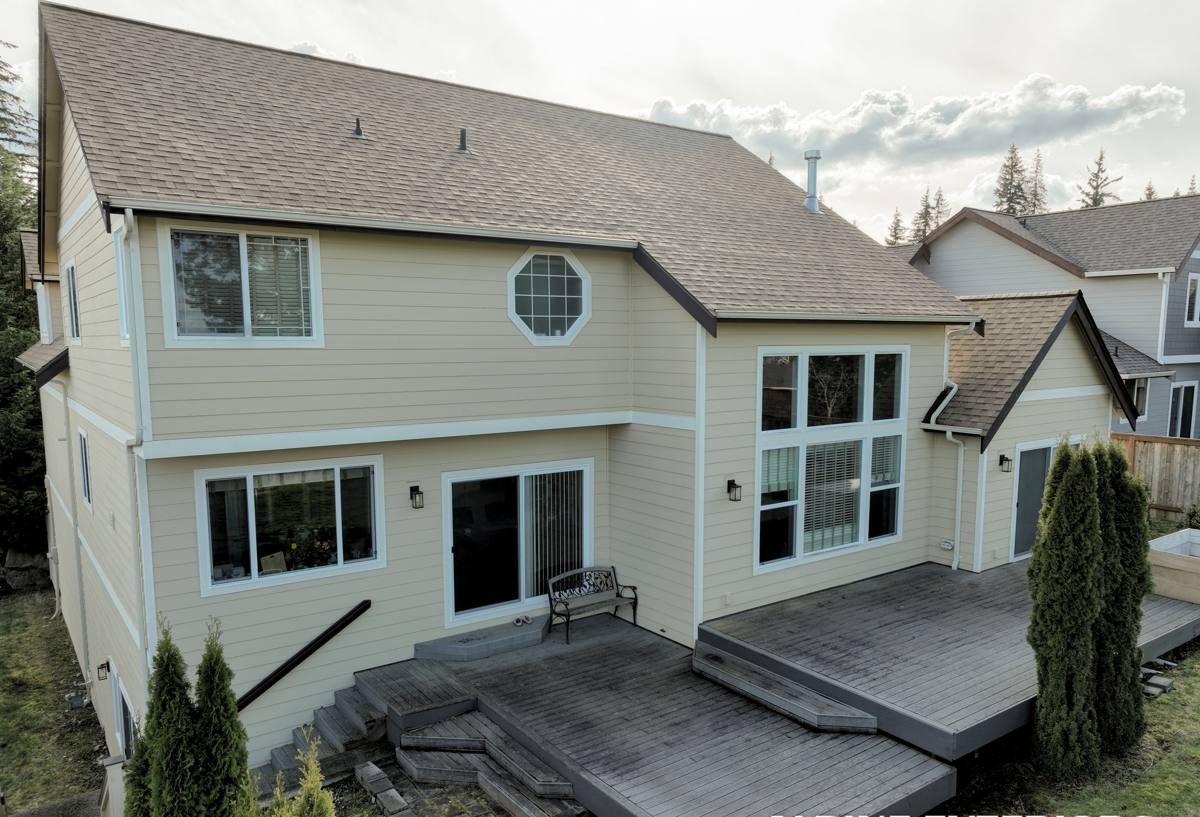
What Marietta's Climate Actually Does to a Deck
Salt Air
Proximity to Bellingham Bay and the Strait of Georgia means airborne salt is a constant, low-level factor even miles inland. It accelerates corrosion on fasteners, hinges, and any exposed metal hardware, and it can dull or discolor lower-grade finishes faster than a strictly inland deck would experience. This is less dramatic than storm damage but more relentless — it works on a deck every single day.
Driving Rain
Whatcom County winters bring sustained, wind-driven rain rather than just steady drizzle. That matters for a deck because rain doesn't just fall on the surface — it gets pushed sideways into ledger connections, under railing posts, and into any gap where end grain is exposed. Standing water and wind-driven moisture are the two biggest reasons deck framing rots from the inside before the surface boards show any obvious wear.
Long Moss Season
Shaded, moisture-retentive spots in Marietta can stay damp for months, and moss doesn't need much encouragement to take hold on a deck surface, especially on the north or shaded side of a house. Beyond looking bad, moss holds moisture against the decking material and creates a slip hazard that gets worse as it spreads.
What a Deck Built for This Area Actually Needs
- Framing lumber and connectors rated for continuous wet exposure, not just "treated" in a general sense
- Fasteners and hardware sized and coated for coastal-adjacent, high-moisture conditions
- A ledger board attachment detail that actively sheds water away from the house rim joist
- Decking spaced and installed to allow airflow underneath, so boards can actually dry between rain events
- A surface material chosen with moss and algae growth in mind, not just looks
- Railing post bases that don't trap water against end grain
Skip any one of these and the deck will likely still look fine for a year or two. The problems that show up in year three through seven — soft framing, rusted-through brackets, boards that stay slick from October to April — almost always trace back to one of these details being shortcut at build time.
Framing and Structure: Getting the Bones Right
The framing is the part of the deck nobody sees once it's finished, which is exactly why it's the part most often built to the minimum. We size joists and beams for the actual span and load, not just to pass a quick visual check, and we use structural connectors rated for exterior, high-moisture use rather than standard interior-grade hardware. Post bases are set to keep wood off concrete and off standing water, since a post sitting in a puddle for a Whatcom County winter is a post that's rotting from the bottom up.
Ledger attachment — where the deck framing bolts into the house — gets particular attention. This is the single most common failure point on older Marietta-area decks we've been called to inspect or rebuild, usually because flashing was skipped or installed incorrectly and water worked its way behind the siding for years before anyone noticed.
Choosing a Decking Material for Marietta Conditions
There's no single "best" decking material — there's a best material for your budget, your maintenance appetite, and how much shade and moisture your particular lot deals with. Here's how the common options actually compare under Whatcom County coastal conditions:
| Material | Moss/Moisture Resistance | Maintenance | Typical Lifespan Here |
|---|---|---|---|
| Pressure-treated wood | Fair — needs sealing to perform well | Annual cleaning and re-sealing recommended | 10-15 years with upkeep |
| Cedar | Good natural resistance, but surface still needs care | Periodic cleaning and oiling | 15-20 years with upkeep |
| Composite decking | Very good — resists moisture absorption | Periodic washing; low overall upkeep | 25-30+ years |
| PVC/capped polymer | Excellent — essentially non-absorbent | Occasional washing | 25-30+ years |
Composite and capped polymer boards cost more up front, but in a climate like this the maintenance savings and moisture resistance often make the math work out over the life of the deck. That said, wood is still a reasonable choice for homeowners who want that specific look and are willing to keep up with sealing — we're honest about that tradeoff rather than pushing everyone toward the same product.
A Note on Fasteners and Hardware
This is the detail that gets skipped most often and causes the most visible early damage. Standard fasteners will streak and stain decking within a couple of seasons in salt-air conditions. We use fasteners and structural hardware rated for coastal and marine-adjacent exposure, which costs a little more per piece but avoids the rust streaking and hardware failure that plagues decks built with generic materials.
Drainage and Moisture Management
A well-built deck manages water on purpose rather than hoping it goes away. That means grading and gapping the decking surface so water sheds instead of pooling, flashing the ledger connection so water is directed away from the house structure, and keeping enough clearance under the deck for air to move and boards to dry out between storms. On lower or shaded Marietta lots, we'll also look at whether the ground under the deck needs its own drainage improvement — a deck can be built perfectly and still stay damp if the ground beneath it never dries.
Our Process, Start to Finish
- On-site assessment — we look at your specific lot: sun exposure, shade, existing drainage, and how the deck will tie into your house
- Material and design conversation — honest tradeoffs on decking material, railing style, and layout based on your budget and maintenance preference
- Written estimate — clear scope, materials, and pricing before any work starts
- Permitting — we handle the paperwork required for your specific location
- Framing and structural work — built to the details above, not the minimum
- Decking, railing, and finish work — installed with the spacing and hardware appropriate for this climate
- Final walkthrough — we go over care and maintenance specific to the material you chose
Keeping a Marietta Deck in Good Shape
Even a well-built deck needs some ongoing attention in this climate. A short seasonal routine goes a long way:
- Sweep leaves and debris off the surface regularly, especially in fall — trapped organic material is what feeds moss
- Rinse or lightly scrub the surface once or twice a year to interrupt moss and algae before it establishes
- Check railing posts and stair connections annually for movement or corrosion at hardware points
- Reseal wood decking on the manufacturer's recommended schedule — don't wait until it looks dry and gray
- Keep gutters and downspouts near the deck clear so runoff isn't dumping extra water onto or under the structure
- Clear any vegetation that's shading the deck more than necessary, since more sun exposure means faster drying between storms
Why a Crew That Already Works in Marietta Makes a Difference
A lot of deck problems we get called to fix started with a design or material choice that would have been fine somewhere drier and sunnier, but wasn't right for a shaded, coastal-adjacent lot in Whatcom County. Knowing the local permitting process, understanding how salt air and moss actually behave here, and having already seen which details fail first in this specific climate all shorten the gap between "looks good on install day" and "still looks good in year ten." That's the difference between a deck built to a generic spec and one built for Marietta.
If you're planning a new deck or replacing one that's showing its age, we're happy to take a look and put together a free, no-pressure estimate — just fill out the form below.