 Ferndale Window
 Installation Is What Decides Whether This Job Lasts
Two homes can go up with the exact same siding product and end up with completely different outcomes ten years later. The material is only half the story — the other half is whether it was fastened, flashed, clearanced, and sealed correctly on install day. That gap matters everywhere, but it matters more on Lummi Nation's peninsula lots than almost anywhere else in our service area, because the exposure here doesn't give a sloppy install anywhere to hide. Salt-laden air off the water, rain that arrives sideways instead of straight down, and a moss season that runs most of the year all put installation shortcuts under pressure faster than a calmer, drier site would.
This page is specifically about siding installation — new work, full re-sides, and what separates a job that's still performing in year twenty from one that starts showing problems in year three. We install James Hardie fiber cement exclusively, and everything below assumes that system, since it's the only one we install to spec on Lummi Nation homes.
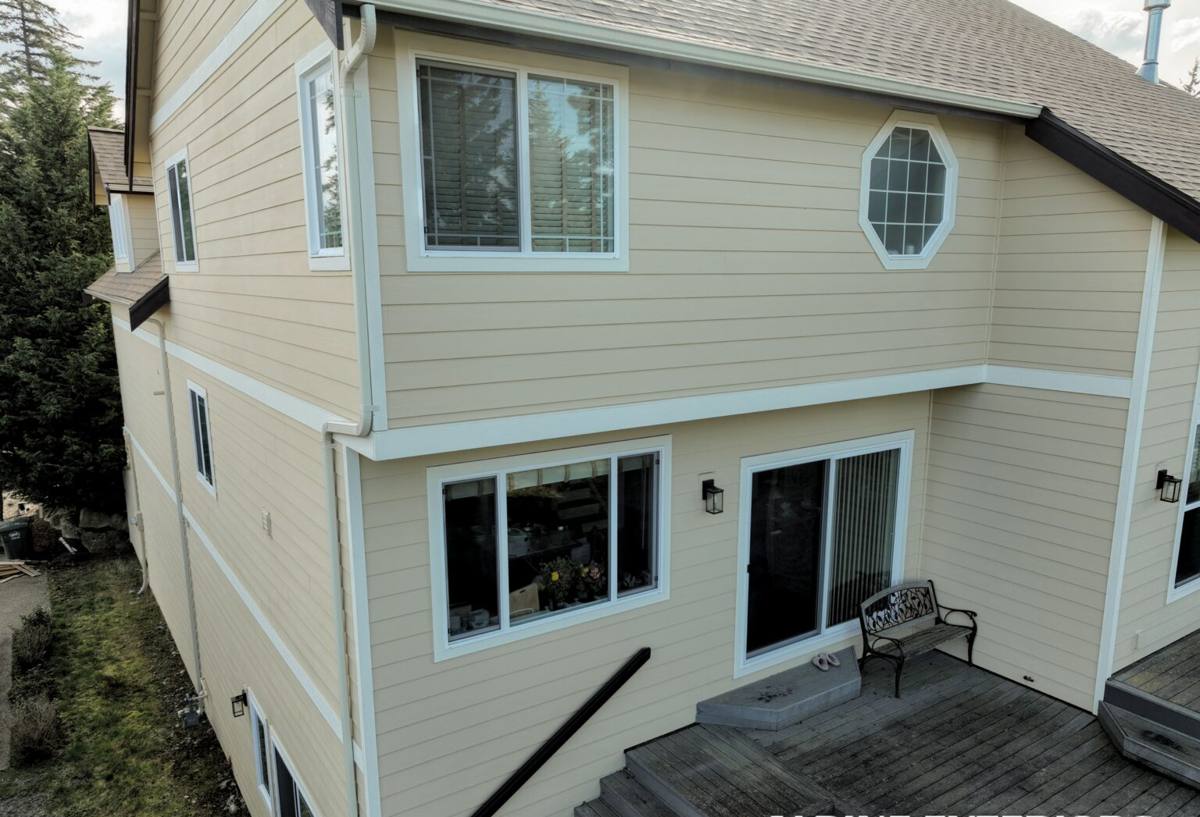
What Peninsula Exposure Demands From an Installation
Salt Air and Hardware Choices
Homes on or near open water take on salt-laden air as a near-constant condition, not an occasional event. That accelerates corrosion in fasteners, flashing, and trim hardware, and it does it faster the closer a house sits to the shoreline. An installation that reaches for standard-grade fasteners because they're cheaper or easier to source is making a decision that shows up as rust streaking and loosening trim well before it would on a home further inland.
Wind-Driven Rain and the Water-Resistive Barrier
Open water means fewer windbreaks, and wind is what turns rain into a sideways problem. Driving rain gets forced into panel joints, window flashing, and trim seams instead of just running down the face of the wall. The water-resistive barrier underneath the siding — and how carefully it's lapped and taped at every seam and penetration — often matters more here than the siding material itself. A correctly installed barrier sheds wind-driven water before it reaches the sheathing; a rushed one just gives that water a path in.
A Moss Season That Rewards Airflow
Shaded elevations, peninsula terrain, and near-constant moisture add up to a moss and mildew season that runs longer here than in drier parts of Whatcom County. Installation detail affects how a wall handles that more than most homeowners expect. Proper clearance at the base of the wall, a working drainage plane behind the siding, and panels that aren't jammed tight against trim or flashing all give a wall the chance to dry out between wet spells instead of staying damp continuously.
Why James Hardie Is the Only System We Install Here
We install James Hardie fiber cement exclusively — not vinyl, not LP SmartSide, not Cemplank, Allura, primed spruce, or cedar. That's a professional standard we hold to on every job, and it matters even more on an exposed waterfront lot. Hardie's factory-applied ColorPlus finish resists salt and UV exposure far longer than a field-applied paint job would. The HZ5 formulation is engineered specifically for regions with heavy, sustained moisture and freeze-thaw cycling, which is a close match for a Lummi Nation property. The material is non-combustible, it doesn't swell or cup the way engineered wood products can after repeated wet-season cycles, and Hardie backs it with a strong transferable warranty — provided the installation actually follows spec. That last condition is the whole reason this page exists: the warranty only means something if the crew that hangs the siding does it correctly.
What a Correct James Hardie Installation Actually Involves
Fastening and Spacing
Hardie publishes exact fastener type, spacing, and placement requirements, and they vary by product line and exposure category. Following that spec — not an abbreviated version of it — is what keeps panels secure through coastal wind loads, and it's also what keeps the manufacturer's warranty valid if a problem ever comes up down the road.
Clearances Above Grade, Roofline, and Decks
Hardie specifies minimum clearance between siding and grade, roofing, deck surfaces, and other horizontal planes. Those clearances exist to keep the bottom edge of the siding out of standing water and splash-back, which is a common failure point on older homes where the grade has been built up over the years or a deck was added after the original siding went in.
Flashing and Sealant at Every Penetration
Windows, doors, hose bibs, vents, and light fixtures all interrupt the siding plane, and each interruption is a place water can track behind the cladding if it's flashed or sealed incorrectly. This is the slowest, least visible part of an installation, and it's usually the part that determines whether a wall stays dry behind the siding for decades or starts trapping moisture within a few wet seasons.
Field-Cut Edges and Drainage Gap
Any panel cut on site — around a window, at a corner, at the end of a run — needs that cut edge sealed or primed per Hardie's specification before it goes up. Left unsealed, a cut edge is one of the more common places fiber cement actually takes on water, not because the material failed, but because the field cut wasn't finished correctly. Panels also need a working drainage gap behind them rather than being installed flush against the barrier, so any moisture that does get past the outer layer has somewhere to go.
Installation Shortcuts That Fail Fastest on a Lummi Nation Home
| Shortcut | What It Looks Like on Install Day | How It Shows Up Later |
|---|---|---|
| Standard fasteners instead of corrosion-resistant hardware | No visible difference | Rust streaking and loosened panels within a few years, faster near open water |
| Skipped clearance at grade or deck ledger | Siding looks flush and tidy | Wicking, softness, and paint failure at the bottom courses |
| Rushed or taped-over window flashing | Looks sealed from the outside | Hidden moisture intrusion, often not caught until interior staining shows up |
| Unsealed field-cut edges | Cuts look clean and painted | Localized swelling or delamination at the cut, especially on water-facing walls |
| Panels installed tight with no drainage gap | Appears well-fitted | Trapped moisture behind the siding and slower drying after every wet spell |
Tear-Off, Overlay, or New Construction — What's Different
Not every installation starts from the same point, and the right approach depends on what's already on the wall. A full tear-off removes the old siding down to the sheathing, which is the only way to actually see and address hidden rot, a failed barrier, or old flashing that's been quietly letting water in for years — common finds on older homes in a wet, salt-exposed area like this. Installing new siding directly over an existing layer is something we generally avoid; Hardie's installation spec assumes a proper substrate and water-resistive barrier underneath, and building over an unknown or already-compromised wall just buries the problem instead of fixing it. New construction is the cleanest scenario, since the barrier, flashing, and siding can all go on in the correct sequence from the start, with nothing old to work around.
Our Installation Process, Step by Step
Site and Exposure Walkthrough
Before we price anything, we walk every elevation of the house and note which walls take direct wind and salt off the water, which sit in shade or under tree cover, and whether there's visible evidence of past moisture problems — staining, soft trim, moss that keeps coming back — that points to something happening behind the current siding.
Prep and Removal
On a re-side, we remove the existing siding and inspect the sheathing and framing underneath before anything new goes up. Any rot or damage gets addressed at this stage, not covered over, since it's the only point in the project where that wall assembly is actually visible.
Barrier, Flashing, and Installation
The water-resistive barrier goes on first, lapped and taped correctly at every seam, followed by flashing at windows, doors, and other penetrations. Siding installation follows Hardie's fastening, spacing, and clearance specifications for the product line and exposure category on that specific home — not a generic default.
Final Walkthrough and Cleanup
Once the siding is up, we walk the completed job with the homeowner, point out anything worth knowing for future maintenance, and make sure the site is cleaned up before we consider the job finished.
What Affects the Cost of a Siding Installation Here
| Factor | What It Affects | Why It Matters on Lummi Nation |
|---|---|---|
| Tear-off vs. new construction | Labor scope and prep work | Tear-off often reveals hidden moisture damage common on older waterfront homes |
| Substrate and framing condition | Repair costs before new siding goes on | Long-term trapped moisture can rot sheathing and framing behind older siding |
| Wind exposure category | Fastening pattern and hardware grade | Open peninsula lots often require tighter fastening specs than sheltered inland sites |
| Trim and flashing scope | Detail work around windows, corners, and penetrations | More penetrations and more exposure both mean more flashing detail to get right |
| Site access | Labor time and staging | Waterfront lots can have limited access, steeper grades, or tighter staging areas |
Exact numbers depend on the specific home and its exposure, which is why we walk the property in person before giving a real figure instead of quoting off a generic price sheet.
What to Check Before You Hire Anyone to Install Your Siding
- Do they carry a current Washington contractor license and insurance, and will they show it without being asked twice
- Do they install Hardie to the manufacturer's published fastening, clearance, and flashing spec — not a shortcut version
- Will they do a full tear-off when the situation calls for it, instead of pushing an overlay to save time
- Do they have experience with waterfront or near-waterfront exposure specifically, not just general siding work
- Will they show you the sheathing and framing before covering it back up, if a tear-off is involved
- Do they give you a written estimate with no pressure to sign before you're ready
Why a Crew That Already Installs on Lummi Nation Matters
A crew that works this stretch of the county regularly knows which wall orientations stay wet longest, where extra flashing attention actually pays off, and which fastening details are worth the added time so a homeowner isn't dealing with a callback after the next winter storm. That's the kind of judgment that comes from installing on exposed, water-adjacent homes repeatedly — not from reading a spec sheet once. Lummi Nation's proximity to open water means an installation here has to hold up to a heavier version of what the rest of Ferndale deals with, and a crew that treats that difference seriously, rather than applying a one-size-fits-all approach built for a calmer inland site, is what keeps a siding job performing for decades instead of years.
If you're planning a new siding installation or full re-side on a Lummi Nation home, we're glad to take a look and walk you through exactly what your specific exposure calls for. Reach out using the form below to schedule a free, no-pressure estimate.