 Ferndale Window
 Why Lummi Island Siding Wears Differently Than the Mainland
Lummi Island sits fully exposed to Puget Sound weather in a way most Whatcom County properties don't. A home a few miles inland in Ferndale gets some shelter from trees, terrain, and distance from open water. An island home doesn't get that buffer. Wind comes off the water carrying salt, driving rain hits siding at an angle instead of falling straight down, and the surrounding tree cover holds enough shade and moisture through fall and winter to keep moss and algae established on north- and west-facing walls for months at a stretch.
None of that is a problem you solve once. It's a standing condition the siding on your house has to handle every year, indefinitely. That's the lens we use when we talk about a siding replacement on the island — not "what looks good going up" but "what's still doing its job in fifteen years after another decade and a half of salt, rain, and moss."
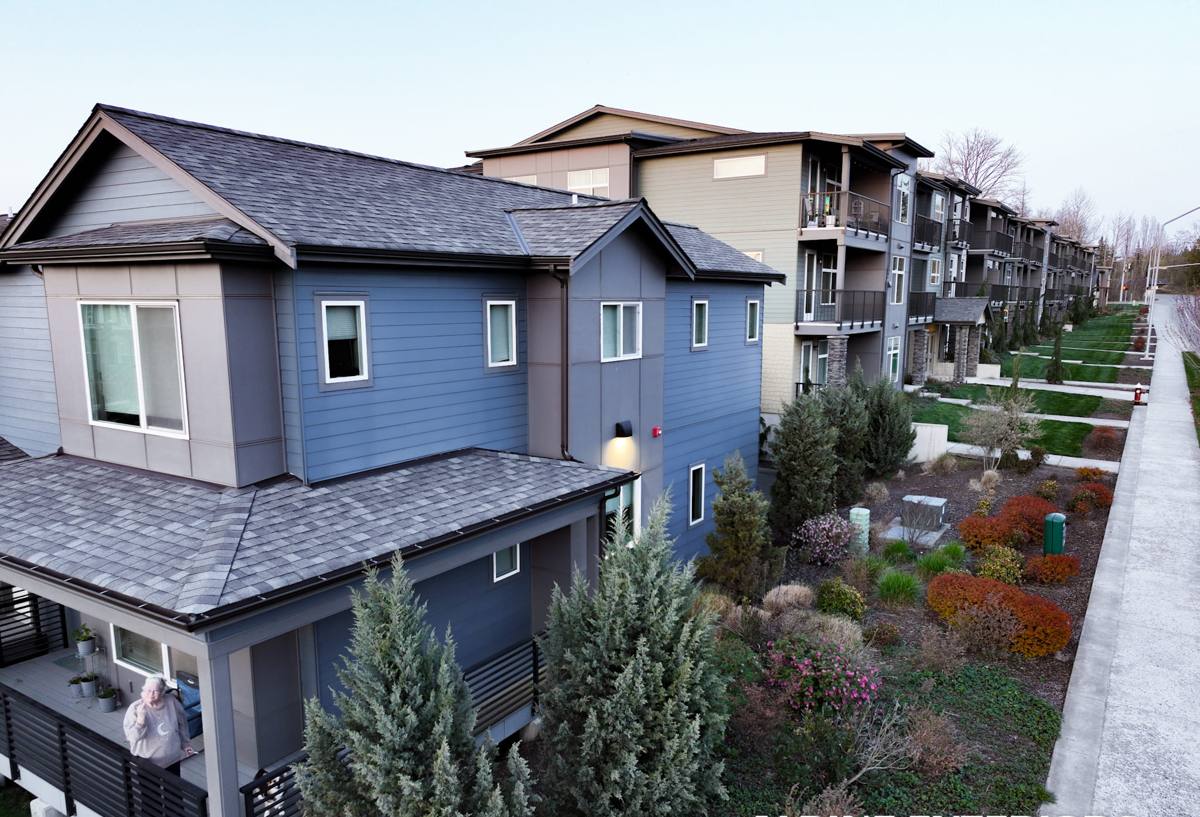
What Salt Air, Rain, and Moss Actually Do to Siding
These three stressors don't act alone — they compound each other, and understanding how helps explain why some siding choices hold up on the island and others don't.
Salt Air
Airborne salt is corrosive to exposed metal fasteners, flashing, and trim, and it accelerates the breakdown of some paint and coating systems over time. It also holds moisture against a wall surface longer than dry inland air would, which matters more than the salt itself in most cases.
Driving Rain
Wind-driven rain doesn't just wet the face of the siding — it pushes water sideways and upward at laps, seams, and penetrations that were only ever designed to shed water falling straight down. This is where installation detail (lap spacing, flashing, caulk joints) matters more than the siding material itself.
Moss and Algae Season
Whatcom County's long wet season, combined with the shade many island lots have from surrounding trees, keeps some wall faces damp for extended stretches. Moss and algae growth on siding is mostly cosmetic, but the moisture it holds against the surface is not — it's the mechanism that causes real damage to moisture-sensitive materials underneath.
What a Correct Siding Replacement Involves
Siding replacement is not a cosmetic swap. The visible boards are the last five percent of the job. Everything that matters most happens underneath, and it's the same on the island as anywhere — it just has less room for error given the exposure.
Tear-Off and Sheathing Inspection
Once the old siding comes off, we inspect the sheathing and framing underneath before anything goes back up. On a coastal property, this step catches problems early — soft sheathing, rot at window and door openings, or areas where a prior installation let water in behind the cladding for years without anyone knowing. Any compromised material gets replaced, not covered over.
Weather-Resistive Barrier and Flashing
A correctly lapped weather-resistive barrier (WRB) behind the siding is what actually keeps bulk water out of your wall assembly — the siding itself is the first line of defense, but the WRB and flashing are what stop the water that gets past it. Every window, door, and penetration needs proper flashing integrated into that barrier in the right shingle-lap order, top piece over bottom piece, so water is always directed outward and down.
Fastening and Clearances
James Hardie publishes specific fastener types, spacing, and penetration requirements, along with minimum clearances from grade, roof lines, and other surfaces. These aren't suggestions — they're what the manufacturer's warranty is conditioned on, and they're what determines whether the siding performs the way it's designed to in wind-driven rain.
Why We Install Only James Hardie Fiber Cement
We get asked why we don't offer vinyl, LP SmartSide, or cedar as options. It's a fair question, and the honest answer is that we made a standard for ourselves and we stick to it, because on exposed, wet, salt-air properties like Lummi Island, the differences between products show up over years, not on installation day.
Vinyl siding is inexpensive and low-maintenance in mild conditions, but it can warp or distort with heat and doesn't hold up to wind-driven impact the way fiber cement does. LP SmartSide is an engineered wood product — solid in the right climate, but wood-based siding is more sensitive to sustained moisture exposure than fiber cement, and sustained moisture is exactly what island homes deal with for months at a time. Cedar is a beautiful natural material, but it requires ongoing maintenance — staining or sealing on a real schedule — to keep performing in a wet coastal climate, and that maintenance burden is a real cost most homeowners underestimate when they choose it.
James Hardie fiber cement is non-combustible, dimensionally stable in wet-dry cycling, and available in Hardie's HZ climate-engineered product lines, which are formulated for different regional moisture and freeze-thaw conditions. The ColorPlus factory finish is baked on under controlled conditions rather than field-applied, which gives it more consistent coverage and a longer service life than a job-site paint job, and it's backed by a transferable warranty on both the substrate and the finish. That combination is why it's the only product we put on a house.
| Factor | Vinyl | LP SmartSide | Cedar | James Hardie Fiber Cement |
|---|---|---|---|---|
| Salt air resistance | Moderate | Moderate | Moderate (with upkeep) | Strong |
| Sustained moisture tolerance | Good | Fair — moisture-sensitive | Fair — needs sealing | Strong |
| Ongoing maintenance | Low | Moderate | High (staining/sealing) | Low |
| Fire resistance | Low | Moderate | Low | Non-combustible |
| Finish durability | Field material, can fade/warp | Field-painted | Field-stained | Factory ColorPlus finish |
How We Run a Job on Lummi Island
Working on the island isn't the same logistical exercise as a job in downtown Ferndale, and we plan for that difference rather than treating it as an afterthought.
- Material and crew scheduling accounts for the ferry — we batch deliveries and stage material so we're not making unnecessary round trips mid-job.
- We confirm dumpster, staging, and access needs up front, since island lots don't always have the same room for a full material drop that a mainland driveway does.
- Weather windows get built into the schedule — tear-off only happens when we can get the wall dried in and protected the same day, which matters more on an exposed site than an inland one.
- We sequence flashing and WRB work so no section of wall sits open longer than necessary, regardless of what the forecast is doing.
The point of planning this way is simple: a siding job that gets interrupted by weather or logistics mid-tear-off is a job where water gets into places it shouldn't. On an island property, that's not a risk worth taking to save a day on the schedule.
What Drives the Cost of a Siding Replacement
Every property is different, but the same handful of factors drive most of the cost variation we see on island and coastal jobs. We don't publish a flat price because these genuinely change the number — but knowing them helps you understand the estimate you get.
| Cost Factor | Why It Matters |
|---|---|
| Sheathing condition | Rot or moisture damage found during tear-off adds repair scope before new siding can go on |
| Wall complexity | Dormers, multiple gables, and cut-ins take more labor and material waste than a simple rectangular wall |
| Siding profile and trim | Lap width, trim detail, and accent choices affect both material cost and install time |
| Access and staging | Island logistics, tight lots, or limited staging area can affect crew efficiency |
| Existing siding removal | What's coming off, and how it's disposed of, adds labor separate from the new install |
Maintenance After Installation
Correctly installed James Hardie siding is low-maintenance, not zero-maintenance, and that distinction matters more on an island lot with heavy tree cover than it does on an open, sunny site. A periodic rinse-down of north- and west-facing walls keeps moss and algae from establishing a foothold, and it's worth doing before it becomes visible buildup rather than after. Keeping gutters clear and vegetation trimmed back from the wall surface helps airflow and drying between rain events, which is the single biggest factor in how long any siding — Hardie included — keeps performing well in a wet climate. None of this is intensive work; it's the difference between a wall that dries out between storms and one that doesn't.
What to Check Before Hiring a Crew for Island Work
- Ask whether they've worked on the island before and what they do differently for the logistics — ferry scheduling, material staging, weather windows.
- Confirm they carry James Hardie manufacturer certification, not just general siding experience.
- Ask how they handle a tear-off that runs into unexpected weather mid-job — this is where inexperienced crews create moisture problems.
- Get specifics on flashing and WRB detailing, not just "we install to code."
- Confirm what's actually covered under warranty — both the manufacturer's product warranty and the installer's workmanship warranty — and get it in writing.
Why a Crew That Already Works on the Island Matters
A siding job on Lummi Island isn't harder because the work itself is different — it's harder because the margin for a logistical or scheduling mistake is smaller. A crew that hasn't planned around the ferry, hasn't staged material for a site with limited access, or doesn't build weather contingencies into an island schedule can turn a straightforward replacement into a stretched-out job with open walls exposed longer than they should be. We've done enough work in and around Ferndale and the surrounding Whatcom County coastline to plan around those realities before they become problems, not after.
If you're weighing a siding replacement on Lummi Island — whether your current siding is failing, or you're just trying to get ahead of the moss and moisture cycle before it causes real damage — we're happy to take a look and walk you through what your home specifically needs. Reach out for a free, no-pressure estimate using the form below.