 Ferndale Window
 Composite Decking Built for Kendall's Climate
Kendall sits inland from the coast compared to towns like Blaine or Birch Bay, but it's still very much inside the weather system that defines this part of Whatcom County. Marine-influenced air moves through the whole county, driving rain still arrives sideways as often as it falls straight down, and the mild, wet stretch that runs from fall through spring gives moss and mildew months to work on any outdoor surface that doesn't drain and dry well. A deck has no roofline to shelter it from any of that. It sits exposed to sun, rain, and standing moisture in a way few other parts of a house do.
Composite decking has become the default choice for a lot of Kendall homeowners precisely because it holds up to that combination better than wood does with far less upkeep. But "composite" isn't one product — board quality, cap construction, and installation details vary a lot between a deck that looks good for five years and one that still looks good after twenty. This page covers what composite decking specifically needs to handle here, what a correct installation involves, and how we approach a composite deck project for a Kendall property.
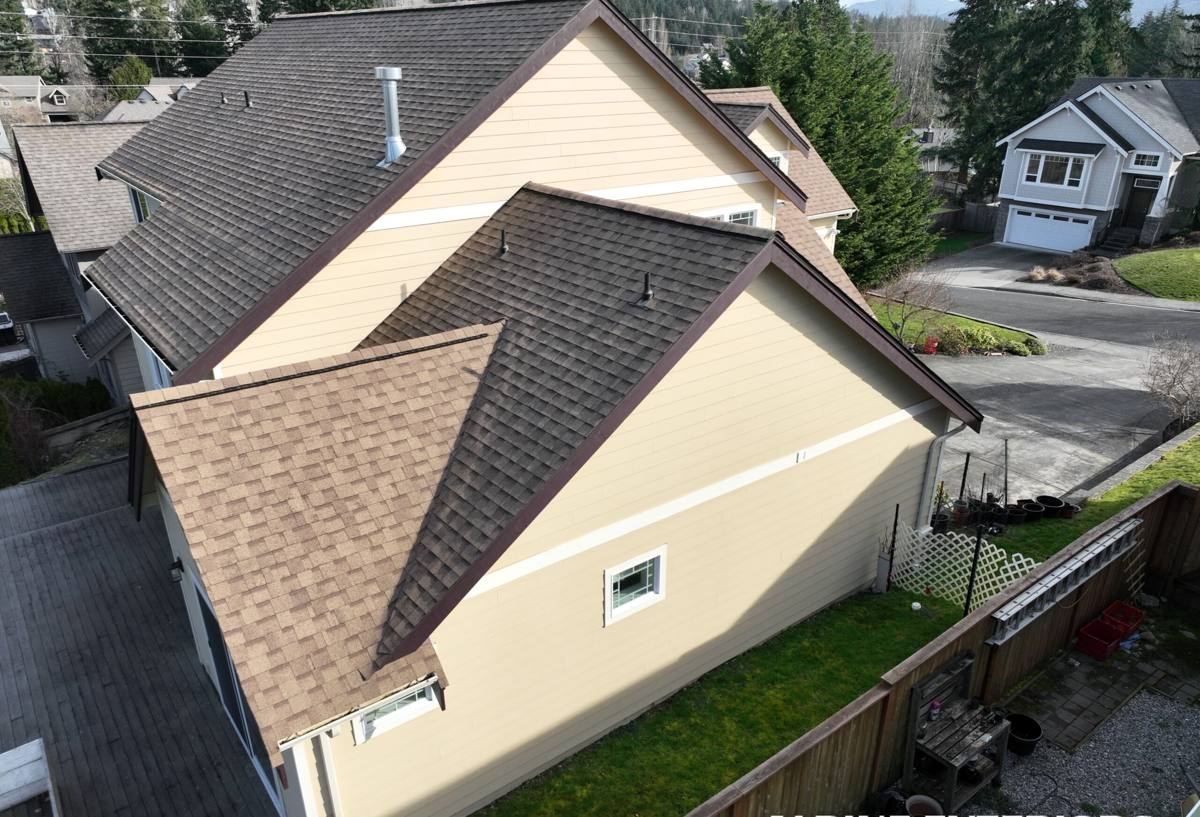
What Kendall's Climate Asks of a Composite Deck
Driving Rain and Standing Moisture
Storms in this part of Whatcom County rarely just fall straight down onto a deck surface. Wind pushes rain sideways and up under railings, into gaps between boards, and against the framing underneath. A deck built without the right board spacing and substructure drainage can end up holding water in exactly the spots you can't see from the surface, which matters more with a wood-fiber composite core than most homeowners expect.
A Long Moss and Mildew Season
Shaded decks and north-facing surfaces in this area stay damp for long stretches between storms, and horizontal surfaces are the first place moss and mildew take hold because they hold water longer than a vertical wall ever does. Composite boards resist this far better than untreated wood, but the surface texture and cap quality of the specific board you choose still make a real difference in how much cleaning a deck needs to stay presentable.
Salt-Tinged Marine Air
Even set back from the water, homes across Whatcom County sit inside air that carries some salt content, and that affects the metal components on a deck more than the decking boards themselves. Fasteners, brackets, and railing hardware are where salt-influenced moisture does its damage over time, which is why hardware selection matters as much as board selection on a deck built to last here.
Why Composite Makes Sense for This Property Type
Wood, composite, and PVC are the three materials most Kendall homeowners weigh against each other, and each behaves differently in sustained moisture. Wood needs regular sealing or staining to keep water out and is the first material to show soft spots and graying when that maintenance slips. PVC decking contains no wood fiber and resists moisture better than almost anything else on the market, but it costs more and can flex more under concentrated loads. Capped composite sits in between: a plastic cap layer wrapped around a wood-fiber composite core gives it strong resistance to moisture absorption, staining, and fading, at a cost and feel that fits what most homeowners here are actually looking for.
| Material | Moisture Behavior | Moss & Mildew Resistance | Upkeep |
|---|---|---|---|
| Pressure-treated wood | Absorbs moisture; needs sealing to resist it | Poor without regular treatment | Sealing or staining every 1-2 years |
| Cedar | Some natural resistance, still needs sealing | Fair when properly maintained | Regular oiling or sealing |
| Uncapped composite | Moderate; exposed fiber can absorb moisture at cut ends | Fair; more prone to surface buildup | Periodic cleaning |
| Capped composite | Strong; cap layer blocks most moisture absorption | Good on most current product lines | Occasional washing |
| Cellular PVC | Excellent; no wood fiber to absorb moisture at all | Strong, smooth non-porous surface | Occasional washing |
We install all of these when that's the right call for a given budget and site, but for most Kendall decks, a quality capped composite board gives the best balance of moisture performance, appearance, and cost over the life of the deck.
Not All Composite Is Built the Same
The difference between a mid-grade and premium composite board usually comes down to three things: whether the cap wraps all four sides of the board or just the top and edges, how dense and consistent the wood-fiber core is, and how the manufacturer backs the product with a fade and stain warranty. A four-sided capped board holds up better at the cut ends where boards meet joists and stair stringers, which is exactly where uncapped or three-sided boards tend to show moisture damage first in a climate this wet. We'll walk through the specific product lines that fit your budget rather than defaulting to whichever board is easiest to move.
What a Correct Composite Deck Install Involves
The composite boards on top get most of the attention, but the framing, fasteners, and drainage details underneath are what actually determine whether that deck is still solid in fifteen years. A build done right here includes a specific sequence of decisions, not just a material swap onto a generic frame.
Substructure and Framing
Composite decking is heavier than wood and has its own span rating, so joist spacing has to match the specific product being installed rather than a generic framing layout carried over from a wood deck design. Framing lumber itself needs to be rated for sustained ground and moisture exposure, sized correctly for the actual span and load the deck will see.
Fasteners and Hardware
Standard fasteners corrode faster than most homeowners expect in this region's air, and a corroding fastener loses holding strength well before it looks obviously bad. We use stainless steel or coastal-grade corrosion-resistant fasteners and hardware throughout, and hidden fastener systems on the deck surface itself wherever the specific board product supports it, which also gives a cleaner, screw-free walking surface.
Ledger Flashing
Where a deck ties into the house, the ledger board connection is one of the most common places moisture works its way into the structure on a poorly built deck. Correct ledger flashing keeps water from tracking behind the ledger and into the house's wall framing, and it's a detail that's easy to shortcut and hard to fix later without removing the deck.
Board Gapping and Drainage
Composite boards need to be gapped correctly for both drainage and material expansion, so wind-driven rain and everyday moisture can actually move through the deck and dry rather than sitting trapped between boards. Gapping that's too tight defeats a lot of the moisture resistance the board itself was designed to provide.
Under-Deck Ventilation and Grading
Grading and airflow underneath the deck keep moisture from sitting against the framing between storms, which matters most on lower decks close to grade or decks over unexcavated crawlspaces. Skipping this step is invisible on install day and shows up years later as a damp substructure even when the visible decking looks fine.
A Practical Checklist for a Correctly Built Composite Deck
- Joist spacing matched to the specific composite product's span rating, not a generic wood-deck layout
- Stainless steel or coastal-grade corrosion-resistant fasteners and hardware throughout
- Hidden fastener systems used wherever the board product supports them
- Ledger board properly flashed where the deck attaches to the house
- Board gaps sized correctly for drainage and material movement
- Grading and ventilation underneath the deck to prevent standing moisture against framing
- Railing and post attachment sized for the site's actual wind and use conditions
Choosing the Right Composite Board for Your Property
Beyond the capped-versus-uncapped question, a few site-specific factors should shape which composite line makes sense for a given Kendall property. Shaded, tree-covered lots benefit from board colors and grain patterns that don't show moss and organic buildup as readily as very dark, smooth boards do. Sun-exposed decks put more emphasis on fade resistance and heat retention in the color chosen, since darker composite can run noticeably hotter underfoot on a clear day. Warranty structure is also worth reading closely rather than assuming they're all equivalent — stain, fade, and structural warranty terms vary meaningfully between manufacturers and even between product tiers from the same manufacturer.
- How much direct sun versus shade does the deck area actually get through the day?
- Is the property surrounded by trees that will drop organic debris onto the deck regularly?
- Does the household want a low-maintenance surface, or is some periodic care an acceptable tradeoff for a different look or lower upfront cost?
- What does the manufacturer's warranty actually cover — structural integrity, staining, fading, or all three?
- Does the color and grain pattern chosen hide or highlight surface debris and water spotting between cleanings?
How Our Process Works
- Site visit: We look at grade, drainage, sun and shade exposure, and existing structure condition if it's a replacement, before recommending any specific product.
- Material and design conversation: We go over composite board options that fit the budget and how the space will actually be used, along with railing and layout choices.
- Permitting: Deck permitting in Whatcom County follows standard setback, structural, and elevation requirements, and we handle that as part of the job.
- Substructure and framing: Framing is built and spaced to the specific decking product's span rating, with corrosion-resistant fasteners and proper ledger flashing from the start.
- Decking, railing, and trim: Boards go down with correct gapping and hidden fastener systems where supported, followed by railing and any stair or trim work.
- Final walkthrough: We cover what your specific board product needs going forward, which for most modern composite is minimal, but not nothing.
Maintaining a Composite Deck in This Climate
Composite decking is genuinely lower-maintenance than wood, but "low-maintenance" doesn't mean "no maintenance," especially with a moss season that runs most of the year here.
- Rinse or wash the deck surface periodically to clear pollen, organic debris, and surface grime before it works into the cap layer
- Keep gaps between boards clear of leaves and debris so water and airflow can move the way the design intends
- Check railing posts and fastener points once a year, especially heading into the wet season, for early corrosion or loosening
- Trim back overhanging branches or plants that hold moisture and shade against the deck surface
- Address any soft framing, standing water, or discoloration underneath right away rather than waiting — that's a structural signal, not just a cosmetic one
Why Hiring a Crew That Already Works Kendall Matters
A contractor who mostly builds decks in drier parts of the state can still put together a competent-looking deck, but a lot of what actually determines a Kendall deck's lifespan doesn't show up until a wet season or two in — fastener corrosion, moisture trapped under badly graded substructure, moss taking hold in gaps that were cut too tight. A crew that regularly works this part of Whatcom County has already seen which composite lines hold up to the local combination of driving rain and a long moss season, and which fastener grades and drainage details are worth insisting on rather than treating as an upsell.
That familiarity also shows up in smaller judgment calls specific to a given lot: how to orient a deck around a shaded, moss-prone corner of the yard, or being straightforward with a homeowner about what a composite deck here actually needs to hold up versus what's just an added line item on the estimate.
If you're considering a composite deck for your Kendall property, whether that's replacing an aging wood deck or building new, we're glad to walk the site with you and lay out honest options for your budget and how you plan to use the space. Use the form below to request a free, no-pressure estimate.