 Ferndale Window
 Siding on Lummi Island Has a Harder Job Than Siding Almost Anywhere Else
Lummi Island sits out in the Salish Sea, and that location shapes everything about how a home's exterior ages. Homes here take on salt-laden air off the water, long stretches of wind-driven rain, and a shaded, damp microclimate under the fir and cedar canopy that keeps moss and algae active for much of the year. Add in the practical reality of island life — a ferry crossing for every delivery, every crew visit, and every piece of equipment — and you have a building envelope that has to work harder, and a repair or replacement project that has to be planned more carefully than a typical mainland job in Whatcom County.
We install James Hardie fiber cement siding exclusively, and this page is specifically about what that means for a Lummi Island property: what the climate actually does to siding out here, what a correct installation looks like, and why hiring a crew that already understands the island — not just the product — matters more than it would for a house a few miles inland.
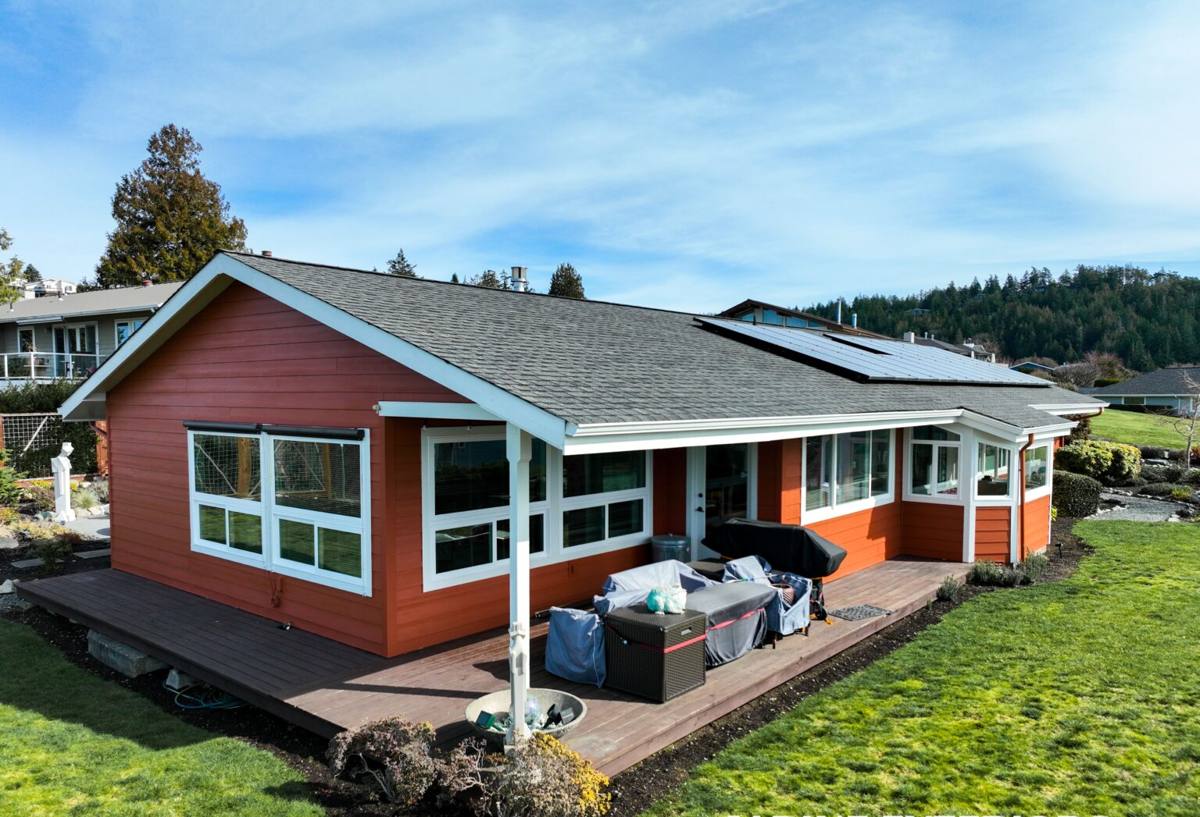
What Salt Air, Driving Rain, and Moss Actually Do to Exterior Siding
Salt Air
Airborne salt is corrosive and hygroscopic — it pulls moisture out of the air and holds it against whatever surface it lands on. On siding, that means fasteners, flashing, and any exposed metal are under constant low-grade attack, and painted or coated surfaces face accelerated fading and chalking compared to homes farther from open water. Materials that rely on a thin factory coating, or that need field-applied paint to hold up, tend to show wear faster in this environment.
Driving Rain
Storms off the water don't just fall straight down — they come in sideways, which pushes water into laps, seams, and trim joints that would stay dry in a calmer climate. Any siding system with weak drainage behind it, or fastening that leaves gaps for wind-driven water to work into, will eventually let moisture reach the wall sheathing. Once that happens, the damage is often hidden until it's significant.
Moss and Algae Season
Between the tree cover common on the island and the extended damp season typical of this part of Washington, north- and west-facing walls in particular stay shaded and moist for long stretches. That's exactly the condition moss, lichen, and algae need to take hold. Porous or wood-based siding gives these organisms something to grip and feed on; a dense, factory-finished fiber cement surface gives them far less to work with.
Why We Standardized on James Hardie Fiber Cement Only
We don't install vinyl, LP SmartSide, Cemplank, Allura, primed spruce, or cedar siding. That's not a marketing position — it's a decision made after years of seeing how different siding materials actually hold up in Whatcom County's marine climate, especially on exposed island and waterfront properties.
- Non-combustible core. Hardie fiber cement is a cement, sand, and cellulose composite that doesn't feed a fire the way wood-based products can.
- ColorPlus factory finish. The color is baked on in a controlled factory process, which resists fading and chipping far better than field-applied paint exposed to salt air and UV.
- Climate-engineered HZ product lines. Hardie makes region-specific formulations (HZ5 is the relevant line for our climate) engineered for moisture and freeze-thaw performance rather than a single one-size-fits-all product.
- Dense, resistant surface. Fiber cement doesn't swell, rot, or delaminate the way wood and some engineered wood products can when they take on repeated moisture.
- Strong transferable warranty. Backed by a manufacturer warranty that's meaningful because the material itself is engineered to last, not just marketed to.
Products like vinyl and LP SmartSide have real strengths — vinyl is inexpensive and low-maintenance in mild climates, and LP SmartSide's engineered wood is easier to work with than solid lumber. But vinyl can warp and become brittle under UV and temperature swings, and any wood-based product depends on its outer coating staying intact to keep moisture out — a bigger ask in a climate that batters that coating year-round. That trade-off is why we made Hardie our standard rather than one option among several.
What a Correct James Hardie Installation Involves Here
The siding material is only part of the job. Most siding failures we see — on any brand — trace back to installation details, not the product itself. On an exposed Lummi Island wall, these details matter even more than usual.
Drainage Plane and Rainscreen Gap
Behind the siding, a correctly installed water-resistive barrier and a ventilated rainscreen gap give any water that gets past the siding surface a path to drain and dry out, instead of sitting against the sheathing. This is one of the single biggest factors in whether siding lasts on a wind-driven-rain site.
Flashing at Every Penetration
Windows, doors, deck ledgers, and any wall penetration need properly lapped, sealed flashing. On a home taking direct wind-driven rain off the water, a flashing detail that would be a minor oversight elsewhere can become a real leak point here.
Fastening to Manufacturer Spec
Hardie's warranty depends on installation to their published instructions — correct fastener type and spacing, proper clearance from grade and roof lines, and correct nailing to avoid overdriven or underdriven fasteners that compromise the water-resistant lap joint.
HZ5 Product Selection and ColorPlus Colors
We spec the HZ5 line and ColorPlus finishes appropriate for this climate zone, rather than a generic product not engineered for a marine environment.
Choosing Siding Profiles for a Wooded, Waterfront Property
Lummi Island homes range from simple cabins to larger waterfront builds, often set among trees that shade part of the exterior year-round. That mix of exposure and shade on a single home is worth planning for.
| Product | Best Use | Why It Fits |
|---|---|---|
| HardiePlank Lap Siding | Primary wall siding, most homes | Traditional lap profile, wide range of ColorPlus colors, proven in wet coastal climates |
| HardieShingle | Accent areas, gables, cottage-style homes | Shingle look without the moisture vulnerability of cedar shakes |
| HardieTrim | Corners, window and door surrounds | Matches fiber cement performance at the joints most exposed to driving rain |
| HardiePanel | Modern/vertical accents | Clean lines for contemporary waterfront designs |
How the Project Works, Ferry Logistics Included
Because Lummi Island is only reachable by ferry, we plan these jobs a little differently than a mainland Ferndale project — not because the siding work changes, but because materials, crew scheduling, and equipment moves all have to work around a fixed crossing schedule instead of a quick truck trip.
- On-site assessment. We inspect the existing siding and sheathing for hidden moisture or rot, since that's common under old siding on shaded, damp walls.
- Material and crossing plan. We schedule Hardie material delivery and crew logistics around ferry availability so the project isn't stalled mid-job waiting on a crossing.
- Removal and sheathing repair. Old siding comes off, damaged sheathing is repaired, and the drainage plane and rainscreen go in correctly before any new siding is installed.
- Hardie installation to spec. Fastening, flashing, and clearances follow manufacturer requirements for warranty coverage.
- Final walkthrough and cleanup. We haul debris off-island rather than leaving it for you to deal with.
What Drives Cost on an Island Siding Project
| Factor | Why It Matters |
|---|---|
| Ferry access and logistics | Material and crew transport takes planning time that a mainland job doesn't require |
| Existing sheathing condition | Hidden moisture damage under old siding may need repair before new siding goes on |
| Wall exposure and complexity | Multiple stories, dormers, and waterfront-facing walls take longer to flash and fasten correctly |
| Product line and trim detail | HardieShingle accents and custom trim add labor compared to straight lap siding |
| Site access on the island | Tighter driveways and staging areas on some island lots affect equipment and material staging |
We provide honest, project-specific estimates after seeing the home — general national averages don't account for ferry logistics or island site conditions, so we won't quote off a rule of thumb.
Living With Hardie Siding in a Moss-Prone, Salty Climate
- Rinse siding with a garden hose periodically to clear salt residue and organic buildup before it sets in, especially on shaded walls.
- Trim back branches and brush that keep a wall shaded and damp longer than necessary — airflow is one of the simplest defenses against moss.
- Inspect caulking at trim joints and penetrations annually; caulk is a maintenance item on any siding system and matters more in a wet, wind-driven climate.
- Avoid pressure-washing directly into laps and seams — a gentle rinse is safer for the finish and the drainage details behind it.
- Watch gutters and downspouts near siding runs; overflow during heavy rain is a common source of localized water damage regardless of siding material.
Hardie's ColorPlus finish and dense fiber cement surface reduce how often you'll need to think about any of this compared to painted wood or algae-prone wood-look products, but no siding is entirely maintenance-free in this climate.
Why a Crew That Already Works Lummi Island Is Worth Choosing
A contractor who only occasionally takes on island work has to relearn the ferry schedule, the material logistics, and the site-access quirks every time. A crew that already works Lummi Island regularly has that figured out, which shows up as fewer delays, fewer surprise trips back and forth, and a more realistic estimate up front. It also means we've already seen how homes out here age under salt air and moss — knowledge that shapes where we pay extra attention during installation, not just how we talk about the product.
If you're weighing a siding replacement on Lummi Island, we're happy to take a look and put together a free, no-pressure estimate — no obligation, just a straight assessment of what your home needs. Use the form below to get started.