 Ferndale Window
 Marietta's Windows Work Harder Than Most
Marietta sits in that low-lying pocket between Ferndale and Bellingham Bay, close enough to the water that homes here take a different kind of weathering than houses further inland in Whatcom County. Salt-laden air off the bay, wind-driven rain that comes sideways off the water, and a long, damp moss season all put extra stress on window frames, seals, and hardware. A window that performs fine in a sheltered inland yard can fail years early in Marietta if it wasn't chosen and installed with this exposure in mind.
Energy efficiency isn't just about a lower heating bill, either — though that matters, since Marietta homes lean on forced-air or heat pump systems through a long heating season with plenty of gray, damp days. It's also about keeping moisture out of the wall cavity, keeping condensation off the glass, and keeping hardware from seizing up or corroding from salt exposure. Get the window and the install right, and you solve both problems at once. Get it wrong, and you end up with a window that's technically "energy efficient" on paper but is fogging, sticking, or rotting out its sill within a few winters.
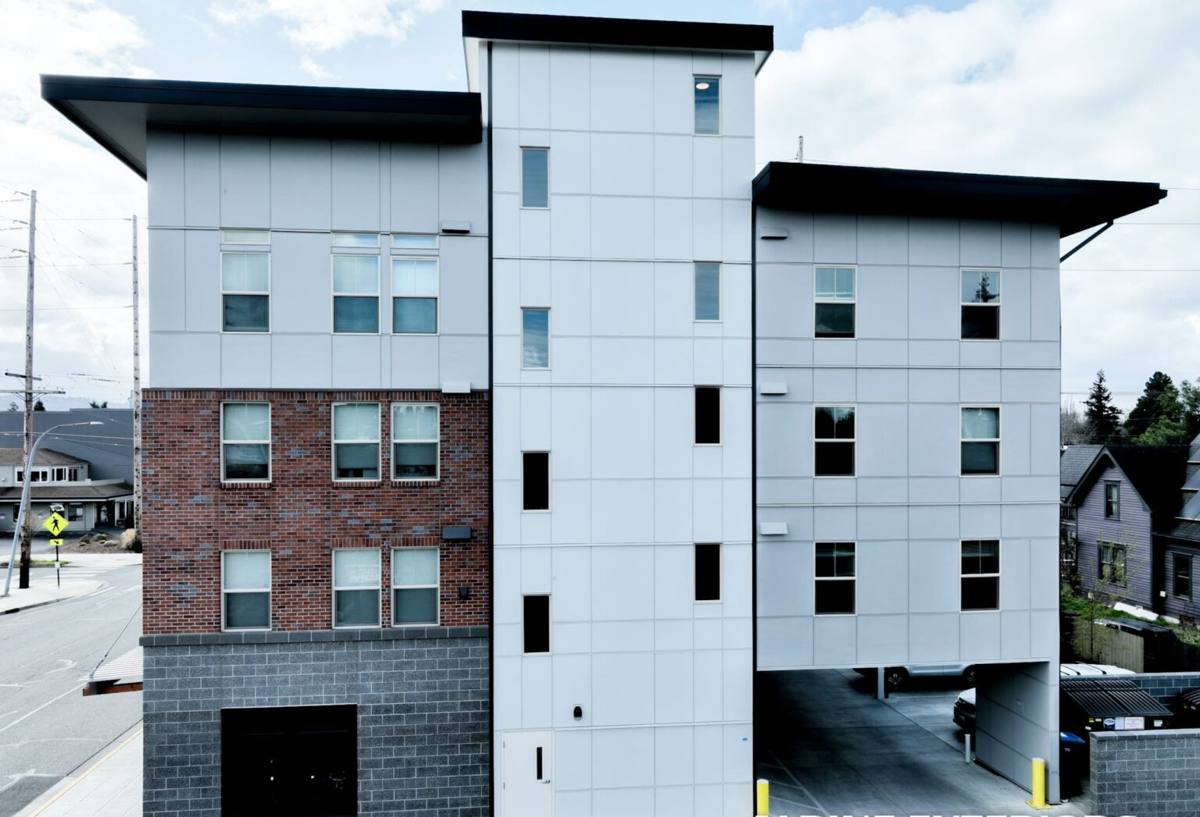
What Marietta's Climate Actually Does to a Window
Salt Air and Hardware Fatigue
Proximity to Bellingham Bay means a steady low-level dose of salt in the air, especially on windier days. Salt accelerates corrosion on unprotected fasteners, hinges, cranks, and lock mechanisms. Standard-grade hardware that's fine in a drier, inland climate can start pitting or seizing up in a marine-influenced area like Marietta well before its expected lifespan. This is a frame-material and hardware-spec decision as much as it's an installation one.
Wind-Driven Rain and Water Intrusion
Rain that falls straight down is forgiving. Rain that gets pushed sideways by wind coming off the water is not — it finds every gap in flashing, every shortcut in sealant, and every spot where a window wasn't shimmed and leveled correctly. In an area exposed to driving rain, the installation details around the window (not just the window unit itself) determine whether water stays out of the wall assembly.
Moss Season and Trapped Moisture
Whatcom County's long moss season means extended stretches of high humidity, low sun exposure, and slow-drying surfaces. Moss and algae growth around window trim and sills isn't just cosmetic — it holds moisture against wood trim and cladding longer than it would otherwise sit, which speeds up rot if flashing and drainage details aren't done correctly. A window install that doesn't account for this can look fine for a season or two and then start showing soft trim and staining.
What Actually Makes a Window "Energy-Efficient"
"Energy-efficient" gets used loosely in this industry. For Marietta's climate, the specifications that actually matter are:
- U-factor — measures how well the window resists heat loss. Lower is better for our heating-dominated climate.
- Solar Heat Gain Coefficient (SHGC) — how much solar heat passes through the glass. Matters more on south- and west-facing walls.
- Low-E coatings — a microscopically thin metallic layer that reflects heat back inside during winter without meaningfully darkening the glass.
- Gas fill — argon or krypton between panes slows heat transfer compared to plain air.
- Frame material — affects both insulating value and how the frame holds up to salt air and constant moisture.
None of these specs work in isolation. A high-performance glass package installed in a frame with poor weatherstripping, or installed with sloppy flashing, will still underperform and let in moisture. The install quality and the product spec have to both be right.
Frame and Glass Options for a Marietta Home
| Option | Energy Performance | Handling of Salt Air & Moisture | Maintenance |
|---|---|---|---|
| Vinyl frame, double-pane low-E, argon fill | Good, solid value | Won't corrode; welded corners resist water entry well | Low — no painting, occasional cleaning |
| Vinyl frame, triple-pane low-E, argon fill | Best insulating value | Same corrosion resistance as double-pane vinyl | Low |
| Fiberglass frame, double-pane low-E | Very good, dimensionally stable | Excellent — resists warping from moisture cycling | Low, higher upfront cost |
| Wood-clad frame | Good, depends on core | Cladding protects exterior, but any breach exposes wood core to rot risk in this climate | Higher — cladding seams and interior wood need periodic attention |
For most Marietta homes, we steer people toward vinyl or fiberglass frames precisely because of the salt air and moisture combination — not because wood-clad windows are bad products, but because a fully sealed, non-porous frame removes an entire category of long-term risk in this specific location. If a wood interior look matters to you, wood-interior/vinyl or fiberglass-exterior composite units can often split the difference.
What a Correct Installation Actually Involves
The window unit itself is maybe half the job. In a climate like Marietta's, the installation details are where energy efficiency and water-tightness are actually won or lost:
- Full removal of the old unit and inspection of the rough opening for hidden rot or water damage before anything new goes in
- Correct flashing sequence — sill pan flashing first, then side flashing, then head flashing, shingle-lapped so water sheds outward at every layer
- Continuous, correctly placed sealant and backer rod at the exterior joint — not just a bead of caulk smeared over gaps
- Proper shimming and squaring so the sash operates smoothly and the weatherstripping compresses evenly on all four sides
- Low-expansion foam or mineral wool insulation in the gap between frame and rough opening — never a solid bead of standard foam, which can bow a frame out of square
- Interior air-sealing detail so conditioned air and humid interior air aren't leaking into the wall cavity
- Corrosion-resistant fasteners and hardware appropriate for a salt-air-exposed location
Skip or rush any one of these steps and you can end up with a window that carries a good energy rating on the label but still leaks air, lets in wind-driven rain, or fogs between the panes within a few years because the seal around the unit — not the glass itself — failed.
Our Process for a Marietta Window Project
- On-site assessment — we look at existing window condition, framing, exposure direction (which walls take the worst of the wind and rain), and current energy performance issues like drafts or condensation.
- Product recommendation — matched to your home's exposure, budget, and how the windows need to perform, not a one-size-fits-all package.
- Written estimate — clear on scope, product, and what's included, before any work starts.
- Removal and opening inspection — old units come out carefully so we can check the rough opening for hidden damage before it's covered back up.
- Flashing, install, and air-sealing — done in the correct sequence, not shortcuts to save an hour.
- Interior and exterior finish work — trim, sealant lines, and hardware checked for smooth operation.
- Final walkthrough — we test every window with you before we consider the job done.
Signs a Marietta Home Needs New Windows Now
Not every window problem means a full replacement, but these are the signs worth a look, especially on walls exposed to bay wind and rain:
- Fogging or a milky haze between the panes — the seal has failed and the gas fill is gone
- Visible daylight or a noticeable draft around the frame when it's windy
- Soft, spongy, or stained trim and sill areas, especially where moss or algae has been growing
- Hardware that's stiff, pitted, or won't lock smoothly anymore
- Condensation forming on the inside of the glass regularly through the winter and moss season
- A noticeable temperature difference standing near the window compared to the rest of the room
Why Hiring a Crew That Already Works in Marietta Matters
Marietta is a small area, and its exposure to salt air and driving rain off Bellingham Bay is different enough from more sheltered parts of Ferndale and Whatcom County that generic installation habits don't always hold up. A crew that already knows this stretch understands which walls typically take the worst weather, what kind of flashing and hardware upgrades are worth the extra cost here, and what moss and moisture problems tend to look like before they become structural ones. That local pattern recognition shows up in fewer callbacks and windows that actually perform the way their spec sheet says they should, years down the road — not just on install day.
It also means a crew that's realistic about scheduling around this region's weather windows, and that isn't guessing at permit or code requirements that apply locally. Consistency across a neighborhood like Marietta comes from a crew that's done the work here before, not from a one-off install anywhere in the county.
If your Marietta home has drafty, foggy, or aging windows — or you're planning ahead for a remodel — we're happy to come take a look and give you a straightforward, no-pressure estimate. There's no obligation, and you'll get a clear picture of what your home actually needs before you decide anything. The form below is the easiest way to get started.