 Ferndale Window
 Building a Deck That Actually Holds Up in Sudden Valley
Sudden Valley is one of the more challenging spots in the area to build a deck correctly. It's a wooded, lake-adjacent community, which means most lots deal with heavy tree cover, dappled shade that never fully burns off, and soil that stays damp long after the rest of Whatcom County has dried out. Add in the region's driving rain, salt-tinged marine air moving in off the Strait of Georgia, and a moss season that can stretch from October into May, and you've got a set of conditions that will find every weak point in a deck within a few years if it wasn't built with those conditions in mind.
A deck built the same way you'd build one on an open, sun-exposed lot in a drier part of the state simply won't perform the same way here. The framing, the fasteners, the decking material, and even the gap spacing between boards all need to be chosen with this specific site condition in mind. This page walks through what that actually looks like — not generic deck-building advice, but what changes when the job is in Sudden Valley specifically.
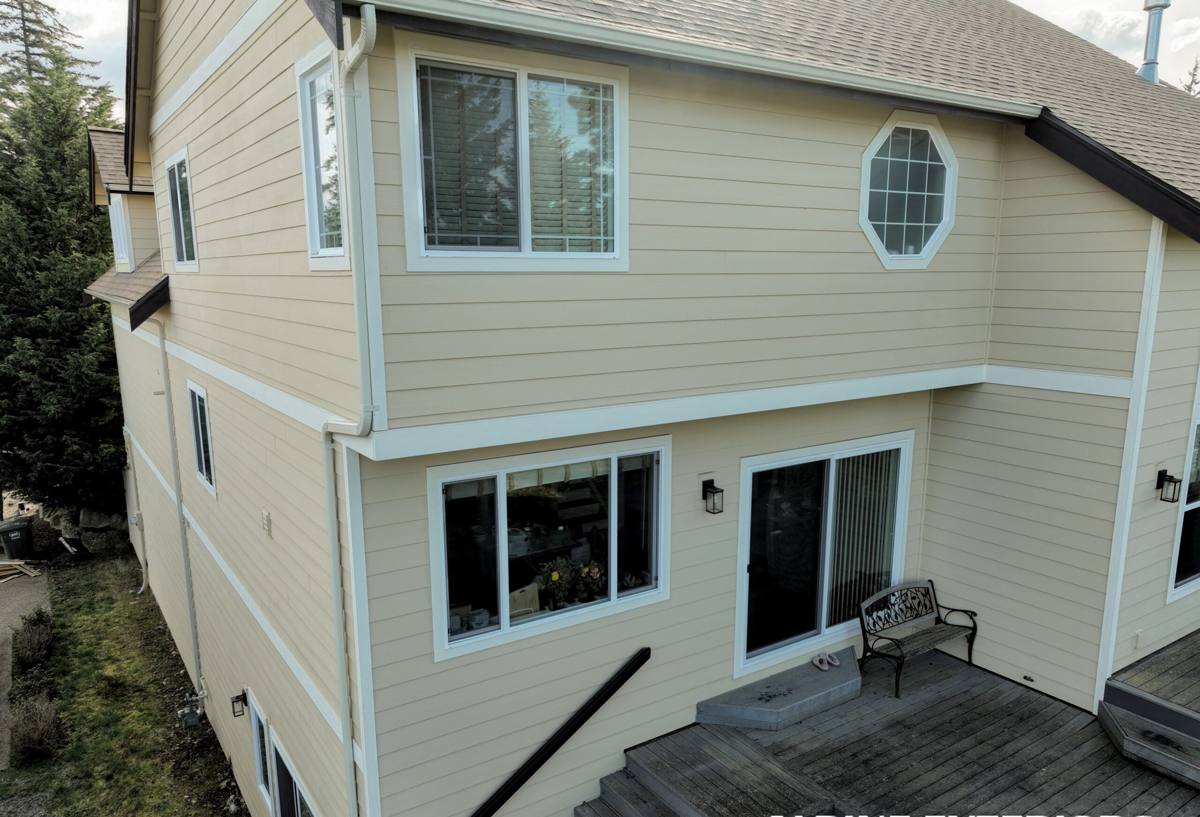
What Makes a Sudden Valley Lot Different
Three things show up over and over when we look at decks in this neighborhood:
- Persistent shade. Mature tree cover keeps large sections of many decks damp well into the afternoon, even on days when the sun is out elsewhere in Ferndale.
- Slower drying cycles. Between the shade and the region's rainfall pattern, wood surfaces and the ground beneath a deck stay wet longer, which is exactly what moss, algae, and mildew need to establish themselves.
- Debris load. Needles, leaves, and organic matter collect between boards and around posts faster on a wooded lot than on an open one, and that debris holds moisture against the wood or decking surface.
None of this means a deck can't be built to last in Sudden Valley — it means the build has to account for slower drying, more organic debris, and near-constant dampness in shaded zones, rather than assuming the deck will get the sun exposure a typical builder plans around.
Getting the Structure Right: Footings, Framing, and Ledger Attachment
Footings and posts
Damp, often clay-heavy soil on wooded lots doesn't drain the way sandy or well-amended soil does. Footings need to be sized and set to local frost depth and bearing requirements, not just poured to a standard depth out of habit. Post bases should sit clear of standing water and use a base connector that keeps the post end off concrete, since a post sitting directly in a puddle of trapped moisture will rot from the bottom up regardless of what species or treatment the wood carries.
Ledger board attachment
The ledger — the board that attaches the deck to the house — is the single most common source of hidden rot on any deck in this climate, wooded lot or not. If it isn't flashed correctly, water works its way behind the ledger and into the house's rim joist, and by the time it's visible from outside, there's often significant damage already done. A correct ledger installation uses proper flashing, a water-resistant barrier behind it, and fasteners rated for the load and the moisture exposure — not just lag screws driven through untreated wood-to-wood contact.
Joist protection
Joist tape over the top of the framing before decking goes down is a small add during construction and a meaningful difference in framing lifespan. On a shaded, slow-drying lot, that detail matters more than it would on an open, sun-exposed site.
Choosing a Decking Material for a Shaded, Damp Lot
The decking surface itself takes the brunt of the moss and mildew problem, since it's the part exposed to standing moisture, falling debris, and reduced airflow. Here's how the common options actually compare for a Sudden Valley-type site:
| Material | Moss/algae resistance | Maintenance | Typical lifespan | Upfront cost |
|---|---|---|---|---|
| Cedar | Moderate — needs regular cleaning and sealing to keep ahead of it | Annual cleaning, periodic re-staining or sealing | 15–20 years with upkeep | Low–moderate |
| Pressure-treated pine | Low in constant shade without upkeep | Regular cleaning, staining/sealing every 2–3 years | 10–15 years in heavy shade | Lowest |
| Composite decking | Good — most modern composites resist mold/algae growth on the surface | Occasional washing, no staining or sealing | 25–30+ years | Higher |
| Tropical hardwood | Good if properly finished, but finish maintenance is demanding | Regular oiling to prevent surface graying and moisture uptake | 25+ years with diligent care | Highest |
We don't push one material on every job. Cedar still makes sense for homeowners who like the look and don't mind the yearly upkeep. Composite makes the most sense on lots with heavy shade and debris, because it doesn't need sealing and it handles standing moisture better over the long run. What we do steer clients away from on a wooded, shaded Sudden Valley lot is untreated or minimally treated softwood left unsealed — the maintenance burden in this specific climate is more than most homeowners want to keep up with, and the failure point (moisture getting into checked or cupped boards) shows up faster than it would in a drier location.
Fasteners and Hardware: The Part Nobody Sees Until It Fails
Marine-influenced air and constant moisture accelerate corrosion in fasteners and hardware that aren't rated for it. Standard galvanized fasteners can start showing rust streaking and weakening within a few years on an exposed, damp deck. We use stainless steel or high-grade coated fasteners rated for ground contact and coastal exposure on connectors, ledger bolts, and any hardware that's structural — the cost difference over the life of the deck is small compared to the cost of a railing post or ledger connection failing because a fastener corroded through.
Drainage, Airflow, and Moss Prevention
Moss and algae need three things to take hold: moisture, shade, and a surface that doesn't dry out between rain events. Sudden Valley lots typically supply all three, so the build has to work against that:
- Decking is spaced with proper gapping so water drains through rather than pooling on the surface.
- The substructure is built with enough clearance and ventilation underneath for airflow to reach the underside of the deck.
- The deck surface is sloped slightly away from the house so water sheets off instead of collecting near the ledger.
- Where tree cover is unavoidable, we talk through realistic cleaning intervals with the homeowner rather than pretending a low-maintenance material means no maintenance.
Signs an existing deck is losing that fight
- Green or black film building up on boards faster than it washes off
- Boards that stay visibly damp or dark for days after rain stops
- Soft or spongy spots near the ledger board or post bases
- Rust streaking around fastener heads or metal connectors
- Standing debris packed between boards that doesn't clear on its own
Railings, Stairs, and Code Requirements
Any deck built for a Sudden Valley home needs to meet Washington state residential building code requirements as adopted and enforced by Whatcom County — guardrail height, baluster spacing, stair rise and run, and handrail requirements aren't optional details, and they get checked at inspection. Sloped or uneven lots, which are common on wooded lake-area properties, often mean stairs and landings need more careful planning than they would on a flat, open building site. We handle the permit submittal and coordinate inspections as part of the build, so the homeowner isn't left tracking down code requirements or scheduling county inspections on their own.
Our Deck-Building Process
- Site visit and assessment. We walk the lot, note tree cover, drainage patterns, sun exposure, and existing structure condition if there's a deck already in place.
- Design and material selection. We talk through decking material, layout, and railing options based on the site's actual shade and moisture conditions — not a one-size-fits-all package.
- Permit submittal. We handle the paperwork with Whatcom County so the project is built to code from the start.
- Footings and framing. Posts, footings, ledger flashing, and joist protection go in first, built to the load and moisture demands of the site.
- Decking, railings, and stairs. Installed with proper spacing and fastener choice for long-term drainage and corrosion resistance.
- Final walkthrough and inspection. We confirm everything passes county inspection and walk the homeowner through basic care for whatever material was installed.
Why It Matters to Hire a Crew That Already Works in Sudden Valley
A contractor who mostly builds decks on open, sun-exposed lots elsewhere in Ferndale or the county will often default to standard specs — standard fastener grade, standard footing depth, standard decking gap — because that's what works most of the time. On a shaded, wooded, lake-adjacent lot like the ones common in Sudden Valley, "standard" isn't enough. Knowing to size footings for the soil conditions, flash the ledger properly, spec corrosion-resistant hardware, and plan for moss and airflow from the start comes from having actually built and maintained decks in this specific kind of setting — not from a generic playbook. That local familiarity is also what keeps permit submittals moving smoothly with the county and avoids costly rework after inspection.
If you're planning a new deck or replacing one that's struggling with moss, soft spots, or drainage problems, we're happy to come take a look and give you a straightforward, no-pressure estimate. Use the form below to get started.