 Ferndale Window
 Board & Batten Siding for Everson Homes
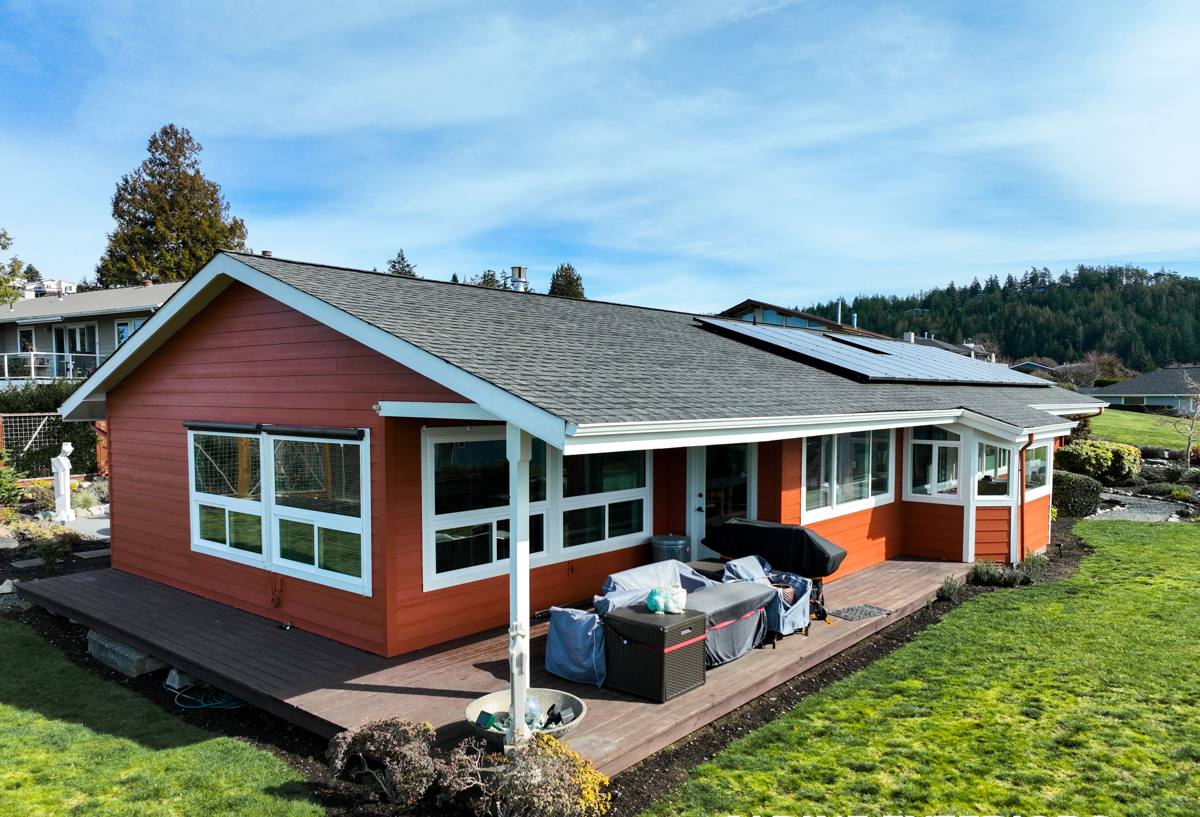
Board and batten is one of the most requested looks in Whatcom County right now — clean vertical lines, deep shadow reveals, and a farmhouse-to-modern range that works on everything from a Nooksack River valley ranch to a new build on a half-acre lot outside town. But in Everson, the look is only half the job. The other half is what the siding has to survive: a long wet season, humidity that lingers in low-lying areas near the river, driving rain that comes in sideways during winter storms, and the marine-influenced air that moves through this whole part of Whatcom County and keeps moss and mildew active for most of the year.
We install board and batten as a full James Hardie fiber cement system, not a look built out of whatever material happens to be cheapest that month. That distinction matters more in Everson than it does in a dry climate, because the material choice and the install details are what decide whether this siding still looks sharp in fifteen years or starts showing swollen edges, streaking, and soft spots in five.
What This Climate Actually Does to Siding
Moisture That Doesn't Let Up
Everson sits in an area where fog, dew, and low cloud cover keep exterior surfaces damp for long stretches, especially on north-facing walls and anywhere shaded by trees or a neighboring structure. Siding that can't shed water quickly, or that traps it once it gets behind the surface, stays wet longer than it should — and that's exactly the condition moss, algae, and mildew need to take hold.
Driving Rain and Wind-Driven Water
Winter storms coming off the water push rain sideways, not straight down. On a board and batten wall, that means water gets forced against every vertical seam and every batten edge. If the drainage plane behind the siding isn't built correctly, or the fasteners and caulking weren't done to spec, wind-driven rain finds its way behind the boards — and once it's behind them, it doesn't dry out fast.
Freeze-Thaw and Material Movement
Whatcom County doesn't get brutal cold snaps often, but it gets enough freeze-thaw cycling each winter to matter. Materials that absorb moisture and then freeze will expand, crack, and degrade faster than materials engineered to resist water absorption in the first place.
Board & Batten as a Building System, Not Just a Style
A lot of homeowners think of board and batten as a visual choice — wide flat boards with narrow strips covering the seams. Structurally, it's a full wall system: a water-resistive barrier, a drainage gap, the field panels or boards, the battens, flashing at every penetration and transition, and a fastening pattern that holds all of it together under wind load. Skip or shortcut any one of those layers and the whole system underperforms, no matter how good the material is.
Why We Use James Hardie for This Style Specifically
James Hardie's board and batten options — whether built from HardiePanel vertical siding with Hardie batten trim, or the pre-finished Hardie Artisan line — are engineered as fiber cement, which means the boards themselves don't absorb and swell the way wood or wood-based products do. Hardie's HZ5 product formulation is built for exactly this kind of climate: wet winters, humid air, and a lot of exposure to standing moisture at grade and around plantings.
Why We Don't Install Other Board & Batten Materials
We get asked regularly why we won't quote board and batten in vinyl, engineered wood, or primed solid wood, since all three are available and often cheaper up front. Here's the honest breakdown of the trade-offs, not a knock on the products themselves:
| Material | Moisture Behavior | Maintenance | Fire Resistance | Typical Lifespan (PNW conditions) |
|---|---|---|---|---|
| James Hardie fiber cement | Engineered to resist moisture absorption; won't swell or rot | Low — factory ColorPlus finish, no repainting cycle | Non-combustible | 30+ years to spec |
| Solid or primed wood | Absorbs water readily; prone to swelling, splitting, rot at end grain | High — repainting/staining every few years | Combustible | 10-20 years, install-dependent |
| Engineered wood (OSB-based) | Vulnerable at cut edges and joints if moisture gets in | Moderate — coating maintenance matters | Combustible | Highly install and maintenance dependent |
| Vinyl (board and batten profile) | Doesn't rot, but can warp, fade, and trap moisture behind it | Low, but limited repair/color options | Combustible, can deform under heat | 15-25 years, color fades over time |
Wood board and batten can look beautiful the day it goes up, but in a climate that stays damp as much as Whatcom County's does, it's a maintenance commitment — repainting, re-caulking, and watching for rot at every batten edge. Engineered wood is sensitive to exactly the kind of sustained moisture exposure this region delivers. Vinyl sheds water but doesn't stand up to sun and temperature swings the way fiber cement does, and it's not the material we want backing a fire-resistance conversation in a wildfire-aware state. James Hardie is the one option in that table that's both engineered for this specific climate and backed by a strong transferable warranty when installed to spec.
What a Correct Installation Actually Involves
The material is only as good as the install. A board and batten job done wrong on great siding will fail faster than a mediocre material installed correctly. On every Everson project, our crew follows the same non-negotiables:
- A continuous water-resistive barrier installed before any siding goes up
- A drainage gap (rain screen) behind the siding so any water that does get in can drain and the wall can dry
- Corrosion-resistant fasteners, placed and spaced per James Hardie's published installation instructions
- Factory-cut and field-cut edges sealed before installation, not after
- Proper clearance from grade, roof lines, decks, and other siding transitions to avoid trapped moisture
- Flashing at every window, door, and penetration — not caulk used as a substitute for flashing
- Batten spacing and fastening that follows manufacturer specs, not just what looks even
Manufacturer warranties on Hardie products are conditioned on correct installation. That's not a technicality — it's the reason two houses with the same siding material can have very different outcomes ten years later.
Our Process on Everson Projects
Assessment
We start by looking at the existing wall assembly — what's underneath, whether there's any sign of past moisture intrusion or rot in the sheathing, and how the home's exposure (tree cover, sun, prevailing wind and rain direction) should factor into the install plan.
Scope and Materials
We spec out the James Hardie board and batten configuration, trim, and ColorPlus finish that fits the home and give you a clear, written scope — no vague allowances.
Installation
Removal of the old siding, correction of any sheathing issues found underneath, house wrap and drainage plane installation, then the board and batten system itself installed to manufacturer spec from the ground up.
Final Walkthrough
We walk the finished job with you, checking seams, flashing, and finish before we consider it done.
Living With It: Maintenance in This Climate
One of the real advantages of James Hardie's ColorPlus finish is that it's baked on at the factory under controlled conditions, which gives it better fade and moisture resistance than a field-applied paint job — meaning far less of the recurring repainting cycle that wood and primed products need out here. That doesn't mean zero maintenance: gutters need to stay clear so water isn't sheeting down the wall, vegetation should be kept back from the siding to let it breathe and dry, and an occasional gentle rinse keeps moss and grime from building up during the wetter months. It's a lighter maintenance load than the alternatives, not a zero-maintenance one.
Why Local Experience Matters for This Job
Board and batten in a coastal, high-moisture climate isn't a one-size-fits-all install. A crew that's used to installing in a dry climate will make different assumptions about drainage planes, batten spacing tolerances, and flashing details than a crew that works Whatcom County year-round. As a Ferndale-based crew, we've seen how this specific climate — the driving rain, the humidity that sits in the valley, the long stretch of the year where nothing fully dries out — actually plays out on real walls over real years. That's the experience we bring to a board and batten project in Everson: not just knowing the manufacturer spec sheet, but knowing how it holds up against this particular weather.
If you're weighing board and batten siding for a home in Everson, we're happy to walk the property, talk through what a correct install looks like for your specific site, and give you a straightforward, no-pressure estimate — just fill out the form below to get started.