 Ferndale Window
 Birch Bay Puts Exterior Siding Through a Tough Test
Homes along Birch Bay sit closer to the elements than most houses in Whatcom County. Waterfront and near-waterfront properties take on salt-laden air coming off the water, wind-driven rain that gets pushed sideways into wall assemblies instead of falling straight down, and long stretches of overcast, damp weather that keep exterior surfaces wet for days at a time. Add in the tree cover common around the bay and you get shaded, slow-drying wall sections where moss and algae get a foothold and never really let go.
None of that is unusual for the Pacific Northwest coast, but it is more concentrated in Birch Bay than it is a few miles inland in Ferndale proper. Siding here has to manage constant moisture exposure, resist the slow corrosion that salt air causes in fasteners and trim, and hold its color and shape without turning into a maintenance chore every spring. That's the standard we hold every Birch Bay project to, and it's the reason we install James Hardie fiber cement siding exclusively rather than vinyl, engineered wood products, or cedar.
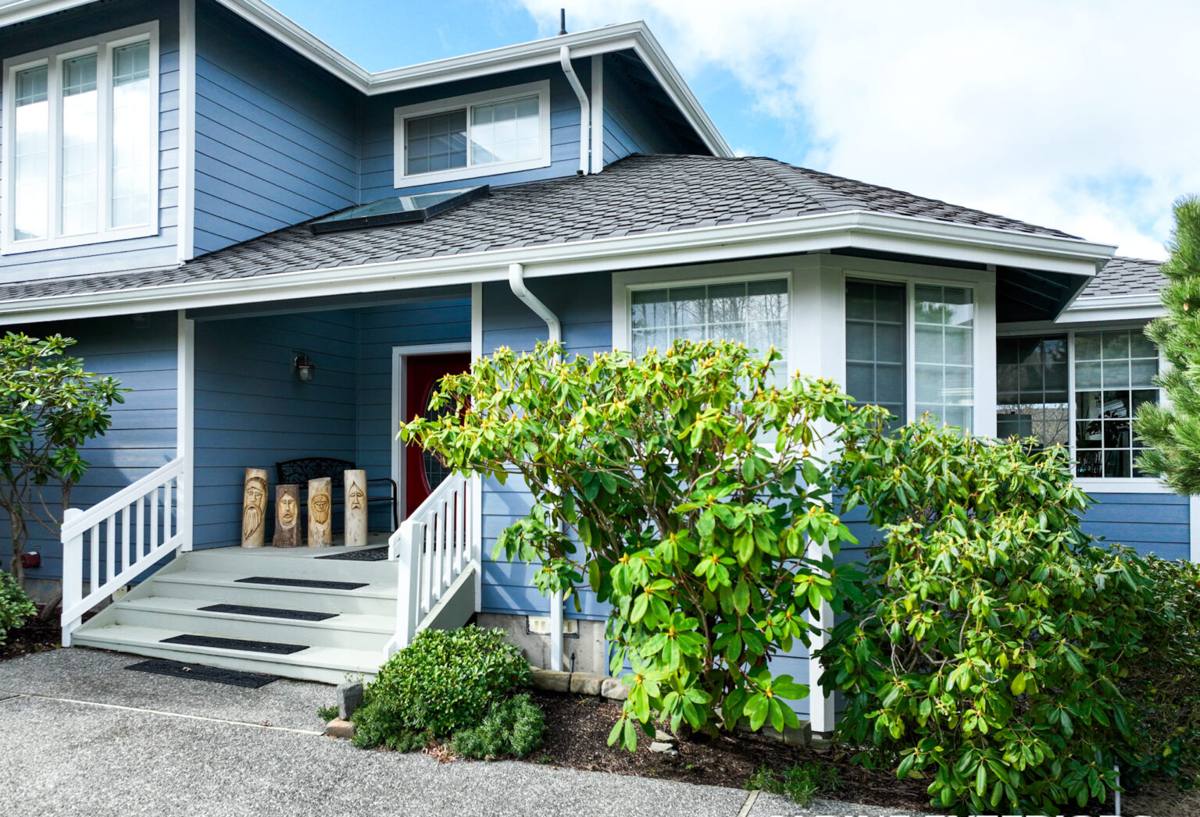
Why James Hardie Fiber Cement Is the Right Material for This Location
James Hardie siding is a fiber cement product — a mix of cement, sand, and cellulose fibers pressed and cured into planks and panels. It doesn't absorb water the way wood-based sidings do, it doesn't soften or delaminate when it stays damp, and it's non-combustible, which matters for insurance and for peace of mind regardless of coastal exposure. For a Birch Bay home, the properties that matter most are dimensional stability in wet-dry cycling and resistance to the kind of slow moisture creep that salt air and driving rain create at seams, corners, and penetrations.
HZ5 Products Built for This Climate
James Hardie makes climate-specific product lines, and the HZ5 line is engineered for regions with more moisture exposure and freeze-thaw variability than the driest parts of the country see. We spec HZ5 products on Birch Bay homes because they're formulated and warrantied for exactly this kind of environment, rather than treating every job the same regardless of where the house sits.
ColorPlus Finish Instead of Field Painting
James Hardie's ColorPlus finish is baked on at the factory under controlled conditions, which gives it better adhesion and UV resistance than most site-applied paint jobs can match. In a location where the siding is going to spend a lot of its life wet, a factory finish that isn't relying on a painter's timing, temperature, and dry-day window to cure correctly is a real advantage.
What a Correct Installation Actually Involves
Fiber cement siding performs the way it's supposed to only when it's installed to manufacturer spec. A rushed or shortcut installation on a coastal property will show problems faster than the same mistakes would on a sheltered inland house, because there's more water hitting the wall more often.
Water Management Comes Before the First Board
Correct installation starts with the water-resistive barrier and flashing details — window and door head flashing, kick-out flashing at roof-to-wall intersections, and properly lapped house wrap. On a Birch Bay home taking wind-driven rain from the water side, these details determine whether moisture gets shed to the exterior or finds its way behind the siding. We treat this stage as the most important part of the job, not a formality before the "real" work starts.
Fastening, Clearances, and Joint Treatment
James Hardie specifies fastener type, spacing, and penetration depth, along with minimum clearances from grade, roof lines, and decks. Butt joints and trim intersections need to be caulked or flashed per spec, not just butted together and painted over. Skipping these details doesn't usually show up in year one — it shows up in year four or five as staining, swelling at the joints, or moss and algae taking hold where water is sitting instead of draining.
Trim, Corners, and Penetrations
Every point where siding meets something else — a window, a vent, a hose bib, an electrical fixture — is a place water can get behind the cladding if it's not detailed correctly. On a house exposed to salt air and constant rain, these small details add up to the difference between siding that looks the same in ten years and siding that needs attention in three.
How Different Siding Materials Hold Up in Coastal Exposure
Homeowners comparing options for a Birch Bay property are usually looking at James Hardie fiber cement against vinyl, cedar, or engineered wood products. Here's how they generally compare under the specific stresses this location creates.
| Material | Moisture Behavior | Salt Air / Corrosion Concerns | Maintenance Burden |
|---|---|---|---|
| James Hardie fiber cement | Doesn't absorb and swell; stable through wet-dry cycles | Non-metallic substrate resists degradation; trim and fasteners matter more than the panel itself | Occasional cleaning to keep moss/algae from taking hold; factory finish reduces repainting |
| Vinyl | Doesn't absorb water, but can warp or become brittle with UV and temperature swings over time | Fasteners and trim pieces are still vulnerable; panels can loosen and rattle in coastal wind | Low, but color fades and can't be refreshed without replacement |
| Cedar | Absorbs moisture readily; prone to swelling, cupping, and rot without diligent upkeep | Salt air accelerates weathering and finish breakdown | High — regular refinishing, caulking, and moisture checks needed |
| Engineered wood (LP-style) | Wood-based core is moisture-sensitive at cut edges and joints | Edge swelling risk increases in sustained damp, salt-exposed conditions | Moderate to high — edge sealing and joint monitoring are ongoing needs |
This is exactly why we standardized on James Hardie rather than carrying multiple product lines. Vinyl, cedar, and engineered wood all have legitimate uses in drier or more sheltered settings, but on a bay-facing home in this climate, they ask homeowners to take on more upkeep and more risk than fiber cement does.
Our Process for a Birch Bay Siding Project
- On-site assessment — we look at wall orientation relative to the water, existing moisture or moss patterns, trim and flashing condition, and any problem areas around windows, decks, or roof intersections.
- Product and color selection — we walk through HZ5 panel and plank options, ColorPlus color choices, and trim profiles that suit the home and hold up to the exposure it actually gets.
- Prep and water management — removal of old siding where needed, correction of any existing flashing or sheathing issues, and installation of a code-compliant water-resistive barrier before any Hardie product goes up.
- Installation to manufacturer spec — correct fastening, clearances, joint treatment, and trim work, with particular attention to the penetrations and intersections most likely to see wind-driven rain.
- Final walkthrough — we go over the finished work with the homeowner, confirm caulking and paint touch-ups are complete, and make sure everything matches what was scoped.
Keeping Hardie Siding Looking Right Through Moss Season
James Hardie siding is low-maintenance compared to wood, but "low-maintenance" doesn't mean "no maintenance," especially in a location with as much shade and dampness as parts of Birch Bay see. A little seasonal attention keeps the siding performing and looking the way it should.
- Rinse siding down once or twice a year, focusing on shaded, north-facing, or tree-covered walls where moss and algae take hold first
- Keep gutters clear so overflow isn't running down wall sections repeatedly during heavy rain
- Trim back vegetation and tree limbs that keep siding shaded and slow to dry
- Inspect caulking at trim joints, window and door surrounds, and penetrations annually and re-caulk where it's cracked or pulling away
- Check that deck ledger boards, hose bibs, and vent penetrations still have intact flashing and sealant
- Address any moss or algae growth promptly rather than letting it establish — it holds moisture against the surface
Why Hiring a Crew That Already Works Birch Bay Matters
Siding installation isn't identical everywhere, and a crew that mostly works dry, sheltered, inland jobs isn't necessarily thinking about kick-out flashing at a bay-facing roofline or fastener corrosion resistance the same way a crew that works this shoreline regularly does. Knowing which walls on a Birch Bay property take the worst of the wind and rain, how shaded lots dry out differently than open ones, and where past moisture problems tend to show up on homes in this area means fewer surprises during the job and a better outcome once it's done. It also means we're not learning on your house — we're applying what we already know works here.
What Affects the Cost of a Birch Bay Siding Project
Every home is different, so we don't quote pricing without seeing the house, but a few factors consistently move the cost of a project in this area:
- Extent of existing damage or rot that needs to be addressed before new siding goes on
- Complexity of the home's shape — corners, dormers, and roof-to-wall intersections all add labor and flashing work
- Panel versus lap siding choice, and trim detail level
- Access — waterfront lots, steep grades, or limited equipment access can affect labor time
- Whether windows, trim, or other exterior components are being addressed at the same time
We walk through these factors with every homeowner during the estimate so there are no surprises once work starts.
The James Hardie Warranty and Long-Term Value
James Hardie backs its siding products with a transferable limited warranty, and ColorPlus-finished products carry a separate finish warranty covering the factory color. That transferability matters in a community like Birch Bay where waterfront and vacation properties change hands — it's a real asset for resale, not just a piece of paperwork. The warranty is also part of why installation quality matters so much: manufacturer warranties are tied to installation done to spec, which is one more reason correct flashing, fastening, and joint work aren't optional details.
If you're weighing a siding project for a Birch Bay home, we're glad to come take a look and talk through what your specific walls, exposure, and budget call for. There's no pressure and no cost to get our read on the job — just fill out the form below and we'll set up a time.